Chapters 32 and 33 take place in the last year of the siege of Jerusalem. The Babylonian army has built its siege ramps against the walls, famine and disease are killing the people, and Jeremiah is under arrest in the palace guardhouse. At that moment God tells him to do something that looks completely foolish: buy a field. Jeremiah signs the deed, seals it, stores it in a clay jar, and then admits in prayer that he does not fully understand. God’s answer contains one of the Bible’s best-known invitations: “Call unto me, and I will answer thee.”
A study in Jeremiah 32-33 · Arthur Baldwin · StandUp4Jesus.Org · 17 min read
Shut Up In The Court Of The Prison
“The word that came to Jeremiah from the LORD in the tenth year of Zedekiah king of Judah, which was the eighteenth year of Nebuchadrezzar. For then the king of Babylon’s army besieged Jerusalem: and Jeremiah the prophet was shut up in the court of the prison, which was in the king of Judah’s house.”
Jeremiah 32:1, 2
It is the tenth year of King Zedekiah, about a year before Jerusalem fell. The city is surrounded. Jeremiah is a prisoner, kept in the guard’s courtyard of the royal palace, because the king did not like what he had been saying: that Babylon would take the city and that Zedekiah himself would be led away to Babylon (32:3-5). Chapters 37 and 38 tell how he ended up there.
Everything looked lost. Jeremiah’s own prophecies were coming true all around him. And this is exactly the moment God chose to give him the most hopeful chapters in the book.
“Even while Jeremiah was kept under close surveillance by those who scorned his messages, there came to him fresh revelations concerning Heaven’s willingness to forgive and to save, which have been an unfailing source of comfort to the church of God from that day to this.”
Ellen G. White · Prophets and Kings, p. 466
The Right Of Redemption Is Thine
“And Jeremiah said, The word of the LORD came unto me, saying, Behold, Hanameel the son of Shallum thine uncle shall come unto thee, saying, Buy thee my field that is in Anathoth: for the right of redemption is thine to buy it. So Hanameel mine uncle’s son came to me in the court of the prison according to the word of the LORD, and said unto me, Buy my field, I pray thee, that is in Anathoth, which is in the country of Benjamin: for the right of inheritance is thine, and the redemption is thine; buy it for thyself. Then I knew that this was the word of the LORD.”
Jeremiah 32:6-8
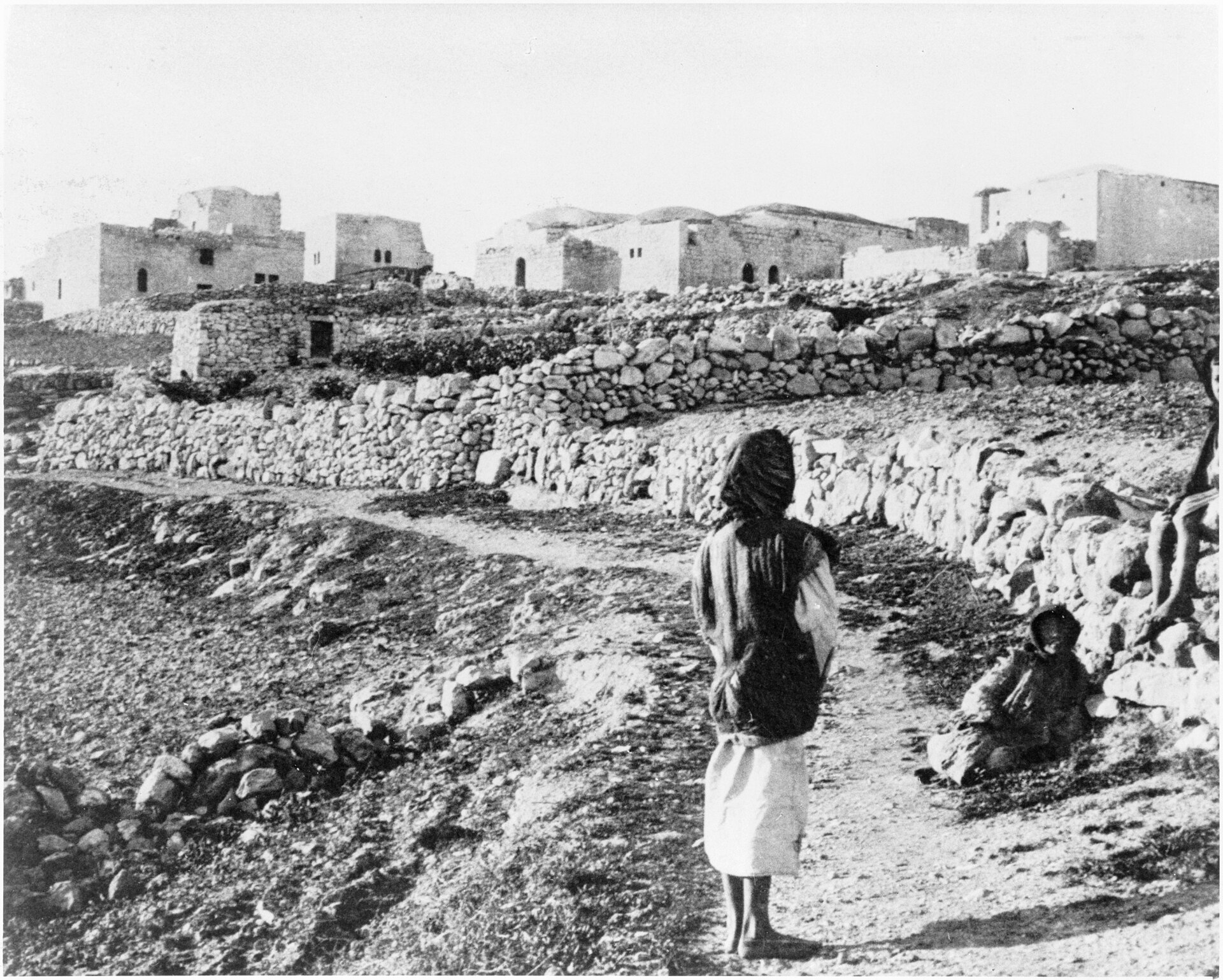
God told Jeremiah in advance that his cousin would come, and then his cousin came. “Then I knew that this was the word of the LORD.” Hanameel had a field in Anathoth, Jeremiah’s home village a few miles north of Jerusalem. That land was already behind enemy lines. Hanameel probably needed money and could see the field was worthless to him now.
The law of Moses said that when a man had to sell family land, his nearest relative had the right to buy it so it would stay in the family: “if any of his kin come to redeem it, then shall he redeem that which his brother sold” (Leviticus 25:25). This is the same law Boaz used when he redeemed the land of Naomi’s family and married Ruth (Ruth 4:4). The relative who did it was called the redeemer, and the series on Ruth shows how that role points to Christ: see A Kinsman-Redeemer.
“And I bought the field of Hanameel my uncle’s son, that was in Anathoth, and weighed him the money, even seventeen shekels of silver. And I subscribed the evidence, and sealed it, and took witnesses, and weighed him the money in the balances.”
Jeremiah 32:9, 10
Jeremiah did it properly. He weighed out the silver, signed the deed, had it witnessed, and sealed it, all in front of the people in the prison courtyard. It was a real legal purchase, not a private gesture.
“From every human point of view this purchase of land in territory already under the control of the Babylonians, appeared to be an act of folly. The prophet himself had been foretelling the destruction of Jerusalem, the desolation of Judea, and the utter ruin of the kingdom. He had been prophesying a long period of captivity in faraway Babylon. Already advanced in years, he could never hope to receive personal benefit from the purchase he had made.”
Ellen G. White · Prophets and Kings, p. 469
That is what makes this purchase an act of faith. Jeremiah would never farm that field. He bought it anyway, because God had said His people would come back. Faith is putting your money where God’s promise is. “Now faith is the substance of things hoped for, the evidence of things not seen” (Hebrews 11:1). Jeremiah literally held the evidence in his hand.
Put Them In An Earthen Vessel
“And I charged Baruch before them, saying, Thus saith the LORD of hosts, the God of Israel; Take these evidences, this evidence of the purchase, both which is sealed, and this evidence which is open; and put them in an earthen vessel, that they may continue many days. For thus saith the LORD of hosts, the God of Israel; Houses and fields and vineyards shall be possessed again in this land.”
Jeremiah 32:13-15
There were two copies of the deed: one “sealed,” closed up and kept as the official record, and one “open,” for anyone to read. Both went into a clay jar, the safest storage the ancient world had, “that they may continue many days.” Long-buried documents really have survived that way. The jars that held the Dead Sea Scrolls kept some of the oldest known copies of the Bible safe for about two thousand years.
This is also our first meeting with Baruch, Jeremiah’s faithful secretary, who will take a large part in the chapters ahead. And the reason for it all is in verse 15: “Houses and fields and vineyards shall be possessed again in this land.” Paul uses the picture of a clay jar for something even more precious: “But we have this treasure in earthen vessels, that the excellency of the power may be of God, and not of us” (2 Corinthians 4:7).
Is There Any Thing Too Hard For Me?
“Now when I had delivered the evidence of the purchase unto Baruch the son of Neriah, I prayed unto the LORD, saying, Ah Lord GOD! behold, thou hast made the heaven and the earth by thy great power and stretched out arm, and there is nothing too hard for thee:”
Jeremiah 32:16, 17
After he obeyed, Jeremiah prayed. His prayer starts with creation and walks through Israel’s whole history: the Exodus, the gift of the land, the people’s disobedience (32:17-23). He confesses, “there is nothing too hard for thee.” But then honesty breaks in.
“Behold the mounts, they are come unto the city to take it; and the city is given into the hand of the Chaldeans, that fight against it, because of the sword, and of the famine, and of the pestilence: and what thou hast spoken is come to pass; and, behold, thou seest it. And thou hast said unto me, O Lord GOD, Buy thee the field for money, and take witnesses; for the city is given into the hand of the Chaldeans.”
Jeremiah 32:24, 25
“Behold the mounts.” The siege ramps were right there. And Jeremiah says, in effect: Lord, You told me to buy a field, and the city is falling. He obeyed first and asked questions second. That is a good order. Faith does not mean having no questions. It means obeying God and then bringing Him the questions.
“Then came the word of the LORD unto Jeremiah, saying, Behold, I am the LORD, the God of all flesh: is there any thing too hard for me?”
Jeremiah 32:26, 27
God hands Jeremiah’s own words back to him as a question. Jeremiah had said, “there is nothing too hard for thee.” God asks, “is there any thing too hard for me?” It is the question God asked Abraham and Sarah when He promised a son to a couple far too old to have one: “Is any thing too hard for the LORD?” (Genesis 18:14). And the angel answered it for Mary: “For with God nothing shall be impossible” (Luke 1:37).
“And they shall be my people, and I will be their God: And I will give them one heart, and one way, that they may fear me for ever, for the good of them, and of their children after them: And I will make an everlasting covenant with them, that I will not turn away from them, to do them good; but I will put my fear in their hearts, that they shall not depart from me. Yea, I will rejoice over them to do them good, and I will plant them in this land assuredly with my whole heart and with my whole soul.”
Jeremiah 32:38-41
The city would fall; God does not take that back. But after the judgment would come the “everlasting covenant,” the same new covenant promised in chapter 31. Look at the last line: God will do this “with my whole heart and with my whole soul.” In chapter 29 God asked His people to seek Him with all their heart. Here He tells them He will restore them with all of His.
Call Unto Me, And I Will Answer Thee
“Moreover the word of the LORD came unto Jeremiah the second time, while he was yet shut up in the court of the prison, saying, Thus saith the LORD the maker thereof, the LORD that formed it, to establish it; the LORD is his name; Call unto me, and I will answer thee, and shew thee great and mighty things, which thou knowest not.”
Jeremiah 33:1-3
Jeremiah was still a prisoner. Nothing outside had changed. But God says: “Call unto me, and I will answer thee.” The walls of the guardhouse could not stop a prayer from going up or an answer from coming down. And God promises more than an answer. He promises to show “great and mighty things, which thou knowest not,” things Jeremiah could not have figured out on his own.
“Behold, I will bring it health and cure, and I will cure them, and will reveal unto them the abundance of peace and truth. And I will cause the captivity of Judah and the captivity of Israel to return, and will build them, as at the first. And I will cleanse them from all their iniquity, whereby they have sinned against me; and I will pardon all their iniquities, whereby they have sinned, and whereby they have transgressed against me.”
Jeremiah 33:6-8
Here are the “great and mighty things”: health for a sick nation, a return from captivity, and above all, cleansing and pardon for “all their iniquity.” The houses being torn down to strengthen the walls (33:4) would be rebuilt. And the sounds chapter 25 said would fall silent would come back: “the voice of joy, and the voice of gladness, the voice of the bridegroom, and the voice of the bride” (33:11). Shepherds would again count their flocks in the hills around Jerusalem (33:12, 13).
David Shall Never Want A Man
“In those days, and at that time, will I cause the Branch of righteousness to grow up unto David; and he shall execute judgment and righteousness in the land. In those days shall Judah be saved, and Jerusalem shall dwell safely: and this is the name wherewith she shall be called, The LORD our righteousness.”
Jeremiah 33:15, 16
God repeats the promise of the righteous Branch from chapter 23, which we studied in The LORD Our Righteousness. This time the name “The LORD our righteousness” is given to Jerusalem too. The people come to bear the name of their King.
“For thus saith the LORD; David shall never want a man to sit upon the throne of the house of Israel; Neither shall the priests the Levites want a man before me to offer burnt offerings, and to kindle meat offerings, and to do sacrifice continually.”
Jeremiah 33:17, 18
This promise looks impossible. Within a year there would be no king in Jerusalem and no temple. For centuries afterwards no son of David sat on a throne. How could David “never want a man”? God ties the promise to the sun and moon: if anyone can break “my covenant of the day, and my covenant of the night,” then His covenant with David and with the priests can be broken (33:20, 21).
The answer is a single Person who is both King and Priest. The angel told Mary that God would give her Son “the throne of his father David: And he shall reign over the house of Jacob for ever; and of his kingdom there shall be no end” (Luke 1:32, 33). And Hebrews says of the same Jesus: “this man, because he continueth ever, hath an unchangeable priesthood” (Hebrews 7:24). He is a priest after the order of Melchizedek, the king-priest of Salem, not after the order of Levi. In Him the throne will never be empty and the priesthood will never end.
And the promise reaches His people too. Peter writes to believers, “ye are a chosen generation, a royal priesthood” (1 Peter 2:9), and John praises Christ, who “hath made us kings and priests unto God and his Father” (Revelation 1:6). Every man and woman who belongs to Christ shares in His Melchizedek order of king-priests. The article Melchizedek Message explores this in depth.
So the field at Anathoth was not a foolish purchase after all. It was a down payment on a promise. Jeremiah’s deed sat in a clay jar while Jerusalem burned, waiting for the day when “fields shall be bought in this land” again (32:43). God keeps His word. For anyone sitting in a prison of circumstances today, His invitation is the same: “Call unto me, and I will answer thee.”
