Table of Contents
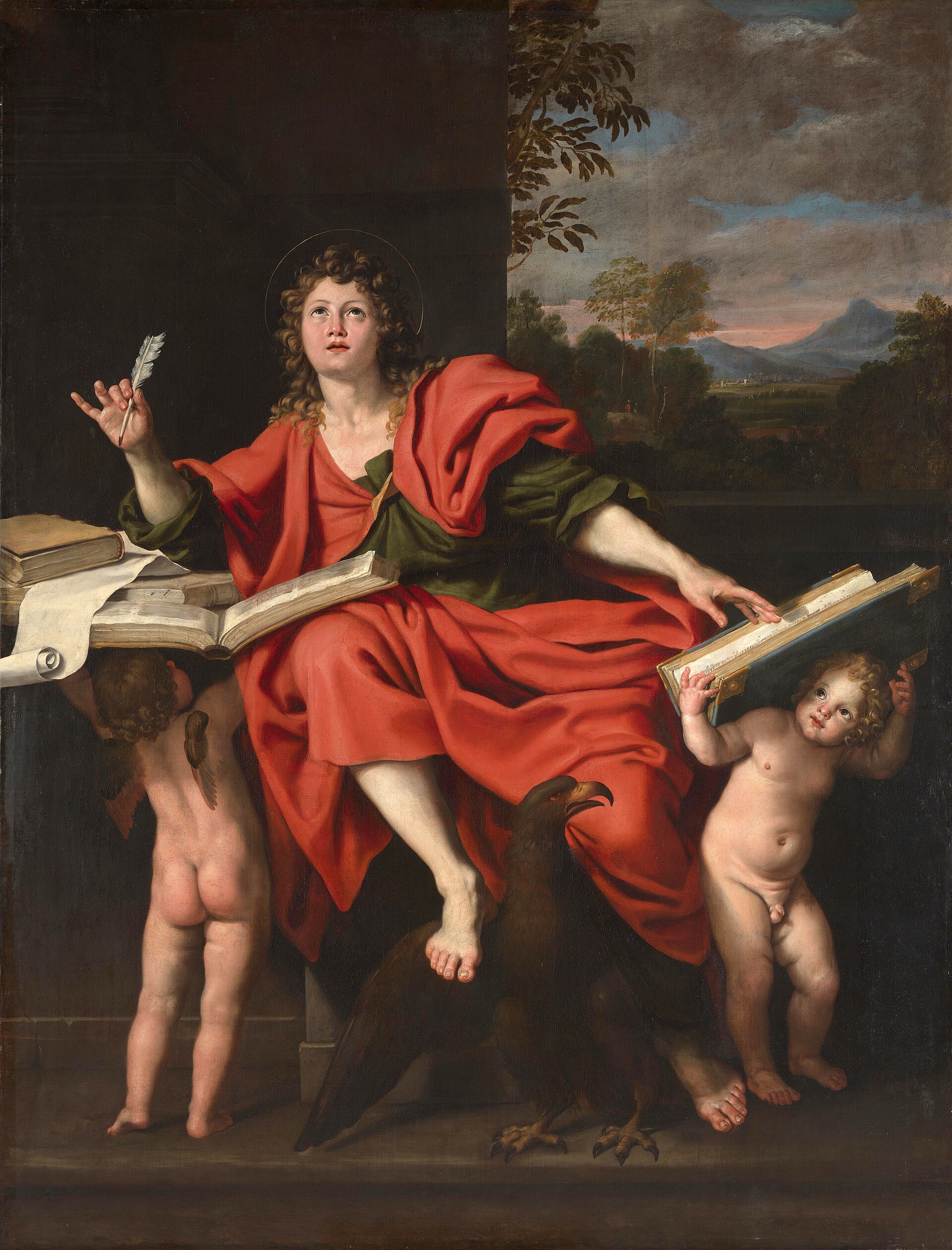
John
John never names himself in his own Gospel, but calls himself “the disciple whom Jesus loved” (13:23; 19:26; 20:2; 21:7, 20) — a fisherman from Galilee, one of the inner three at the Transfiguration and in Gethsemane, and, by the earliest Christian testimony, the last of the twelve apostles still living when he wrote. His Gospel reads nothing like the other three: no genealogy, no parables, no birth narrative, no Sermon on the Mount. In their place stand seven carefully chosen miracles John calls “signs,” seven great “I am” declarations spoken by Christ Himself, and long, intimate discourses — Nicodemus at night, the woman at the well, the upper room on the night of the betrayal — found nowhere else in Scripture. John states his own purpose outright, near the very end: “these are written, that ye might believe that Jesus is the Christ, the Son of God; and that believing ye might have life through His name” (20:31).
This series reads John chapter by chapter, immediately following this site’s own chapter-by-chapter studies of Matthew, Mark, and Luke — the fourth and final Gospel on this site. It opens not in Bethlehem, but before Bethlehem, before Eden, before time itself: “In the beginning was the Word, and the Word was with God, and the Word was God… All things were made by Him; and without Him was not any thing made that was made” (1:1, 3). Before John tells a single story of Jesus’s life on earth, he first identifies exactly who was walking through it — the very Architect of the universe, become flesh, and dwelling among the creatures His own hands had made.
List Of Articles
In The Beginning Was The Word
before a single parable or miracle, john identifies exactly who jesus is — not merely a teacher, but the eternal word by whose own hand every single thing that exists was made; ‘all things were made by him; and without him was not any thing made that was made’ — the architect of the universe, walking into the world his own hands had built
John 1This Beginning Of Miracles
at a wedding in a small galilean village, jesus performs his first public miracle — not a healing, just keeping a party from running out of wine; weeks later, in the most sacred building in the nation, he overturns tables and drives out an entire business with a whip of cords, and nobody in the crowd dares to stop him
John 2Except A Man Be Born Again
a respected religious leader comes to jesus after dark, careful none of his colleagues see him, and gets an answer that makes no sense at first — that being born once isn't enough; in the middle of that private, confused conversation, jesus says the words that would end up memorized by more children than any other sentence in the whole bible
John 3If Thou Knewest The Gift Of God
jesus sits down at a well at noon, tired and thirsty, and asks a samaritan woman for a drink — someone a jewish rabbi wasn't even supposed to speak to in public; within minutes he's told her everything she ever did, and she runs back to the very town she'd been avoiding to tell everyone about it
John 4Wilt Thou Be Made Whole
for thirty-eight years a paralyzed man has been lying beside a pool everyone believes has healing power, and never once been first into the water; jesus doesn't ask him to get there faster — he tells him to get up and walk; and when the religious leaders confront jesus for healing on the sabbath, his defense makes it worse: he says god is his own father
John 5I Am The Bread Of Life
after feeding five thousand people from a boy's lunch, the crowd tries to force jesus to become king by force; he slips away, and when they track him down the next day still thinking about free food, he tells them plainly that he himself is the only bread that will ever satisfy them — many of his own followers walk away for good the same day
John 6If Any Man Thirst
jesus's own brothers dare him to go prove himself publicly at the next big feast in jerusalem; he refuses, then goes anyway in secret, and on the festival's last and greatest day stands up in the temple and makes the boldest public invitation of his ministry yet — the officers sent to arrest him come back empty-handed, undone by his own words
John 7Before Abraham Was, I Am
a woman is dragged into the temple courtyard as a legal trap and jesus empties the accusers out with a single sentence written in the dust; hours later, cornered into comparing himself to abraham by furious religious leaders, he says the one sentence no created being could ever say about himself — and the crowd picks up stones
John 8One Thing I Know
a man born blind is healed with mud and a walk to a pool, and it should be the end of the story; instead it becomes an interrogation — neighbors, pharisees, his own frightened parents, then the pharisees again — and the healed man never wavers, even when it gets him thrown out of the synagogue: whereas i was blind, now i see
John 9I And My Father Are One
jesus tells the men who just excommunicated a healed blind man a story about sheep and shepherds, then says it plainly twice more: i am the door, i am the good shepherd; months later, cornered again at a different feast, he gives the religious leaders a straight answer, six words long, and it is the most direct claim to deity in the gospel so far
John 10I Am The Resurrection, And The Life
a man jesus loves falls sick, and jesus deliberately waits two days and lets him die, lets the body lie in a tomb four days, and only then comes — not to comfort the family, but to call a dead man by name; the sanhedrin's response to the miracle is to formally vote, for the first time, to have jesus killed
John 11Except A Corn Of Wheat Fall Into The Ground And Die
six days before the passover that will kill him, a woman pours a year's wages of perfume over jesus's feet, a crowd turns his entrance into jerusalem into a coronation, and when a few greek pilgrims ask simply to see him, he answers with a sentence about farming that turns out to be a description of his own death: unless a grain of wheat falls into the ground and dies, it stays just one grain, alone
John 12A New Commandment I Give Unto You
no servant is present to wash the disciples' dusty feet before supper, and not one of the twelve will lower himself to do it — they've spent the walk over arguing about which of them is the greatest; so jesus ties a towel around his own waist and does it himself, then within the hour identifies his own betrayer, hands him the bread that seals it, and watches him walk out into the dark
John 13I Am The Way, The Truth, And The Life
judas is gone, the door is shut, and jesus is alone with eleven frightened men who just heard him say he's leaving; he spends his last private hours with them on a promise instead — a place being prepared, a spirit being sent, a peace unlike anything the world hands out — and in the middle of it answers a confused question from thomas with the sixth of his seven great claims
John 14I Am The True Vine
walking toward gethsemane under a bright moon, jesus passes a flourishing grapevine and uses it for the seventh and last of his seven great 'i am' statements — not a palm or a cedar standing alone, but a vine that cannot climb an inch without something to hold onto; then he tells his disciples plainly that the same world which hated him without a cause is about to hate them too
John 15Be Of Good Cheer; I Have Overcome The World
jesus keeps warning his disciples about what's coming — synagogues that will expel them, a world that will hate them the way it hated him — and in the same breath keeps promising exactly the opposite: a comforter, a sorrow that flips into joy the way labor pains flip into the joy of a birth, and a peace strong enough to survive all of it; he ends with a claim that sounds almost absurd given what's about to happen to him in a few hours
John 16The Glory Which I Had With Thee Before The World Was
the upper room discourse ends in prayer, spoken aloud this time with eleven men close enough to hear every word; jesus prays first for himself, making the plainest statement anywhere in this gospel that he existed, glorified, before the world itself was made, then prays for the eleven, then — astonishingly — for every person who would ever come to believe because of their testimony
John 17My Kingdom Is Not Of This World
judas leads an armed mob straight to the garden he knows so well, and jesus meets them with two words that flatten the whole crowd to the ground before a single hand is laid on him; hours later, while peter warms himself by a fire and denies three times that he even knows the man, that same jesus stands bound in front of a roman governor and calmly explains exactly what kind of king he really is
John 18It Is Finished
pilate hands jesus over to be scourged, mocked, and crucified between two criminals, and nails a sign above his head in three languages that turns out to be the truest thing anyone says all chapter; a soldier's spear confirms he is already dead, and two secret disciples who never had the courage to follow him openly while he lived come forward, in broad daylight, to bury him like a king
John 19My Lord And My God
mary magdalene finds an empty tomb and mistakes the risen jesus for a gardener, until he says one word — her own name — and everything changes; behind locked doors he breathes new life into ten frightened men, and when the one skeptic who wasn't there demands proof, he gets it, and answers with the boldest, plainest confession of who jesus really is anywhere in the entire book
John 20Feed My Sheep
seven exhausted disciples fish all night and catch nothing, until a stranger on the shore tells them where to cast the net and it comes up too full to lift; over breakfast, jesus asks peter the same question three times — once for every time peter denied him — and each answer of love is met not with a scolding but with a job
John 21