Isaiah announces the ruin of an enemy nation and then cannot get through it without weeping. Twice he stops the oracle to say the grief is his own — and by chapter 16 it is unmistakably God’s. In the middle of the lament sits one verse about a throne, and an offer Moab could have taken.
A study in Isaiah 15-16 · Arthur Baldwin · StandUp4Jesus.Org · 18 min read
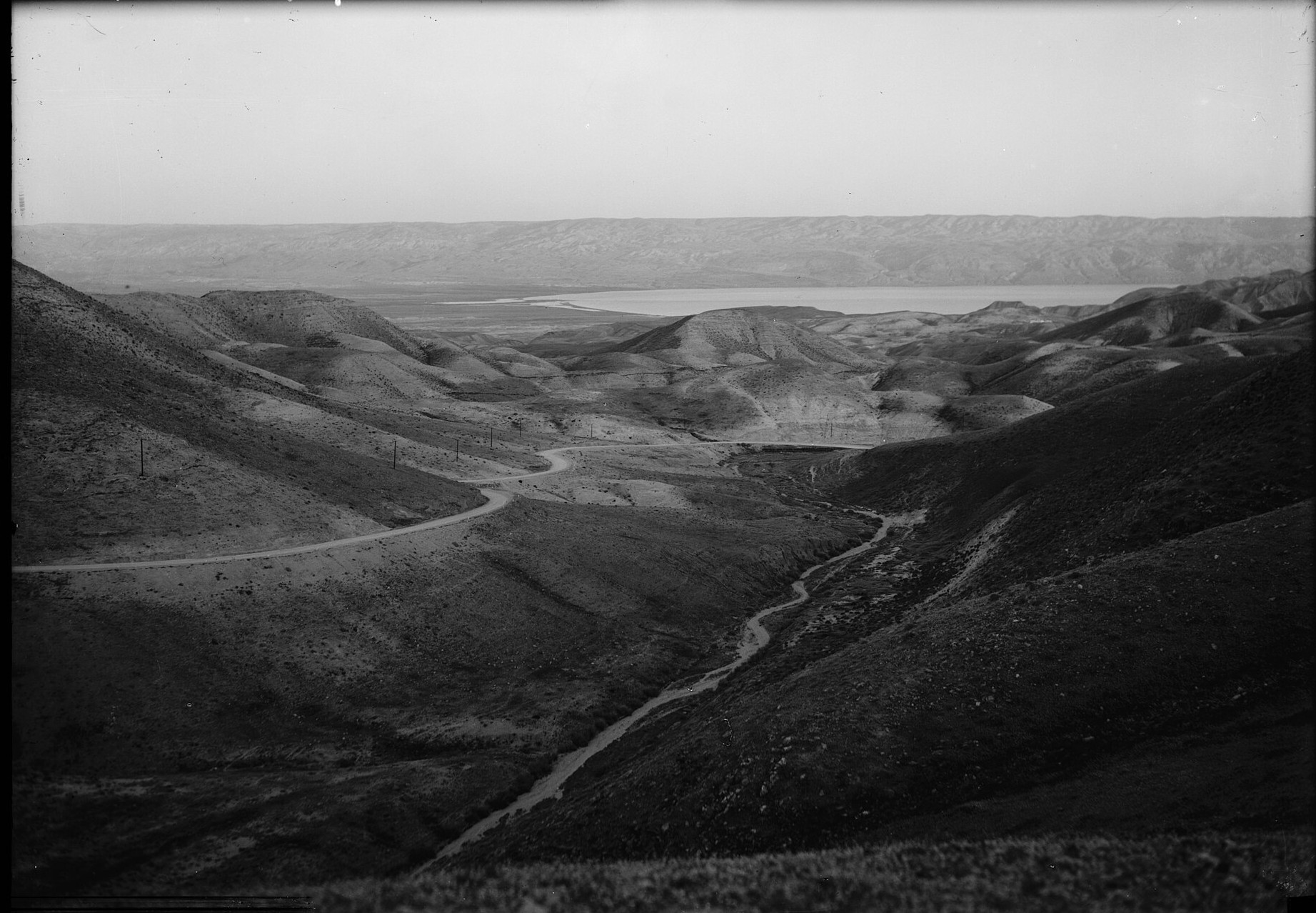
Table of Contents
The Burden Of Moab
The second oracle in Isaiah’s series against the nations is about the relatives.
Moab was not a distant empire. Moab was family, and the family history is an ugly one. Genesis records it without softening: after Sodom, Lot’s elder daughter bore a son, “and called his name Moab: the same is the father of the Moabites unto this day” (Genesis 19:37). Abraham’s nephew is the ancestor. The nation on Israel’s eastern border, across the Dead Sea and up on the tableland, was descended from the same household that came out of Ur.
And the relationship never settled. Moab hired Balaam against Israel; Moabite women drew Israel into the worship of Baal-peor; Eglon of Moab oppressed them in the days of the judges. The law carried a specific exclusion: “An Ammonite or Moabite shall not enter into the congregation of the LORD; even to their tenth generation” (Deuteronomy 23:3).
So when a Hebrew prophet takes up an oracle against Moab, his audience knows what to expect, and what they get is not it. Isaiah 15 and 16 contain more tears than any other oracle in this section of the book — and most of them are on the wrong side.
In The Night
“The burden of Moab. Because in the night Ar of Moab is laid waste, and brought to silence; because in the night Kir of Moab is laid waste, and brought to silence;”
Isaiah 15:1
The verse is built out of a repetition, and the repeated element is the timing. In the night. Twice.
Ar and Kir were the two principal cities, and the sentence on both is identical, which is the point — there was no gap between them, no news traveling ahead, no chance for the second city to prepare because the first had fallen. One night took both.
And the result named is not burning or slaughter but silence. Isaiah is describing what a place sounds like the morning after. This will matter by the end of chapter 16, because the last thing Moab loses is its noise: the shouting in the vineyards, the treaders in the winepresses, the harvest songs. The oracle begins with silence and spends thirty verses explaining what stopped.
On All Their Heads Shall Be Baldness
“He is gone up to Bajith, and to Dibon, the high places, to weep: Moab shall howl over Nebo, and over Medeba: on all their heads shall be baldness, and every beard cut off. In their streets they shall gird themselves with sackcloth: on the tops of their houses, and in their streets, every one shall howl, weeping abundantly.”
Isaiah 15:2, 3
Fourteen place names run through chapter 15, and the effect is deliberate. This is not a country being described in the abstract. It is a map, and Isaiah walks it — Dibon, Nebo, Medeba, Heshbon, Elealeh, Jahaz, Zoar, Luhith, Horonaim, Nimrim, Eglaim, Beer-elim, Dimon. Every one of them is a town where somebody lived.
Notice where the weeping happens: He is gone up to Bajith, and to Dibon, the high places, to weep. When the disaster came, Moab went up to its shrines. That is the most natural thing in the world and it is also the tragedy of the chapter, because the high places are exactly where the help is not. Isaiah will come back to this in 16:12 and close the whole oracle on it.
And the description of grief is physical and specific. Shaved heads, cut beards, sackcloth in the street, howling from the flat rooftops. Then one line that is worse than all of it: “therefore the armed soldiers of Moab shall cry out; his life shall be grievous unto him” (15:4). The soldiers are crying. And a man has reached the point where being alive is the thing he cannot bear.
My Heart Shall Cry Out For Moab
“My heart shall cry out for Moab; his fugitives shall flee unto Zoar, an heifer of three years old: for by the mounting up of Luhith with weeping shall they go it up; for in the way of Horonaim they shall raise up a cry of destruction.”
Isaiah 15:5
And there it is, in the middle of a judgment oracle: My heart shall cry out for Moab.
Stop and consider how strange this is. This is a prophet of Judah, writing about a hereditary enemy, delivering a message of ruin that he did not invent and cannot withdraw — and he breaks the poem to say that it is breaking him. He does not distance himself from the verdict. He does not defend it either. He simply reports that his heart is crying.
Whose heart? The text does not say, and the ambiguity is not a defect. In chapter 16 the same voice returns and it can only be one person: I will water thee with my tears, O Heshbon — and the God who says that is the one whose judgment this is.
This is worth sitting with, because it corrects something we are all prone to. It is easy to hold that God judges. It is easy, in a different mood, to hold that God is loving. Isaiah 15 holds both in the same sentence and does not experience them as a contradiction requiring management. The judgment is real, it is deserved, it is announced — and the one announcing it is in tears while He does it.
The detail about Zoar is quietly perfect, too. Zoar is where the fugitives run — and Zoar is the little town Lot begged for when he fled Sodom, the one place that was spared so he would have somewhere to go. More than a thousand years of Moabite history later, his descendants are running to the same refuge.
Send Ye The Lamb
“Send ye the lamb to the ruler of the land from Sela to the wilderness, unto the mount of the daughter of Zion.”
Isaiah 16:1
Chapter 16 opens with counsel, and it is the only piece of practical advice in the whole oracle.
The background is in Kings. “And Mesha king of Moab was a sheepmaster, and rendered unto the king of Israel an hundred thousand lambs, and an hundred thousand rams, with the wool” (2 Kings 3:4). Moab paid its tribute in livestock, and when Ahab died Mesha stopped paying. Isaiah’s counsel to a nation about to be destroyed is: start again. Send the lamb.
It is a political instruction — submit to Jerusalem rather than trusting your fortresses — and it is more than that. The destination is named twice over: the ruler of the land, and the mount of the daughter of Zion. Isaiah is not merely recommending a treaty. He is telling Moab where the real throne is.
And a lamb sent up to Zion is not a neutral image in this book. Everything in that city ran on lambs; the whole sacrificial system was an arrangement of them. Moab is being told to bring the one thing that had ever reconciled anybody to that God, and to bring it to the one place He had put His name. Whether Moab understood the second meaning is doubtful. Isaiah, who will write chapter 53, understood it perfectly.
Hide The Outcasts
“Take counsel, execute judgment; make thy shadow as the night in the midst of the noonday; hide the outcasts; bewray not him that wandereth. Let mine outcasts dwell with thee, Moab; be thou a covert to them from the face of the spoiler”
Isaiah 16:3, 4
The second instruction is stranger than the first, and far more generous.
God asks Moab for asylum. Not for tribute this time — for shelter. Let mine outcasts dwell with thee. When the Assyrian comes through and Judah’s people are running, Moab is being asked to take them in and not give them up. Bewray not him that wandereth means do not betray the fugitive, do not point when the soldiers ask.
And the image for it is one of the loveliest lines in Isaiah: make thy shadow as the night in the midst of the noonday. In that country shade is not a comfort, it is survival. Be so deep a shadow, God says, that a hunted man standing in you is as hidden as if it were midnight, while the sun is directly overhead.
That is the request. And notice what it does to the shape of the oracle: the doomed nation is being offered something to do. The judgment of chapter 15 is not the last word; there is an opening in chapter 16, and it is an opportunity to show mercy to the people whose God has just sentenced them.
Moab Had Done This Once Before
And this is the detail that turns the whole oracle from a courtesy into an appeal, because Moab had already done exactly this, once, for the most important refugee in Israel’s history.
“And David went thence to Mizpeh of Moab: and he said unto the king of Moab, Let my father and my mother, I pray thee, come forth, and be with you, till I know what God will do for me. And he brought them before the king of Moab: and they dwelt with him all the while that David was in the hold.”
1 Samuel 22:3, 4
David, hunted by Saul and living in a cave, could not protect his elderly parents. So he took them across the Dead Sea and asked the king of Moab to keep them, and the king of Moab did — for as long as it took.
Why Moab? Because David’s great-grandmother was a Moabite woman, and everybody involved knew it. Ruth had come back from that country with Naomi, saying “thy people shall be my people, and thy God my God” (Ruth 1:16), and the child eventually born in that household was “Obed: he is the father of Jesse, the father of David” (Ruth 4:17). David was asking his own relatives, and they said yes.
So read Isaiah 16:3 again with that in the room. Hide the outcasts. Be thou a covert to them. God is not asking Moab to do something unprecedented and against its nature. He is asking Moab to do again the one genuinely good thing it is recorded as having done — and the outcasts in question are the descendants of the man whose parents Moab once sheltered.
And In Mercy Shall The Throne Be Established
“And in mercy shall the throne be established: and he shall sit upon it in truth in the tabernacle of David, judging, and seeking judgment, and hasting righteousness.”
Isaiah 16:5
Here is the center of the oracle, and it arrives without warning in the middle of a lament for a foreign country.
Every phrase is deliberate. In mercy shall the throne be established — not by conquest, not by succession, not by the consent of the powers. Mercy is the foundation the throne rests on, which is the reverse of every throne Isaiah has described so far; the king of Babylon wanted a seat and got a pit, and the men of chapter 10 wrote statutes to take judgment away from the poor.
In the tabernacle of David. Not the palace — the tent. Isaiah reaches past the whole royal establishment to the shepherd’s beginnings, exactly as he reached past David to Jesse in chapter 11.
And then three participles that describe a working day: judging, and seeking judgment, and hasting righteousness. He judges — that is the job. He seeks judgment, which means He goes looking for the cases nobody brought Him, the wrongs that never made it onto a docket. And He is hasting righteousness: He is in a hurry to put things right. Anyone who has waited on a slow court, or a slow church, knows how rare that third word is.
Now put the verse where Isaiah put it. This promise is held out to Moab, in the middle of Moab’s funeral, immediately after Moab is asked to shelter God’s refugees. The offer is not merely survival. It is a share in a kingdom — and the throne in question belongs to the house of a man with a Moabite great-grandmother. Isaiah is telling Moab that the door into that kingdom has a Moabite name on the hinge already.
We Have Heard Of The Pride Of Moab
“We have heard of the pride of Moab; he is very proud: even of his haughtiness, and his pride, and his wrath: but his lies shall not be so.”
Isaiah 16:6
And that is the answer. One verse, and the offer closes.
Isaiah does not say Moab refused. He says something more damning: the refusal was so predictable that it did not need reporting. We have heard of the pride of Moab. The reputation preceded the request, and the request never had a chance against it.
Count the words piled up in one sentence — pride, very proud, haughtiness, his pride again, and his wrath. Isaiah is not being redundant; he is imitating the thing. This is what pride sounds like from outside: the same note repeated until there is no room for anything else in the sentence.
And it is the same fault as two chapters ago, only smaller. The five “I wills” of chapter 14 were pride at the scale of heaven. This is pride at the scale of a hill country with fourteen towns in it, and it produces the identical result. A nation that could have had a covert’s share in an everlasting throne would not take shelter under an obligation, because taking shelter would have meant admitting it needed one.
But his lies shall not be so. Whatever Moab was telling itself about its position, the facts were not going to cooperate.
I Will Water Thee With My Tears
“Therefore I will bewail with the weeping of Jazer the vine of Sibmah: I will water thee with my tears, O Heshbon, and Elealeh: for the shouting for thy summer fruits and for thy harvest is fallen. And gladness is taken away, and joy out of the plentiful field; and in the vineyards there shall be no singing, neither shall there be shouting… Wherefore my bowels shall sound like an harp for Moab, and mine inward parts for Kir-haresh.”
Isaiah 16:9-11
The offer has been refused, the pride has been named, the judgment stands — and this is where the weeping gets heavier, not lighter.
I will water thee with my tears. The vineyards of Moab were famous, and the image works the way irrigation works: the fields that used to be watered for a harvest are now watered by grief, and nothing will come up.
Read carefully what is actually mourned. Not the fortresses, not the army, not the treasury. The shouting. The noise people make bringing in a harvest, the singing in the vineyards, the rhythm the treaders kept in the winepress. God itemizes what He is losing, and the list is entirely made of ordinary human happiness.
Then verse 11, which is the most physical sentence in the oracle: my bowels shall sound like an harp for Moab. The Hebrew locates emotion in the gut, where we locate it in the heart, and the image is of strings under tension being struck. It is the sound a man makes when grief has got hold of him below the level of speech — a low vibration he did not choose and cannot stop.
Whatever else is true about the God of the Old Testament, this is on the record: over an enemy nation, justly condemned, having refused a direct offer of mercy, He grieves like a struck harp. Ezekiel will put the same thing as a question — “Have I any pleasure at all that the wicked should die?” (Ezekiel 18:23). Isaiah puts it as a sound.
Weary On The High Place
“And it shall come to pass, when it is seen that Moab is weary on the high place, that he shall come to his sanctuary to pray; but he shall not prevail.”
Isaiah 16:12
This is the saddest verse in the two chapters, and it is easy to read past.
Moab prays. That is the first thing to see. This is not a nation that gave up on religion; it is a nation that worked at it. Weary on the high place — worn out with going up. The climbing, the offerings, the ceremonies at the shrine of Chemosh, kept up faithfully right through the disaster until the worshippers were exhausted.
And then: he shall not prevail.
Not because the prayers were insincere. Not because God refuses to hear a Moabite — the whole of chapter 16 has just been God asking Moab for something and offering Moab a throne. The prayers do not prevail because of where they were taken. Chapter 15 opened with Moab going up to the high places to weep, and chapter 16 closes with Moab still there, still weeping, still climbing, and still addressing a god who is not there.
Verse 1 had already given the address. Send ye the lamb to the ruler of the land… unto the mount of the daughter of Zion. There was a mountain to go up, and it was not that one. The tragedy of Moab is not irreligion. It is enormous religious effort, expended uphill, in the wrong direction — and there is no reason for a modern reader to feel safe from that particular failure.
Within Three Years
“This is the word that the LORD hath spoken concerning Moab since that time. But now the LORD hath spoken, saying, Within three years, as the years of an hireling, and the glory of Moab shall be contemned, with all that great multitude; and the remnant shall be very small and feeble.”
Isaiah 16:13, 14
The oracle ends with a postscript in prose, and it does two things.
First it distinguishes between an old word and a new one. The poem was the word that the LORD hath spoken concerning Moab since that time — the standing prophecy, undated. But now the LORD hath spoken attaches a clock to it. Isaiah is being careful about his own material, and it is a mark of an honest prophet that he tells you which part of the message is which.
Second, the measurement: within three years, as the years of an hireling. A hired man is paid at the end of his term and counts the days to it, so his years are exact ones — not three years roughly, but three years as a laborer reckons three years. Isaiah is refusing himself any room to be nearly right.
And the outcome is stated flatly. The remnant shall be very small and feeble. A remnant survives, which is more than nothing; Isaiah never quite closes a door. But there is no promise attached to this one, and Moab as a power in that country ends.
The Door That Was Never Shut
There is a last thing to say, and it is the reason this oracle is in a Christian Bible rather than an archive of ancient grievances.
The law had said an Ammonite or Moabite shall not enter into the congregation of the LORD. And the book of Ruth, which every Israelite read, is the account of a Moabite woman who did — who left Moab, attached herself to Naomi’s God in one of the most quoted sentences in Scripture, married in Bethlehem, and had a son. Scripture then puts her name in the royal genealogy without a word of explanation, and Matthew puts it in the first page of the New Testament: “Booz begat Obed of Ruth; and Obed begat Jesse” (Matthew 1:5).
Ellen White states the principle plainly, and she names the two women everybody would have said were furthest outside: “All who, like Rahab the Canaanite and Ruth the Moabitess, turned from idolatry to the worship of the true God were to unite themselves with His chosen people” (Prophets and Kings, p. 19). A Canaanite from Jericho and a Moabite from across the Dead Sea — and both of them are in the ancestry of Christ.
So the exclusion in Deuteronomy is about a nation and its standing, and it never was a statement about what God would do with a Moabite who came. The door for the individual was open the entire time, and the record of one woman walking through it was already written centuries before Isaiah delivered this oracle.
Which is what makes chapters 15 and 16 so heavy. Moab is not being destroyed because there was no way in. There was a way in, there was a Moabite already inside and honored, there was an invitation delivered by a prophet in tears, there was a lamb to send and a road to send it up, and there was a throne established in mercy at the end of it. What Moab could not do was go up the right mountain.
And the man who would one day sit on that throne, judging, and seeking judgment, and hasting righteousness, had Moabite blood in His genealogy — which Isaiah, weeping over the ruin of that country, could not have known, and which we cannot read chapter 16 without knowing.
