A frightened king is offered a sign — anything he likes, as deep or as high as he can imagine — and turns it down in the most religious language available. What God gives him instead is the verse the whole world sings at Christmas, and it was first spoken as a rebuke.
A study in Isaiah 7-9 · Arthur Baldwin · StandUp4Jesus.Org · 16 min read
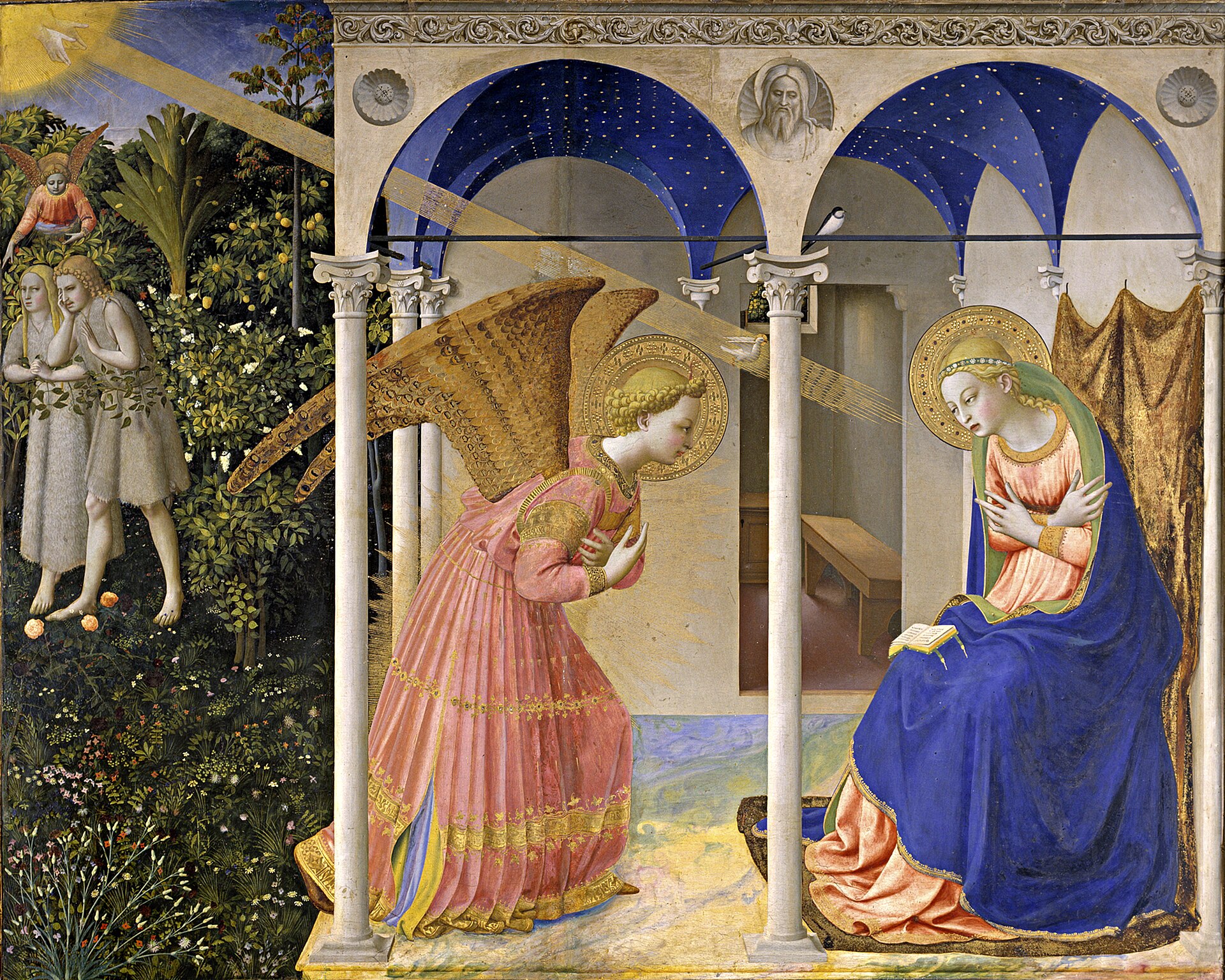
Table of Contents
A King Who Had Already Decided
Two small kingdoms to the north have made an alliance and are marching on Jerusalem to depose the house of David and install a puppet. Judah’s king is Ahaz, and the report reaches him with an image nobody forgets:
“And it was told the house of David, saying, Syria is confederate with Ephraim. And his heart was moved, and the heart of his people, as the trees of the wood are moved with the wind.”
Isaiah 7:2
A forest in a gale. Not one frightened man but a whole nation swaying together, and nothing standing still.
Into that God sends Isaiah with a message that is almost blunt: the alliance will fail, both kings will be gone shortly, take heed and be quiet. And then the condition on which everything turns:
“If ye will not believe, surely ye shall not be established.”
Isaiah 7:9
What Ahaz does next is the hinge of these three chapters, and Ellen White states it without softening:
“Well would it have been for the kingdom of Judah had Ahaz received this message as from heaven. But choosing to lean on the arm of flesh, he sought help from the heathen.”
Ellen G. White · Prophets and Kings, p. 329
He had already sent to Tiglath-pileser of Assyria — I am thy servant and thy son: come up, and save me — with a rich present out of the temple treasury. The help came, and Judah got temporary relief. It also taught Assyria exactly how much Judah was worth, and that lesson would cost the nation everything.
The Most Pious Refusal In Scripture
Knowing all this, God makes Ahaz an offer that has no parallel anywhere else in the Bible:
“Ask thee a sign of the LORD thy God; ask it either in the depth, or in the height above.”
Isaiah 7:11
Anything. Name it — as deep as the grave or as high as heaven. God is not asking this king to walk by bare faith; He is offering to remove every excuse a frightened man could have.
“But Ahaz said, I will not ask, neither will I tempt the LORD.”
Isaiah 7:12
Read that on its own and it is a model of reverence. He is quoting Deuteronomy. He sounds like the most careful believer in the room — a man too humble to presume on God.
It is a lie, and Isaiah knows it. Ahaz will not ask because he does not want an answer. A sign from God would settle the question, and the question was already settled — the messengers were on the road to Assyria. Piety was the cheapest way to keep the door shut.
The prophet’s reply drops the courtesies:
“Hear ye now, O house of David; Is it a small thing for you to weary men, but will ye weary my God also?”
Isaiah 7:13
This is worth sitting with, because it is the most transferable thing in the chapter. Refusing God in religious language is still refusing God, and it is the form the refusal usually takes among people who know their Bibles. Ahaz did not shake his fist. He quoted a text.
The Sign Given Anyway
“Therefore the Lord himself shall give you a sign; Behold, a virgin shall conceive, and bear a son, and shall call his name Immanuel.”
Isaiah 7:14
Notice the therefore. The most beloved verse in the book arrives as a consequence of a king’s unbelief — since you will not ask, the Lord Himself will choose.
And notice who it is addressed to. Verse 11 says “thy God” to Ahaz personally; verse 13 turns and addresses the house of David. The sign is no longer for the king. It is for the dynasty — the line through which the promise runs, which Syria and Ephraim were marching to extinguish. A faithless king cannot forfeit what God swore to David.
The chapter then gives a near-term marker: before the child is old enough to tell right from wrong, both the kings Ahaz fears will be gone (verse 16). That happened within a few years. Prophecy in Isaiah frequently works this way — a nearer fulfillment that could be checked in a lifetime, standing over a further one that could not. The first is God’s receipt on the second.
About That Word ‘Virgin’
This verse is attacked more than almost any other, and the objection deserves a straight answer rather than a nervous one.
The Hebrew word is almah, which means a young woman of marriageable age. There is another Hebrew word, bethulah, which speaks of virginity more narrowly. Critics conclude that Isaiah promised nothing more than a young woman having a baby, and that Matthew read a miracle into an ordinary sentence.
Three things answer that.
- The usage. Almah is never used in the Old Testament of a married woman. In that culture the young unmarried woman it describes was assumed to be a virgin; the word carries the assumption without being a technical term for it.
- The Septuagint. Jewish scholars translating Isaiah into Greek roughly two centuries before Christ rendered almah here as parthenos — which does mean virgin, unambiguously. They had no Christian argument to serve. That is the strongest evidence there is, and it is pre-Christian.
- The logic of a sign. God has just offered a wonder as deep as the grave or as high as heaven. A young woman conceiving in the usual way is not a sign of anything; it happens continually. Whatever the word alone would bear, the context demands something no one could mistake for ordinary.
Matthew was not straining the Hebrew. He was reading it the way Greek-speaking Jews had read it for two hundred years.
The Name Is The Doctrine
Immanuel — God with us. Three words in English, one in Hebrew, and the entire incarnation folded inside it.
Not God above us, which every religion grants. Not God against us, which the guilty conscience assumes. Not even God for us, which is true but can be managed at a distance. With. In the room. In the flesh. Sharing the weather.
And it was given to a generation about to be overrun by Assyria. The name is not a promise of rescue from trouble. It is a promise of company in it — which is a harder gift to want and a better one to have.
A Sanctuary, Or A Stone To Trip Over
Chapter 8 presses the same person from the other side, and the sentence is one of the most searching in Isaiah:
“And he shall be for a sanctuary; but for a stone of stumbling and for a rock of offence to both the houses of Israel.”
Isaiah 8:14
The same stone. Not two objects — one, met two ways. To the man who takes refuge in Him He is a sanctuary; to the man walking his own road in the dark He is the thing in the path that brings him down.
Peter and Paul both quote this of Christ, and it explains something that otherwise puzzles readers of the Gospels: how the same ministry produced worship in some and fury in others. Christ is not neutral ground. Nobody meets Him and stays where they were.
Or Would You Rather Ask The Dead?
Then Isaiah names the alternative, and it is not atheism. Frightened people do not stop being religious; they go looking for another door.
“And when they shall say unto you, Seek unto them that have familiar spirits, and unto wizards that peep, and that mutter: should not a people seek unto their God? for the living to the dead?”
Isaiah 8:19
Set that beside Immanuel and the irony is complete. God has just announced that He is coming to be with us — and the counsel on offer is to consult the dead instead.
The question for the living to the dead? assumes something the whole passage rests on: the dead are not available for consultation, because they are not awake. Whatever answers the wizards produce, they are not coming from Grandmother. This is the seed of a subject Scripture develops at length — and one of the few places the Bible pauses to say plainly that the traffic between the living and the dead is a fraud with a supernatural source.
To The Law And To The Testimony
And in the very next breath, the test:
“To the law and to the testimony: if they speak not according to this word, it is because there is no light in them.”
Isaiah 8:20
The placement is everything. This is not a general remark about Bible study dropped in at random. It is the answer to the wizards. When a voice offers you guidance — a spirit, a vision, a miracle, a messenger, a movement — you do not test it by how convincing it feels. You take it to the law and the testimony.
“By their testimony every statement and every miracle must be tested.”
Ellen G. White · The Great Controversy, p. 593
Every miracle. Not only every doctrine. A wonder that contradicts Scripture is not evidence for the wonder-worker; it is evidence against him. That is a strange rule to modern ears and an indispensable one, and it was written for a people who were about to be offered a great many impressive alternatives.
And Then The Light
Chapter 8 ends in darkness — trouble, dimness, driven to anguish. And then, without transition:
“The people that walked in darkness have seen a great light: they that dwell in the land of the shadow of death, upon them hath the light shined.”
Isaiah 9:2
And the geography is not general. Chapter 9 verse 1 names Zebulun and Naphtali, Galilee of the nations — the northern territory, the first to be overrun, the furthest from the temple, the part of the country the sophisticated south later sneered at.
That is where He grew up, and where most of the ministry happened. The light was promised to the district with the worst reputation and the longest experience of invasion, seven hundred years before a carpenter’s son walked out of Nazareth.
Then the child, and the names — and this is the verse Handel put in the loudest place in the whole oratorio:
“For unto us a child is born, unto us a son is given: and the government shall be upon his shoulder: and his name shall be called Wonderful, Counsellor, The mighty God, The everlasting Father, The Prince of Peace.”
Isaiah 9:6
Born, and given. The child is born because He is truly human; the Son is given because He already existed to be given. One verse, both natures, no strain.
And The mighty God — El Gibbor, the same title used of the LORD Himself in the next chapter. Whatever else Isaiah thought he was describing, he was not describing a good man.
The chapter closes on the guarantee, and it is not our steadiness: the zeal of the LORD of hosts will perform this. Ahaz would not believe, and it was performed anyway. That is the comfort at the end of a passage about a king who refused a sign — the promise never rested on him, and it does not rest on us.
