Four chapters in the middle of Isaiah stop naming nations and describe the end of the world — the earth emptied, the law changed, the wicked shut in a pit for many days, death swallowed up, and the dead singing. Revelation quotes them repeatedly.
A study in Isaiah 24-27 · Arthur Baldwin · StandUp4Jesus.Org · 17 min read
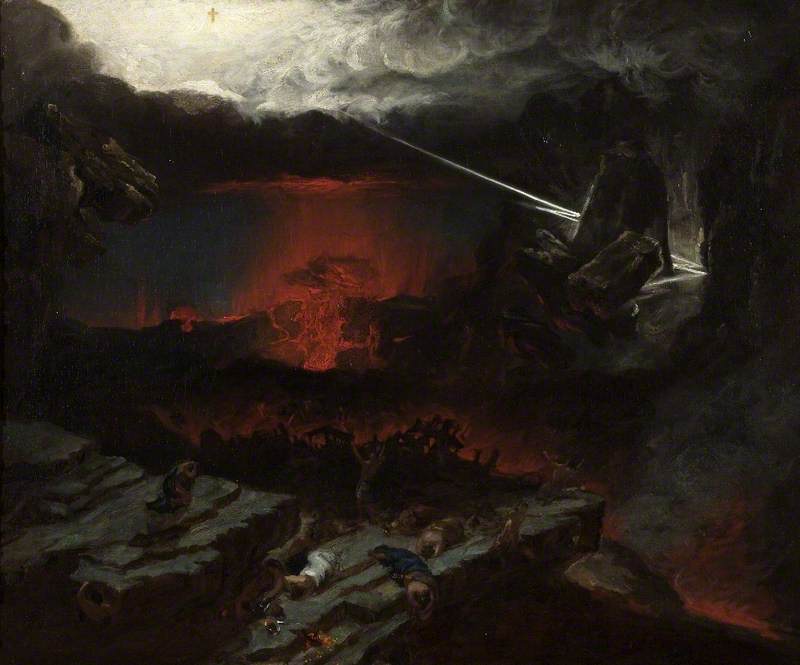
Table of Contents
Where The Oracles Stop Naming Names
Chapters 13 through 23 are a series of judgments on named nations — Babylon, Moab, Damascus, Egypt, Tyre. Each one is specific, datable, and about somebody in particular.
Then chapter 24 opens and the names stop. There is no nation in it. The subject is the earth, a word that beats through these chapters like a drum, and what happens to it is not defeat in war. It is unmaking.
These four chapters have been called Isaiah’s Little Apocalypse for a long time, and the label is fair. They contain, in a few pages, an outline of the end that Revelation will later fill in — and quote.
The Earth Turned Upside Down
“Behold, the LORD maketh the earth empty, and maketh it waste, and turneth it upside down, and scattereth abroad the inhabitants thereof.”
Isaiah 24:1
Ellen White opens her chapter on the crisis ahead with this passage, and the framing is worth having:
“They observe the intensity that is taking possession of every earthly element, and they recognize that something great and decisive is about to take place—that the world is on the verge of a stupendous crisis. The Bible, and the Bible only, gives a correct view of these things.”
Ellen G. White · Prophets and Kings, p. 537
The description gets more violent as the chapter goes:
“The earth is utterly broken down, the earth is clean dissolved, the earth is moved exceedingly. The earth shall reel to and fro like a drunkard, and shall be removed like a cottage; and the transgression thereof shall be heavy upon it; and it shall fall, and not rise again.”
Isaiah 24:19, 20
Removed like a cottage — a temporary shelter struck and carried off, the way a watchman’s hut is taken down when the harvest ends. And the reason given is not geology. The transgression thereof shall be heavy upon it. The planet is described as staggering under a weight, and the weight is moral.
Three Counts In One Verse
“The earth also is defiled under the inhabitants thereof; because they have transgressed the laws, changed the ordinance, broken the everlasting covenant.”
Isaiah 24:5
Three charges, and they escalate. Transgressed the laws — breaking what you acknowledge. Changed the ordinance — altering the standard itself. Broken the everlasting covenant — repudiating the relationship.
The middle charge is the one Adventists have read for a century and a half as pointing at the change of the Sabbath, and Ellen White quotes the verse in exactly that setting. The application is sound, and it should be stated accurately rather than overstated.
What the verse says plainly is that humanity did not merely break God’s law — it edited it, and that this is a distinct and worse offense than transgression. What the verse does not do is name the fourth commandment. It is a universal indictment, and it is stated broadly enough to cover every human attempt to revise a standard we did not set. The Sabbath is the clearest historical instance of exactly the crime described. That is a strong argument. Presenting it as though Isaiah wrote the word “Sabbath” here is a weaker one, and a reader who checks will notice.
Prisoners In The Pit, Many Days
“And it shall come to pass in that day, that the LORD shall punish the host of the high ones that are on high, and the kings of the earth upon the earth. And they shall be gathered together, as prisoners are gathered in the pit, and shall be shut up in the prison, and after many days shall they be visited.”
Isaiah 24:21, 22
This is one of the most structurally important passages in the Old Testament and it is easy to read past.
Two groups are punished: the host of the high ones that are on high — a heavenly company — and the kings of the earth upon the earth. Then both are shut up. And then, crucially, there is an interval. They are not destroyed at once. They are confined, and after many days shall they be visited — the word carries the sense of a reckoning that comes later.
Confinement, a long gap, and then a final visitation. Ellen White cites this verse when describing that interval:
“And Isaiah declares, concerning the wicked: ‘They shall be gathered together, as prisoners are gathered in the pit, and shall be shut up in the prison…’”
Ellen G. White · The Great Controversy, p. 661
Whatever else one concludes, the shape is here in Isaiah long before Revelation 20: judgment does not arrive as a single instantaneous event. There is a holding, and there is a later accounting.
A Feast, And A Veil Destroyed
Chapter 24 ends in ruin. Chapter 25 opens with a banquet — and the abruptness is the point.
“And in this mountain shall the LORD of hosts make unto all people a feast of fat things… And he will destroy in this mountain the face of the covering cast over all people, and the vail that is spread over all nations.”
Isaiah 25:6, 7
Unto all people. The same universality as the emptied earth, now working the other way — everyone was under the judgment, and everyone is invited to the table.
The veil is the harder image, and the better one. A covering cast over all people: something laid across the whole race that keeps it from seeing. It is not destroyed by teaching. It is destroyed, and the destroying happens on the same mountain as the feast.
He Will Swallow Up Death
“He will swallow up death in victory; and the Lord GOD will wipe away tears from off all faces; and the rebuke of his people shall he take away from off all the earth: for the LORD hath spoken it.”
Isaiah 25:8
Death does not merely stop. It is swallowed — consumed by something larger, taken into a victory rather than negotiated with.
Paul reaches for this verse at the climax of his resurrection chapter, where it becomes Death is swallowed up in victory — and he sets it precisely at the trumpet, when the dead are raised. John reaches for the next clause at the very end of the Bible, where God wipes away all tears and there is no more death.
One Old Testament verse, quoted at both of the New Testament’s two great endings. And notice the small, human clause between them, which neither apostle needed to improve on: the Lord GOD will wipe away tears from off all faces. Not abolish tears in the abstract. Wipe them off faces — a gesture you would use on a child.
We Have Waited For Him
“And it shall be said in that day, Lo, this is our God; we have waited for him, and he will save us: this is the LORD; we have waited for him, we will be glad and rejoice in his salvation.”
Isaiah 25:9
Said twice in one verse: we have waited for him. Isaiah does not repeat himself carelessly.
This is the sentence of a people who have been mocked for expecting something, and who are not, in the moment of vindication, saying we were right. They are saying this is our God — the emphasis falls on Him, not on the accuracy of their expectation. Any people who have spent a long time waiting should read that carefully. The reward of waiting is not being proved correct. It is the arrival of a Person.
Awake And Sing, Ye That Dwell In Dust
“Thy dead men shall live… Awake and sing, ye that dwell in dust: for thy dew is as the dew of herbs, and the earth shall cast out the dead.”
Isaiah 26:19
This is one of the clearest resurrection statements in the Old Testament, and every phrase in it is worth slowing over.
Ye that dwell in dust. That is where Scripture consistently locates the dead — not in bliss awaiting an upgrade, and not in torment. In the dust, asleep, until they are called. The command given to them is not come down. It is awake.
And the first thing they do is sing. Not blink, not stagger, not adjust. Sing.
A note on the verse. The middle clause in the King James — together with my dead body shall they arise — is difficult, and most translations render it along the lines of my dead bodies shall rise. The resurrection itself is not in doubt in any reading; the difficulty is confined to that one phrase, and it is better to say so than to build anything on it.
Enter Thou Into Thy Chambers
“Come, my people, enter thou into thy chambers, and shut thy doors about thee: hide thyself as it were for a little moment, until the indignation be overpast. For, behold, the LORD cometh out of his place to punish the inhabitants of the earth for their iniquity.”
Isaiah 26:20, 21
The Passover is behind this — a people indoors, doors shut, while judgment passes through outside. Ellen White uses the verse for the final crisis, as Christ’s word to His own in the day of trouble.
Two details keep it from being grim. It is a little moment — bounded, and short by the measure of the One saying it. And the invitation begins Come, my people. The hiding is not the believer’s own frantic improvisation. It is arranged, and it is offered.
What Revelation Borrowed
Set these four chapters beside the last book of the Bible and the debt is unmistakable.
- Death swallowed up, tears wiped away (25:8) — reappears at the end of Revelation, almost word for word.
- The sun ashamed and the moon confounded because the LORD reigns (24:23) — a city that needs no sun, for the glory of God lightens it.
- Leviathan, the piercing serpent, the dragon in the sea (27:1) — the dragon, that old serpent.
- Shut up in the prison, visited after many days (24:22) — the binding, the thousand years, and the loosing.
- The great trumpet blown and the outcasts gathered (27:13).
Which is worth saying plainly to anyone who finds Revelation impenetrable: it is largely built out of the Old Testament, and Isaiah 24 to 27 is one of its quarries. A reader who knows these four chapters is not guessing when John reaches for a dragon or a trumpet or a city without a sun. They have met them before.
Lo, this is our God; we have waited for him.
