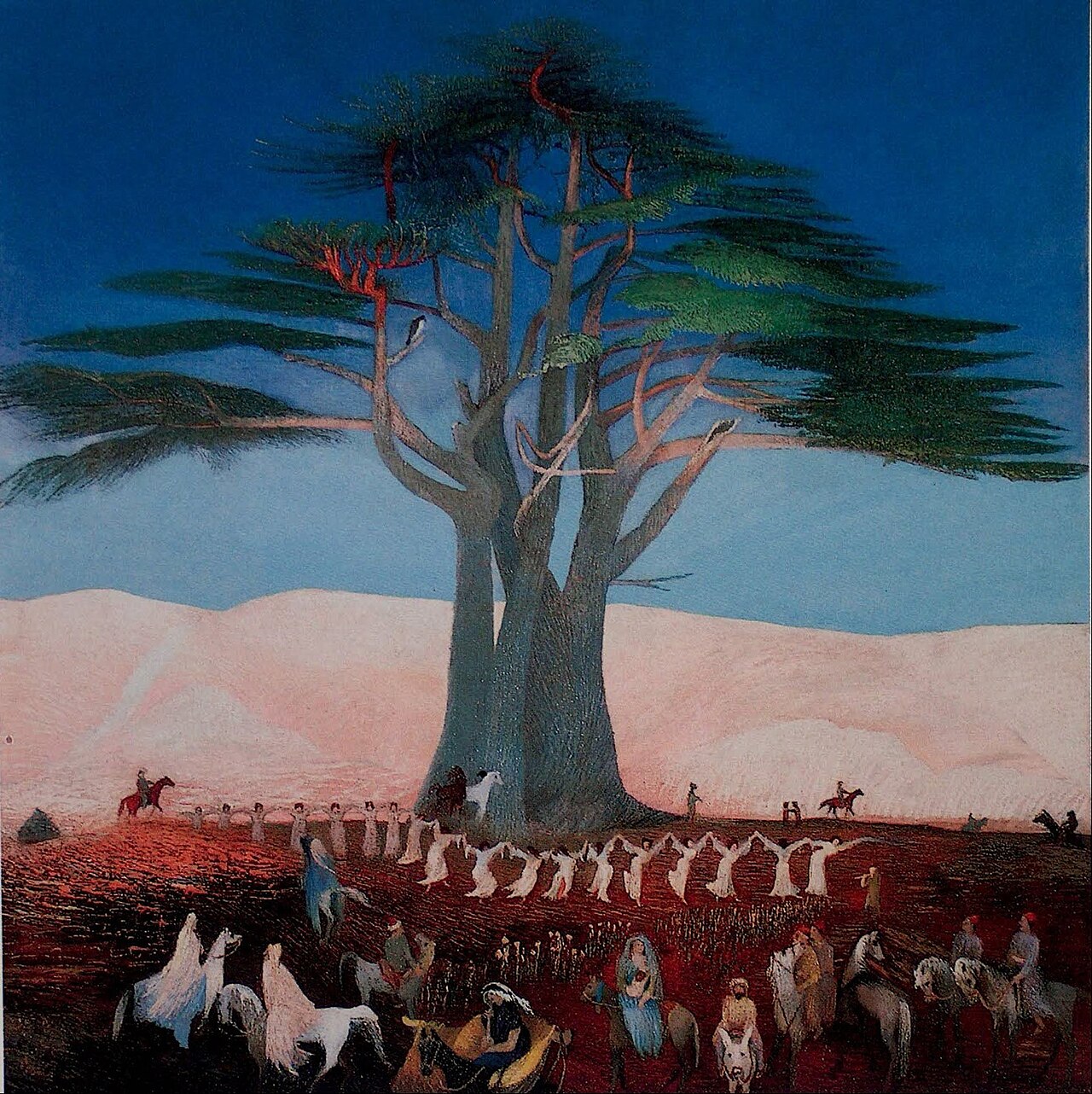
Three pictures in a row — a worthless vine, an abandoned baby God raised and married, and two great eagles fighting over a tree. And at the end of it, God plants something Himself.
A Bible study on Ezekiel 15–17 · Arthur Baldwin · StandUp4Jesus.Org · 14 min read
Table of Contents
Chapter 16 is the longest chapter in Ezekiel and one of the most uncomfortable in the Bible. It is also, read to the end, one of the most tender. Between a short parable about firewood and a riddle about eagles, God tells the story of His own marriage — and does not spare Himself the telling of it.
A Vine Is Good For One Thing
Chapter 15 is eight verses long and consists almost entirely of a question:
“Son of man, What is the vine tree more than any tree, or than a branch which is among the trees of the forest? Shall wood be taken thereof to do any work? or will men take a pin of it to hang any vessel thereon?”
Ezekiel 15:2, 3
Anyone who has handled a grapevine knows the answer. The wood is twisted, soft and short. You cannot build with it, you cannot carve it, and you could not even make a peg out of it strong enough to hang a pot on. Compared with oak or cedar it is worthless timber.
Which is exactly the point, because Israel’s standing image of herself was a vine. “Thou hast brought a vine out of Egypt: thou hast cast out the heathen, and planted it” (Psalm 80:8). Isaiah sang a whole song about it — the vineyard on a fruitful hill, fenced, cleared of stones, planted with the choicest vine, and the owner “looked that it should bring forth grapes, and it brought forth wild grapes” (Isaiah 5:2).
So when God asks what a vine is good for, He is asking what they are good for. And the answer is severe in its simplicity: a vine has exactly one use, and if it is not producing fruit there is no fallback value. An unfruitful oak is still lumber. An unfruitful vine is kindling.
That is worth sitting with, because it cuts against a very natural way of thinking about being chosen. Election in Scripture is never a status that can be enjoyed on its own terms. It is an assignment to bear fruit. Our Lord picked up the same figure and put it as plainly as it can be put: “I am the vine, ye are the branches… for without me ye can do nothing” (John 15:5).
Cast Out In The Open Field
Then chapter 16, and it begins with an insult about ancestry:
“Thy birth and thy nativity is of the land of Canaan; thy father was an Amorite, and thy mother an Hittite.”
Ezekiel 16:3
To a people who traced everything to Abraham, that is a slap. God is not denying the call of Abraham; He is denying that Jerusalem’s character came from it. Spiritually, He says, you are a Canaanite city — you came by your habits honestly, from the people you learned them from.
And then the picture that gives the chapter its power:
“And as for thy nativity, in the day thou wast born thy navel was not cut, neither wast thou washed in water to supple thee; thou wast not salted at all, nor swaddled at all. None eye pitied thee… but thou wast cast out in the open field, to the lothing of thy person, in the day that thou wast born.”
Ezekiel 16:4, 5
A newborn, still unwashed, left in a field to die. Exposure of unwanted infants was ordinary in the ancient world, and the details are the ordinary first care nobody gave her — cord uncut, unwashed, unrubbed with salt, unwrapped.
“And when I passed by thee, and saw thee polluted in thine own blood, I said unto thee when thou wast in thy blood, Live; yea, I said unto thee when thou wast in thy blood, Live.”
Ezekiel 16:6
He says it twice. Not be clean, and then live — in thy blood, Live, said over a child in the state she was actually in, before one thing about her had been improved.
Then the washing comes, and it comes second: “Then washed I thee with water; yea, I throughly washed away thy blood from thee, and I anointed thee with oil” (16:9). The order is the whole gospel in one chapter of the Old Testament. The word that gives life is spoken over the unwashed. The washing follows.
What follows reads like a wedding inventory — embroidered work, fine linen, silk, bracelets, a chain, a jewel, earrings, a crown, gold and silver, fine flour and honey and oil. And then the summary, which contains the sentence the rest of the chapter turns on:
“And thy renown went forth among the heathen for thy beauty: for it was perfect through my comeliness, which I had put upon thee, saith the Lord GOD.”
Ezekiel 16:14
Perfect through my comeliness, which I had put upon thee. Every scrap of it was on loan. There is nothing in the account she brought to it — not her birth, not her survival, not her clothing, not her crown.
She Trusted In Her Own Beauty
“But thou didst trust in thine own beauty, and playedst the harlot because of thy renown.”
Ezekiel 16:15
There is the hinge, and it is one word: own. The beauty was real. It had just been given, and verse 14 had already said so. The fall is not vanity about something imaginary; it is forgetting where a real gift came from.
The chapter then does something that should make any of us uneasy. It follows the gifts, item by item, into their misuse. The embroidered garments He gave her go to decorate the high places (16:16). The gold and silver He gave her are made into images (16:17). The fine flour and oil and honey are set before idols as an offering (16:19). Even the children born into the marriage are given away (16:20, 21).
Nothing new had to be acquired for the betrayal. The wedding presents were sufficient. That is a particular and very modern kind of sin — everything used against the Giver was something the Giver handed over.
The imagery through the middle of the chapter is deliberately shocking, and I do not think it needs reproducing here in full; Ezekiel is not being coarse for effect, he is refusing to let a spiritual betrayal be described in language polite enough to be comfortable. But one detail deserves attention, because it inverts the whole figure:
“They give gifts to all whores: but thou givest thy gifts to all thy lovers, and hirest them, that they may come unto thee on every side… and in that thou givest a reward, and no reward is given unto thee, therefore thou art contrary.”
Ezekiel 16:33, 34
She is not even a successful harlot. She pays. Judah bought her alliances — tribute to Egypt, tribute to Assyria — purchasing the attention of nations that despised her. Idolatry, Ezekiel says, is not a transaction anyone wins. It is a bad bargain in which the customer pays and receives nothing.
Sodom Was Your Little Sister
Then the comparison that would have emptied the room:
“And thine elder sister is Samaria, she and her daughters that dwell at thy left hand: and thy younger sister, that dwelleth at thy right hand, is Sodom and her daughters.”
Ezekiel 16:46
Jerusalem is placed in a family with the two most notorious cities her people knew — apostate Samaria and destroyed Sodom — and then told she is the worst of the three. “Neither hath Samaria committed half of thy sins” (16:51). “They are more righteous than thou” (16:52).
And in the middle of it, God defines Sodom’s sin. Most people, asked what Sodom was destroyed for, would answer confidently and would not answer this:
“Behold, this was the iniquity of thy sister Sodom, pride, fulness of bread, and abundance of idleness was in her and in her daughters, neither did she strengthen the hand of the poor and needy. And they were haughty, and committed abomination before me: therefore I took them away as I saw good.”
Ezekiel 16:49, 50
Pride. Plenty of food. Time on their hands. And with all that surplus, no hand extended to the poor and needy. The abomination is named too, in verse 50 — Genesis has not been contradicted — but it is named after the conditions that produced it, as the fruit rather than the root.
Ellen White traces the same sequence, and her sentence in the middle of it is the sharpest thing written on the subject:
“The profusion reigning everywhere gave birth to luxury and pride. Idleness and riches make the heart hard that has never been oppressed by want or burdened by sorrow. The love of pleasure was fostered by wealth and leisure, and the people gave themselves up to sensual indulgence.”
Ellen G. White · Patriarchs and Prophets, p. 156
Idleness and riches make the heart hard that has never been oppressed by want or burdened by sorrow. That is the mechanism. Comfort did not merely coexist with Sodom’s cruelty; it manufactured it. A city where every want was supplied with little labor lost the capacity to feel anybody else’s.
It is not a comfortable text for a prosperous church to read quickly.
Nevertheless
After sixty verses of that, one word turns the chapter:
“Nevertheless I will remember my covenant with thee in the days of thy youth, and I will establish unto thee an everlasting covenant.”
Ezekiel 16:60
Nevertheless. Not therefore, and not if. There is no condition attached to that sentence and no merit named anywhere near it. The reason given for the everlasting covenant is that He remembers — which is exactly the reason given for the first one, when He passed by a dying infant and said Live.
And then the strangest verse in the chapter, which repays slow reading:
“That thou mayest remember, and be confounded, and never open thy mouth any more because of thy shame, when I am pacified toward thee for all that thou hast done, saith the Lord GOD.”
Ezekiel 16:63
Notice the order. The shame comes when I am pacified toward thee — that is, after the forgiveness, not before it. This is not a sinner talked into repentance by being made to feel bad enough. It is a sinner forgiven, and then, in the light of that, finally seeing what was done and having nothing left to say.
Anyone who has been genuinely forgiven by someone they wronged knows that silence. Excuses survive accusation. They do not survive kindness.
Two Eagles, And An Oath God Called His Own
Chapter 17 is set as a riddle, and unusually, Ezekiel is given the answer in the same chapter.
A great eagle comes to Lebanon, crops the top twig off a cedar and carries it to “a city of merchants” (17:4). Then it takes seed of the land and plants it by great waters, where it grows into “a spreading vine of low stature” (17:6). A second great eagle appears, and the vine bends its roots toward the newcomer.
Verses 12 to 21 name the parts without ceremony. The first eagle is Nebuchadnezzar. The cropped twig is Jehoiachin, carried to Babylon. The seed planted in its place is Zedekiah, installed as a client king under oath. The second eagle is Egypt, to whom Zedekiah sent ambassadors for horses and troops.
And here is the sentence that makes this chapter matter far beyond its politics:
“Therefore thus saith the Lord GOD; As I live, surely mine oath that he hath despised, and my covenant that he hath broken, even it will I recompense upon his own head.”
Ezekiel 17:19
Mine oath. My covenant. The agreement in question was between Zedekiah and a pagan emperor who had sacked his city. God had no part in drafting it and Nebuchadnezzar was no servant of His. But Zedekiah swore it in the name of the Lord — and that made it God’s oath, and breaking it a sin against God rather than merely a piece of failed foreign policy.
The implication is bracing. A promise does not become optional because the person you made it to has no claim on you, or behaved badly, or would never know. If God’s name was invoked, God is a party to it.
The Tender Twig
Three chapters of failed plants — a vine fit only for burning, a bride who squandered everything, a vine that bent toward the wrong eagle. And then God takes the gardening into His own hands:
“I will also take of the highest branch of the high cedar, and will set it; I will crop off from the top of his young twigs a tender one, and will plant it upon an high mountain and eminent: In the mountain of the height of Israel will I plant it: and it shall bring forth boughs, and bear fruit, and be a goodly cedar: and under it shall dwell all fowl of every wing.”
Ezekiel 17:22, 23
Every verb has changed hands. I will take, I will set, I will crop off, I will plant. Nebuchadnezzar took a twig and carried it to a city of merchants; God takes a twig and plants it on a mountain. The same action, done by two different hands, with opposite results.
And what He plants is a tender one — the least promising cutting on the tree, the shoot with no strength of its own. Nothing in this passage is rescued by being impressive.
Ellen White applies these two verses to the remnant that came back from Babylon under Cyrus:
“Some had chosen to listen and to learn; some had found salvation in the midst of affliction. Many of these were to be numbered among the remnant that should return. They were likened by Inspiration to ‘the highest branch of the high cedar,’ which was to be planted ‘upon an high mountain and eminent: in the mountain of the height of Israel.’”
Ellen G. White · Prophets and Kings, p. 599
That is the near fulfillment, and it is worth holding onto rather than rushing past: the promise landed on actual people who actually went home.
But the picture reaches further than the return, and Scripture’s own habit with this image says so. A great tree with “all fowl of every wing” sheltering in its branches is the standing biblical figure for a kingdom. Daniel uses it of Babylon at its height — “the fowls of the heaven dwelt in the boughs thereof” (Daniel 4:12). And our Lord used it of something else entirely: a mustard seed, “the least of all seeds,” which becomes a tree “so that the birds of the air come and lodge in the branches thereof” (Matthew 13:31, 32).
A tender twig with nothing to recommend it, planted by God on a mountain, growing into a tree that shelters every kind of bird. Whatever else that is, it is not a description of a nation-state. And the closing verse says who gets the credit: “I the LORD have brought down the high tree, have exalted the low tree… I the LORD have spoken and have done it” (17:24).
What This Asks Of Us
Being chosen is an assignment, not a rank. A vine that is not bearing fruit has no secondary use. That is the entire argument of chapter 15, and it is the argument our Lord repeats in John 15.
Live was said over the unwashed. Before the water, before the oil, before one improvement — in thy blood, Live. Anyone waiting to be presentable before they come to God has the order backwards, and chapter 16 says so twice in the same verse.
Watch the word own. Thou didst trust in thine own beauty — about a beauty that was genuinely hers to enjoy and never hers to claim. Gifts are the usual raw material of ingratitude.
Sodom’s iniquity began with comfort. Pride, full stomachs, time to spare, and no hand extended to the poor. If that list makes uncomfortable reading in a wealthy country, it is supposed to.
Keep the promise you swore, including the inconvenient one. God called Zedekiah’s treaty with a pagan conqueror mine oath.
And the shame comes after the pardon. Ezekiel 16:63 puts the confounding “when I am pacified toward thee” — which is the only order in which shame ever heals anybody.
Next in this series: Ezekiel 18, and the proverb about sour grapes that God forbids Israel to use ever again — the soul that sinneth, it shall die.
In one breath
- Vine wood is useless timber (15:2, 3). Israel’s own favorite self-image is turned into an argument: a vine has one use, and no fallback value without fruit.
- Jerusalem is a foundling — Amorite and Hittite by character, left unwashed in a field — and God says over her, “when thou wast in thy blood, Live” (16:6). The washing comes afterward (16:9).
- Her beauty was “perfect through my comeliness, which I had put upon thee” (16:14) — and the fall is one word: “thou didst trust in thine own beauty” (16:15).
- The wedding gifts became the instruments of the betrayal — garments to the high places, gold into images, food set before idols (16:16–19). And she pays her lovers (16:33, 34).
- Sodom’s iniquity is defined as pride, fullness of bread, abundance of idleness, and no hand for the poor (16:49) — the abomination named after the conditions that bred it. PP 156: “Idleness and riches make the heart hard.”
- “Nevertheless I will remember my covenant” (16:60) — no condition, no merit. And the shame arrives “when I am pacified toward thee” (16:63), after the pardon.
- The two eagles are Babylon and Egypt; and God calls Zedekiah’s treaty with a pagan king “mine oath… my covenant” (17:19).
- God finally plants a tender twig Himself (17:22, 23) — applied by Ellen White to the returning remnant (PK 599), and shaped like the kingdom-tree of Daniel 4:12 and Matthew 13:32.
