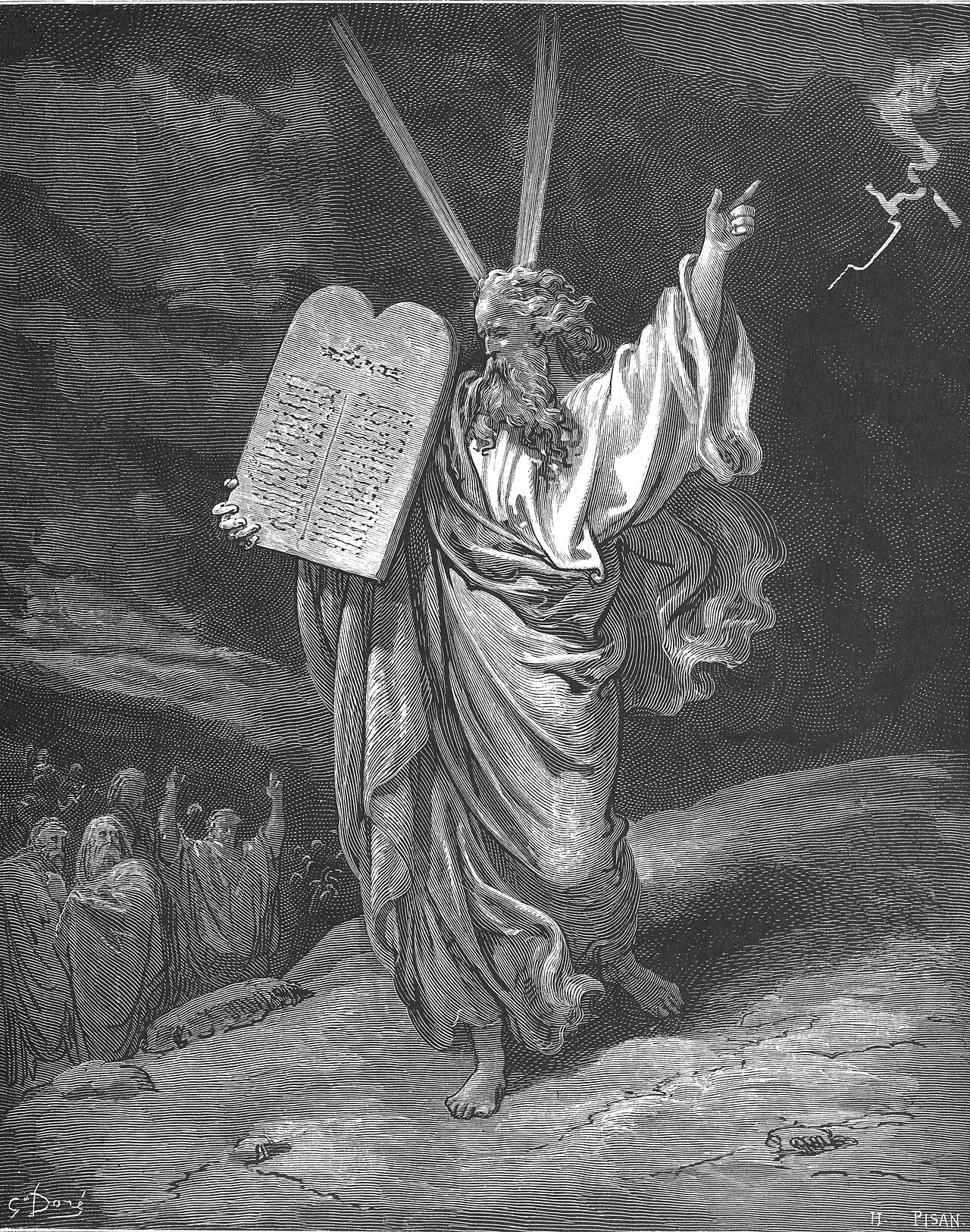
The elders come to inquire of the Lord, and He refuses to be inquired of. What He gives them instead is their own history — and the sign they had thrown away.
A Bible study on Ezekiel 20 · Arthur Baldwin · StandUp4Jesus.Org · 12 min read
Table of Contents
Every so often a chapter of the Bible opens with a scene so pointed that you can feel the temperature drop. Ezekiel 20 is one of them.
The Elders Come Back
“And it came to pass in the seventh year, in the fifth month, the tenth day of the month, that certain of the elders of Israel came to enquire of the LORD, and sat before me.”
Ezekiel 20:1
We have seen this before. In Begin At My Sanctuary, the elders of Judah were sitting in Ezekiel’s house when the hand of the Lord fell on him and he was carried away to see what was going on in the temple. That was the sixth year, sixth month, fifth day. This is the seventh year, fifth month, tenth day — roughly eleven months later.
Same men. Same posture. Sitting down in front of the prophet to inquire of the Lord, as though nothing had been said the last time. And this time God will not play along:
“Son of man, speak unto the elders of Israel, and say unto them, Thus saith the Lord GOD; Are ye come to enquire of me? As I live, saith the Lord GOD, I will not be enquired of by you.”
Ezekiel 20:3
That is a terrible sentence, and we should not rush past it. There is such a thing as coming to God for a word while holding on to what He has already told you to drop. And He is under no obligation to supply a fresh message to a man who has shelved the last one.
What He gives them instead is a history lesson. “Cause them to know the abominations of their fathers” (20:4). And it turns out their fathers’ story and their own are the same story.
The Same Story, Four Times
The chapter then runs the same cycle four times over, in four settings, and once you see the shape you cannot unsee it:
- In Egypt. “I am the LORD your God” — followed by, “Cast ye away every man the abominations of his eyes, and defile not yourselves with the idols of Egypt.” The response: “But they rebelled against me, and would not hearken unto me” (20:7, 8).
- In the wilderness, with the generation He brought out. He gave statutes, judgments, and Sabbaths. The response: “But the house of Israel rebelled against me in the wilderness” (20:13).
- In the wilderness, with their children. “Walk ye not in the statutes of your fathers” — a fresh start for a new generation. The response: “Notwithstanding the children rebelled against me” (20:18, 21).
- And now, in Babylon, with the men sitting on the floor of Ezekiel’s house.
Egypt, wilderness, wilderness, exile. Four settings, four generations, one behavior. That is why God will not take their question: they are not asking a new question.
What He Gave Them
Notice what God keeps saying He gave, right in the middle of all that rebelling:
“And I gave them my statutes, and shewed them my judgments, which if a man do, he shall even live in them. Moreover also I gave them my sabbaths, to be a sign between me and them, that they might know that I am the LORD that sanctify them.”
Ezekiel 20:11, 12
Two gifts, and both are described by what they do for the receiver. The statutes are the ones “which if a man do, he shall even live in them” — a phrase this chapter repeats three separate times (20:11, 13, 21), as if God is anxious that nobody mistake His law for a burden laid on a slave.
And then the Sabbath, given with a stated purpose. Not “to test whether they would comply.” Not “to mark them out from the neighbors.” Read the reason again: that they might know that I am the LORD that sanctify them.
A Sign Of What, Exactly?
This is the verse that makes Ezekiel 20 worth a whole article, and it is worth being precise about what it says.
A sign points to something. So what does this one point to? Not, in the first place, to the one keeping it. It points to what God does: I am the LORD that sanctify them. The Sabbath is a sign of an action performed by God upon a person, and the person’s part is to receive it — by resting.
The same wording appears at Sinai, spoken from the cloud:
“Verily my sabbaths ye shall keep: for it is a sign between me and you throughout your generations; that ye may know that I am the LORD that doth sanctify you.”
Exodus 31:13
And Ellen White draws the two halves of it together in a sentence I have never been able to improve on:
“The Sabbath given to the world as the sign of God as the Creator is also the sign of Him as the Sanctifier. The power that created all things is the power that re-creates the soul in His own likeness. To those who keep holy the Sabbath day it is the sign of sanctification.”
Ellen G. White · Testimonies for the Church, vol. 6, p. 350
That is the whole doctrine in three lines. The day memorializes a God who made — and the same power that spoke a world into being is the power that remakes a character. Which is why the Sabbath cannot be reduced to a scheduling rule. It is a weekly reminder that the making of a holy person is God’s work, not the person’s.
I have written on that gift in Even Your Sanctification, and Ezekiel 20:12 is where it is anchored in the Old Testament.
Not Forgotten — Polluted
Now watch the word God uses for what they did to it. Four times in this chapter:
- “and my sabbaths they greatly polluted” (20:13)
- “but polluted my sabbaths: for their heart went after their idols” (20:16)
- “they polluted my sabbaths” (20:21)
- “and had polluted my sabbaths, and their eyes were after their fathers’ idols” (20:24)
Not neglected. Not forgot. Polluted — which is what you do to something that is still in your possession. You cannot pollute a thing you have thrown away.
And notice the company the charge keeps. Twice out of four it is welded directly to the same clause: their heart went after their idols, their eyes were after their fathers’ idols. The Sabbath was not lost in a calendar dispute. It was hollowed out by people who kept the day on the outside while their affections were somewhere else entirely.
That should give any Sabbath-keeping people a moment’s pause. It is entirely possible to hold the sign and pollute it at the same time.
The Hardest Verse In The Chapter
I am not going to walk around this one, because if you read Ezekiel 20 straight through you will hit it and stop:
“Wherefore I gave them also statutes that were not good, and judgments whereby they should not live; And I polluted them in their own gifts, in that they caused to pass through the fire all that openeth the womb, that I might make them desolate, to the end that they might know that I am the LORD.”
Ezekiel 20:25, 26
Did God give His people bad laws? Did He command child sacrifice?
No. And Scripture is not the least bit ambiguous about it — it says so three separate times, in the plainest words available, about this exact practice:
“And they have built the high places of Tophet… to burn their sons and their daughters in the fire; which I commanded them not, neither came it into my heart.”
Jeremiah 7:31
Jeremiah repeats it in 19:5 — “which I commanded not, nor spake it, neither came it into my mind” — and again in 32:35. And the law itself had forbidden it outright: “And thou shalt not let any of thy seed pass through the fire to Molech” (Leviticus 18:21).
So verse 25 cannot mean that God authored those statutes. What it means is what the chapter itself has been building toward: they wanted other statutes, and He stopped preventing them from having them. Verse 24 is the reason clause — because they had despised His judgments, polluted His Sabbaths, and gone after their fathers’ idols — and verse 25 is the consequence.
The chapter says it again later, and there the bitterness is unmistakable:
“As for you, O house of Israel, thus saith the Lord GOD; Go ye, serve ye every one his idols, and hereafter also, if ye will not hearken unto me.”
Ezekiel 20:39
Go ye, serve ye every one his idols. That is not permission. It is a father finally taking his hands off. Paul describes the identical action three times in one paragraph, and even uses a phrase for it: “God also gave them up to uncleanness”… “God gave them up unto vile affections”… “God gave them over to a reprobate mind” (Romans 1:24, 26, 28).
God’s wrath, in this chapter and in Romans, is not mainly a lightning bolt. It is the withdrawal of restraint from people who have demanded the freedom to be ruined. And the statutes He handed them over to were exactly the ones they had been eyeing all along — the ordinances of the nations they wanted to look like.
That is a more frightening judgment than a thunderbolt, because there is no moment where it feels like judgment. It feels like getting your way.
For My Name’s Sake
There is one more refrain in this chapter, and it is the reason any of them survived to sit on Ezekiel’s floor. At every stage where God says He would have poured out His fury, the sentence turns on the same phrase:
“But I wrought for my name’s sake, that it should not be polluted before the heathen, among whom they were, in whose sight I made myself known unto them, in bringing them forth out of the land of Egypt.”
Ezekiel 20:9
Four generations deep in the same rebellion, and the reason the story continues is not that God found something admirable in them. It is that He had put His name on them, and He would not have that name dragged through the mud of the nations. Grace here is not sentiment. It is God being faithful to Himself when there is nothing else left to be faithful to.
And that is precisely how the chapter closes — with a promise of gathering, not a slammed door: “I will accept you… when I bring you out from the people, and gather you out of the countries wherein ye have been scattered; and I will be sanctified in you before the heathen” (20:41).
Sanctified in you. The word from verse 12 has come back around. What the sign promised, He still intends to do.
What This Asks Of Us
A sign points away from itself. If we ever find ourselves keeping the Sabbath as evidence of what we are, we have turned the sign around to face us. It was given so that we might know who sanctifies us — and the answer is not us.
Polluting is done with the thing in your hands. Israel did not lose the Sabbath by argument. They kept it while their hearts went after idols, and God called that pollution. Keeping the day correctly is not, by itself, the sign working.
Watch for the judgment that feels like freedom. The most severe thing God does in this chapter is stop stopping them. If we are getting exactly what we insisted on, that is not automatically evidence of His favor.
And He keeps going for His own name’s sake. That is the only reason there was anyone left in Babylon to be told any of this — and it is the only reason there is a church now.
Next in this series: Ezekiel 34, and the shepherds who fed themselves.
In one breath
- The elders come to inquire and God refuses to be inquired of (20:3), answering with their own history instead.
- The same cycle runs four times — Egypt, wilderness, their children, and now Babylon.
- The Sabbath was given “to be a sign… that they might know that I am the LORD that sanctify them” (20:12) — a sign of what God does.
- The charge is not that they forgot it but that they polluted it — four times, and twice welded to “their heart went after their idols.”
- Ezekiel 20:25 is not God authoring bad law. Jeremiah says three times that child sacrifice never came into His mind, and Leviticus 18:21 forbids it. It is the withdrawal of restraint — the same act Paul calls “God gave them up.”
- The reason any of them survived is “for my name’s sake” — and the chapter still ends in gathering, and in God being sanctified in them.
