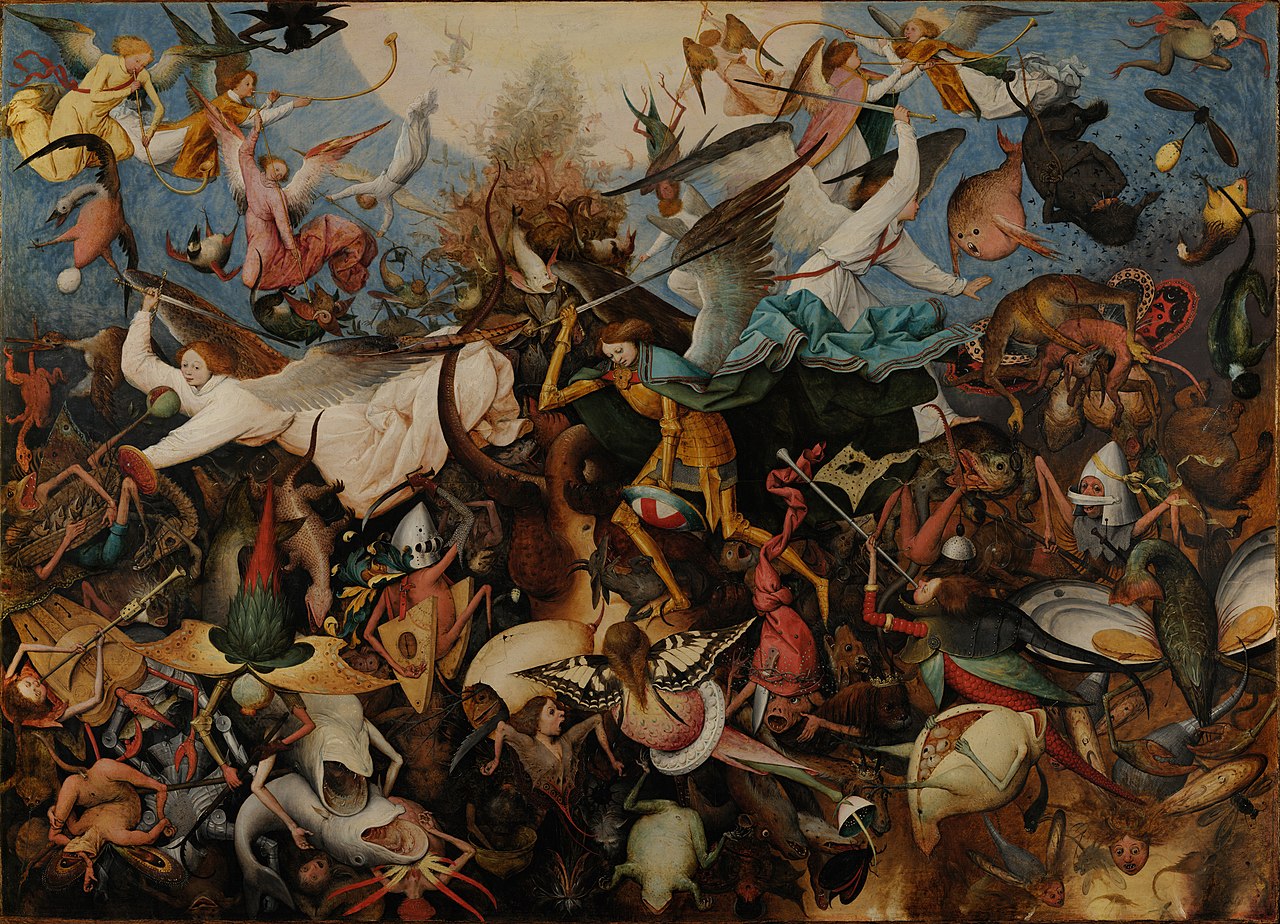
Ezekiel is dictating a funeral song for a Mediterranean trading king — and halfway through, the words stop fitting any man who ever lived.
A Bible study on Ezekiel 28 · Arthur Baldwin · StandUp4Jesus.Org · 11 min read
Table of Contents
So far in this series the book of Ezekiel has kept us in a courtroom. A throne arrived on wheels. The evidence was examined. The faithful were marked, the sentence fell, and the glory withdrew by inches from a house that had turned its back on it.
Now the book does something no other prophet does at this length. It stops, and it goes behind the case — back past Jerusalem, past Eden, to the first defendant there ever was.
And it arrives there, of all ways, in the middle of a message to a seaport.
Two Speeches, Not One
The first thing to notice in Ezekiel 28 is that it contains two separate messages, and the text marks the break plainly. Verse 1: “The word of the LORD came again unto me, saying, Son of man, say unto the prince of Tyrus.” Then verse 11 starts over: “Moreover the word of the LORD came unto me, saying, Son of man, take up a lamentation upon the king of Tyrus.”
New word from the Lord. New title for the one addressed. And, as we are about to see, a description that changes so completely that it cannot be describing the same person.
A Man, And Not God
The first speech is aimed at a flesh-and-blood ruler of a real city. Tyre was the great commercial power of that coast — a fortress harbor, a shipping empire, rich beyond its size. And its prince had drawn the obvious conclusion about himself:
“Son of man, say unto the prince of Tyrus, Thus saith the Lord GOD; Because thine heart is lifted up, and thou hast said, I am a God, I sit in the seat of God, in the midst of the seas; yet thou art a man, and not God, though thou set thine heart as the heart of God.”
Ezekiel 28:2
Notice how the charge is built. It is not that he worshiped the wrong god. It is that his heart is lifted up, and that the lifting came out of his success:
“By thy great wisdom and by thy traffick hast thou increased thy riches, and thine heart is lifted up because of thy riches.”
Ezekiel 28:5
Real wisdom. Real wealth. Real achievement — God does not dispute a word of it. What He disputes is the conclusion drawn from it. And the sentence lands on that one point: “thou shalt be a man, and no God, in the hand of him that slayeth thee” (28:9). A man. And no God. That is the whole of the first speech.
The Second Speech Cannot Be About A Man
Then the word comes again, the title changes to king, and Ezekiel is told to sing a funeral lament. Read it slowly:
“Thou sealest up the sum, full of wisdom, and perfect in beauty. Thou hast been in Eden the garden of God; every precious stone was thy covering… Thou art the anointed cherub that covereth; and I have set thee so: thou wast upon the holy mountain of God; thou hast walked up and down in the midst of the stones of fire. Thou wast perfect in thy ways from the day that thou wast created, till iniquity was found in thee.”
Ezekiel 28:12–15
Now count what has just been said about this person, and ask whether any of it can be true of a Phoenician king:
- He was in Eden, the garden of God. No king of Tyre was in Eden.
- He is the anointed cherub that covereth — and God adds, “I have set thee so.” An appointment, to an order of being that is not human.
- He walked on the holy mountain of God, among the stones of fire.
- He was perfect from the day he was created. Not righteous by struggle, not forgiven — perfect from day one. That has been true of no son of Adam.
This is why Christians have read the second half of Ezekiel 28 as reaching past the prince of Tyre to the power that was working through him. Isaiah does the same thing with the king of Babylon, in language just as impossible for a man: “How art thou fallen from heaven, O Lucifer, son of the morning!… I will exalt my throne above the stars of God… I will be like the most High” (Isaiah 14:12–14).
Ellen White reads them together, and states the identification plainly:
“Sin originated with him who, next to Christ, had been most honored of God and who stood highest in power and glory among the inhabitants of heaven. Before his fall, Lucifer was first of the covering cherubs, holy and undefiled.”
Ellen G. White · The Great Controversy, p. 493
What A Covering Cherub Covered
Here is where this chapter reaches back and takes hold of everything we have already seen in Ezekiel.
In chapter one, four living creatures carried the throne. In chapter ten, Ezekiel saw them again and told us what they were: “This is the living creature that I saw under the God of Israel by the river of Chebar; and I knew that they were the cherubims” (Ezekiel 10:20). Cherubim are the order of being that attends the throne of God.
And in the sanctuary Moses was told to build, the position had a name and a place:
“And the cherubims shall stretch forth their wings on high, covering the mercy seat with their wings, and their faces shall look one to another; toward the mercy seat shall the faces of the cherubims be.”
Exodus 25:20
Covering the mercy seat. The place where God said, “there I will meet with thee, and I will commune with thee from above the mercy seat” (Exodus 25:22).
So when Ezekiel 28 calls this being the anointed cherub that covereth, it is not a decorative title. It is the closest post to the throne of God in the universe. The rebellion did not start at the far edge of creation among beings who barely knew Him. It started at the mercy seat, in the being who stood nearest, who saw most, and who had the least excuse.
Which, if you have been reading this series, should sound familiar. In chapters eight through eleven, judgment began at the sanctuary, with the men who had the most light. Ezekiel 28 shows us that this is not a new pattern. It is the oldest one there is.
Till Iniquity Was Found In Thee
Everything in this chapter turns on one small word in verse 15.
“Thou wast perfect in thy ways from the day that thou wast created, till iniquity was found in thee.”
Ezekiel 28:15
Perfect. Created perfect, by a Creator who makes nothing defective. And then till — and on the far side of that word, iniquity.
Notice the wording God chooses. Iniquity was found in him. Not put there. Not permitted to be introduced from outside. Not the result of some flaw in the making, some pressure from without, some deficiency in his environment. There was nothing outside him to blame, because at that point nothing outside him was wrong.
This is the single most important verse in Scripture on the origin of evil, and it is worth being honest about what it does and does not give us. It tells us where sin began and in whom. It does not tell us why, and Ellen White insists that no such explanation exists to be found:
“It is impossible to explain the origin of sin so as to give a reason for its existence… Sin is an intruder, for whose presence no reason can be given. It is mysterious, unaccountable; to excuse it is to defend it. Could excuse for it be found, or cause be shown for its existence, it would cease to be sin.”
Ellen G. White · The Great Controversy, pp. 492, 493
Read that last sentence twice, because it is doing more work than it looks. If a reason could be given for sin, sin would be excused — and a sin with a valid excuse is no longer sin. The very unaccountability of it is what makes it guilt rather than misfortune. And it clears God entirely:
“Nothing is more plainly taught in Scripture than that God was in no wise responsible for the entrance of sin; that there was no arbitrary withdrawal of divine grace, no deficiency in the divine government, that gave occasion for the uprising of rebellion.”
Ellen G. White · The Great Controversy, pp. 492, 493
Little By Little
But if we cannot have a reason, the chapter does give us a mechanism — and it is unnervingly ordinary.
“Thine heart was lifted up because of thy beauty, thou hast corrupted thy wisdom by reason of thy brightness.”
Ezekiel 28:17
The beauty was real. God gave it. The wisdom was real; God gave that too. What went wrong is that the gifts became the ground of the pride — because of thy beauty, by reason of thy brightness. He looked at what he had been given and drew a conclusion about himself.
And it did not happen in a single leap:
“Little by little, Lucifer came to indulge a desire for self-exaltation.”
Ellen G. White · The Great Controversy, p. 494
Little by little. In the being who stood nearest the throne, in a universe with no temptation in it, sin came on by degrees — indulged, then entertained, then defended. If that is how it went in heaven, none of us should be relaxed about the small allowances we make in a world that is soaked in the stuff.
And notice the exact echo between the two halves of this one chapter. Of the prince of Tyre: “thine heart is lifted up because of thy riches” (28:5). Of the covering cherub: “thine heart was lifted up because of thy beauty” (28:17). Same disease, six thousand years apart, in a merchant and in an archangel. That is why both speeches are in the same chapter.
Why God Did Not Simply End It
The question every honest reader asks here is why God did not put a stop to it in the first hour. He could have. One rebel, contained instantly, and no Calvary, no cemeteries, no Ezekiel 9.
The answer lies in what kind of government He runs:
“God desires from all His creatures the service of love—homage that springs from an intelligent appreciation of His character. He takes no pleasure in a forced allegiance, and to all He grants freedom of will, that they may render Him voluntary service.”
Ellen G. White · The Great Controversy, p. 493
A love that cannot be refused is not love, and an allegiance that cannot be withheld is not allegiance. The freedom that made Lucifer’s worship worth having is the same freedom that made his rebellion possible. God did not remove it — not from him, and not from us.
The Fire Comes From Inside
The lament ends with a sentence, and two details in it deserve close attention.
“Thou hast defiled thy sanctuaries by the multitude of thine iniquities… therefore will I bring forth a fire from the midst of thee, it shall devour thee, and I will bring thee to ashes upon the earth in the sight of all them that behold thee. All they that know thee among the people shall be astonished at thee: thou shalt be a terror, and never shalt thou be any more.”
Ezekiel 28:18, 19
First, where the fire comes from. Not thrown at him from outside. “therefore will I bring forth a fire from the midst of thee.” The thing that destroys him is what he became. God pronounces the sentence, and the sentence is that the rebellion finally consumes the rebel.
Second, how it ends. Ashes. Never shalt thou be any more. Not an eternal rival maintained forever in a burning kingdom of his own — an end. The being who wanted to be like the Most High finishes as ashes on the ground, watched by everyone who ever knew him, and then he is not there at all.
That is the same word Scripture gives about the end of evil everywhere. The universe does not carry this forever. It ends, and it ends completely.
Why This Is In Ezekiel
It is fair to ask what a passage about the fall of Lucifer is doing in a book addressed to Jewish exiles by a canal in Babylon, tucked into a series of oracles against foreign nations.
I think the placement is the point. Ezekiel has just walked us through the corruption of God’s own house by men who had every advantage — the ancient men in the chambers of imagery, the twenty-five with their backs to the temple. The obvious question left hanging over chapters eight to eleven is: how does that happen? How do people with the most light end up the furthest from it?
Chapter 28 answers it by showing the first case on record. Perfect in his ways. Nearest the throne. The most gifted being God ever made. And his heart was lifted up because of what he had been given.
The elders in Jerusalem did not invent anything. They caught something very old.
What This Asks Of Us
Gifts are the danger, not the safeguard. Every quality named in this chapter — beauty, wisdom, brightness, position, wealth — was genuine and God-given. Not one of them protected anybody. The nearer the throne, the more careful a creature has to be about what he concludes from his own advantages.
Do not go looking for an explanation of your sin. The instinct, when we are caught, is to reach for a cause: how we were raised, what was done to us, the pressure we were under. Some of that may be true and none of it is the point. Lucifer had no upbringing, no wounds, no pressure, and no bad examples — and iniquity was found in him. To excuse sin, as she says, is to defend it.
And it began little by little. That is the mercy hidden in this chapter, because it means it can be stopped little by little too — today, in the small allowance, before it becomes a settled desire.
Next in this series: Ezekiel 20, and the Sabbath given as a sign.
In one breath
- Ezekiel 28 holds two separate messages: to the prince of Tyre (vv. 1–10), a man, and to the king of Tyre (vv. 11–19), who was in Eden and was created perfect.
- The second description cannot fit any human being, which is why it has been read as reaching past the prince to the power behind him — as Isaiah 14 does with Babylon.
- The covering cherub is the post over the mercy seat (Exodus 25:20). The rebellion started at the throne, in the being who stood nearest.
- “Till iniquity was found in thee” — sin arose inside a perfect being with nothing outside him to blame. Scripture gives the where and the who, never the why.
- The mechanism was ordinary: the gifts became the ground of the pride, and it came on little by little.
- God did not crush it because forced allegiance is not allegiance.
- The fire comes from the midst of him, and the end is ashes — “never shalt thou be any more.”
Another Resource: Ellen White’s full treatment of this passage is the chapter “The Origin of Evil” in The Great Controversy, pages 492–504, and it is the best few pages ever written on the subject.
