Five chapters of woes, and then a date. A king dies, a prophet looks up, and the throne he has been describing turns out to be occupied. What happens next is not a promotion — Isaiah is undone before he is useful, and the first thing heaven does about it involves fire.
A study in Isaiah 6 · Arthur Baldwin · StandUp4Jesus.Org · 16 min read
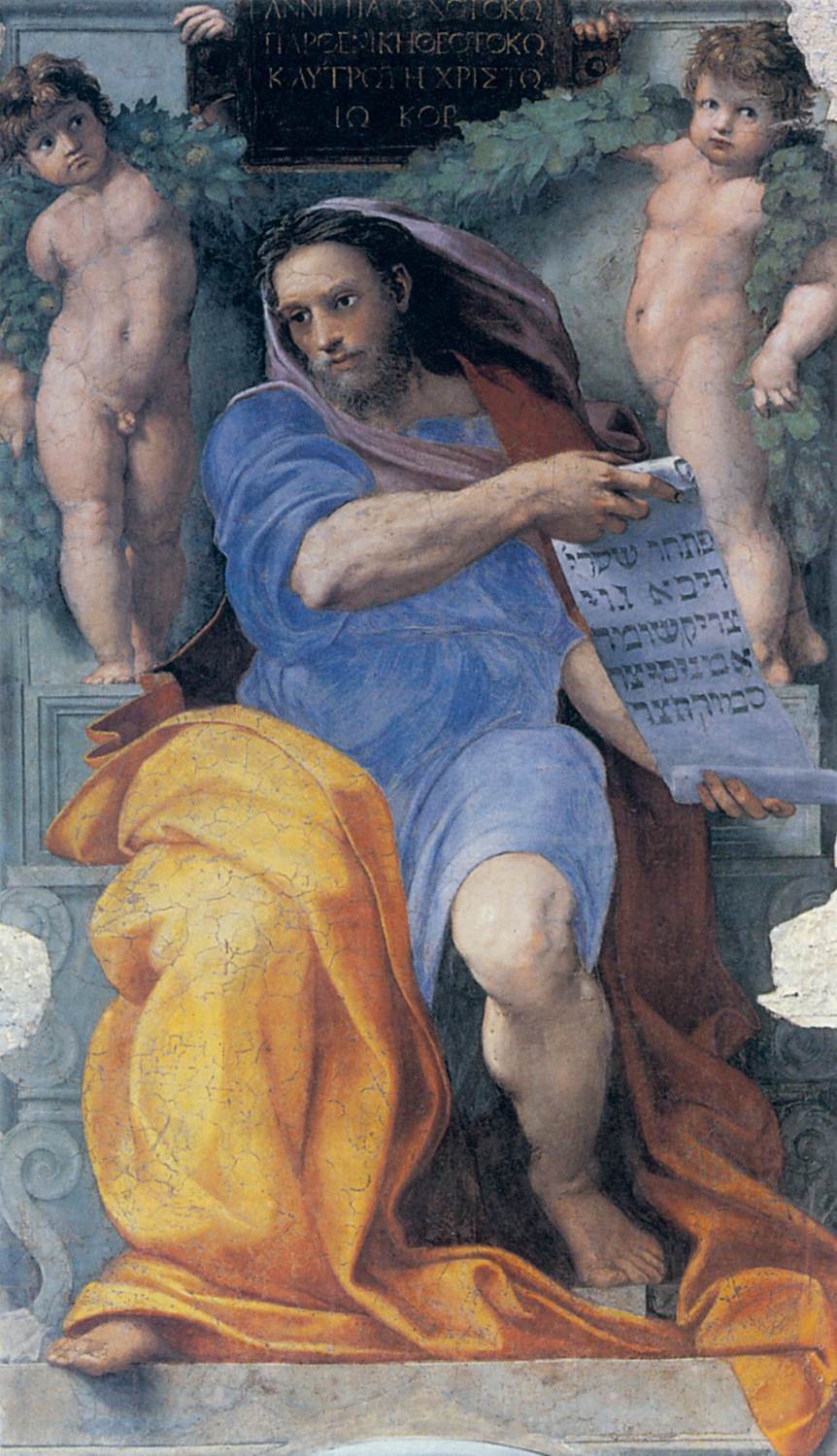
Table of Contents
In The Year That King Uzziah Died
“In the year that king Uzziah died I saw also the Lord sitting upon a throne, high and lifted up, and his train filled the temple.”
Isaiah 6:1
Isaiah dates this one. He has not dated a vision since chapter 1, and the date he chooses is not a year number but a death.
Uzziah had reigned fifty-two years. Anyone under sixty in Jerusalem had never known another king. He was, by the record, a good one — he built, he fortified, he won wars — until he walked into the temple to burn incense himself, which was not his to do, and came out a leper. He lived out his remaining years in isolation, and the throne of Judah effectively stood empty long before it was vacant.
So the sentence has a shape to it. In the year that king Uzziah died — the year the visible throne emptied — I saw also the Lord sitting upon a throne. One seat is vacated and Isaiah is shown another that never was. It is the same argument the whole book makes, delivered in a single verse before any doctrine is stated.
High And Lifted Up
High and lifted up is a phrase worth stopping on, because Isaiah has spent chapter 2 using that exact language as an accusation.
There the cedars were “high and lifted up,” and the oaks, and the towers, and every proud man — and every one of them was to be brought low, so that the LORD alone shall be exalted in that day. Now the prophet sees the one occupant of that height, and the vocabulary that condemned everything else is simply accurate. Loftiness is not wrong. It is only wrong where it does not belong.
His train filled the temple — the hem of the robe alone fills the building. Isaiah does not attempt to describe the figure on the throne. He describes the overflow, and stops. That restraint is itself part of the report.
Six Wings, And What They Are For
“Above it stood the seraphims: each one had six wings; with twain he covered his face, and with twain he covered his feet, and with twain he did fly.”
Isaiah 6:2
Six wings, and only two of them are for flying. Do the arithmetic: two thirds of the equipment of these creatures is devoted to covering themselves in the presence of God, and one third to service.
These are unfallen beings. They have nothing to be ashamed of and nothing to hide, and they still cover their faces and their feet. Whatever the covering means, it is not guilt. It is the ordinary posture of a creature near uncreated holiness — and if that is how the sinless behave, the prophet’s reaction two verses later stops looking excessive.
Holy, Holy, Holy
“And one cried unto another, and said, Holy, holy, holy, is the LORD of hosts: the whole earth is full of his glory. And the posts of the door moved at the voice of him that cried, and the house was filled with smoke.”
Isaiah 6:3, 4
Hebrew has no superlative form; it repeats a word to intensify it. Twice is emphatic. Three times occurs, of any attribute of God, only here and in Revelation 4:8, where the living creatures use the same words. Of everything that could be said about God, this is the one thing said three times.
And the second half of their cry is the surprise: the whole earth is full of his glory. Not the temple — the earth. In the same year that Judah’s throne emptied and its cities were described as burned, the seraphim report that the whole earth is full of His glory. They are not describing what Isaiah can see. They are describing what is there.
Verse 4 gives the physical effect, and it is worth noticing what shakes. Not the throne — the door posts, the join between inside and outside, the part of the building a man walks through. The voice of one creature moves the architecture, and smoke fills the room so that even what little could be seen is obscured.
Woe Is Me, For I Am Undone
“Then said I, Woe is me! for I am undone; because I am a man of unclean lips, and I dwell in the midst of a people of unclean lips: for mine eyes have seen the King, the LORD of hosts.”
Isaiah 6:5
This is the seventh woe in six chapters, and it is the one that matters most.
Six woes have just been pronounced on other people — on land-grabbers, on drinkers, on those who call evil good, on the wise in their own eyes. Isaiah pronounced every one of them, and he was right every time. The seventh is on himself, and he does not arrive at it by argument. He arrives at it by seeing the King.
Notice what he indicts. Unclean lips — the very organ of his profession. The man whose whole calling is speech discovers the fault is in his mouth. And he refuses to separate himself from his nation: I dwell in the midst of a people of unclean lips. He has been denouncing them for five chapters and he now names himself as one of them, in the same breath, without softening either half.
That is the answer to a question this book keeps raising — how a person can carry a message of judgment without becoming insufferable. Isaiah is not exempted from his own preaching. He is the first to be caught by it.
A Live Coal From The Altar
“Then flew one of the seraphims unto me, having a live coal in his hand, which he had taken with the tongs from off the altar: And he laid it upon my mouth, and said, Lo, this hath touched thy lips; and thine iniquity is taken away, and thy sin purged.”
Isaiah 6:6, 7
Three details carry the theology.
The seraph flies. Isaiah does not climb, petition, or qualify. He says what he is, and something comes to him. The two wings kept for movement are used to close the distance in the direction of the man who has just admitted he cannot stand there.
The coal is from the altar. Not from a hearth, not from the throne — from the place where sacrifice was burned. The cleansing agent comes off the altar of substitution, which is the only place in that building where sin had ever been dealt with. Isaiah is not made clean by proximity to majesty; he is made clean by fire that has been at the altar.
The seraph uses tongs. A creature who stands unshielded before the throne cannot hold this coal in his hand. Whatever the fire of that altar is, it is too much even for the unfallen — and it is laid directly on a man’s mouth.
The word order in verse 7 is exact, and it is the order Isaiah 1 promised. There the invitation was “though your sins be as scarlet, they shall be as white as snow”; here the sentence is “thine iniquity is taken away, and thy sin purged.” Announced first, and only then experienced. Isaiah does not feel forgiven and conclude that he is; he is told, and the telling is the fact.
Whom Shall I Send?
“Also I heard the voice of the Lord, saying, Whom shall I send, and who will go for us? Then said I, Here am I; send me.”
Isaiah 6:8
The question is not addressed to Isaiah. It is asked into the room — whom shall I send, and who will go for us? — and Isaiah answers a question that was not put to him.
The sequence is the whole point, and it will not run in any other order. Uzziah dies. The King is seen. The prophet is undone. The coal is applied. He is told his sin is purged. Then the question is heard, and only then can he volunteer. A man convinced he was already clean would have volunteered four verses earlier, and he would have gone in his own name.
Here am I; send me is three words of availability and no terms. He does not ask what the message is. He finds out in the next verse, and it is worse than anything he could have negotiated.
The Hardest Commission In Scripture
“And he said, Go, and tell this people, Hear ye indeed, but understand not; and see ye indeed, but perceive not. Make the heart of this people fat, and make their ears heavy, and shut their eyes; lest they see with their eyes, and hear with their ears, and understand with their heart, and convert, and be healed.”
Isaiah 6:9, 10
He volunteered before he heard this. The commission is to preach to people who will not understand, and the preaching itself is described as what makes their hearts fat and shuts their eyes.
The difficulty is real and should not be smoothed over, but the passage is not saying God prevents people from being saved. Two things in the text settle it.
First, Hebrew regularly states a result as though it were a purpose. A prophet is told to do the thing whose outcome he is being warned of. Isaiah is not given a technique for blinding people; he is given a message and told in advance what it will do to those who have already decided.
Second, chapter 5 has already explained the mechanism. There the people called evil good and good evil, and put bitter for sweet — a palate deliberately reversed. When that has happened, more light does not help; it hardens. The sun that melts wax bakes clay, and the difference is in the material, not the sun.
This is the passage the New Testament reaches for more than almost any other from Isaiah. Jesus quotes it to explain why He teaches in parables, and it is applied again at the very end of Acts — the last Old Testament quotation in the book, used to explain why a message so plainly true was so widely refused.
Lord, How Long?
“Then said I, Lord, how long? And he answered, Until the cities be wasted without inhabitant, and the houses without man, and the land be utterly desolate, And the LORD have removed men far away, and there be a great forsaking in the midst of the land.”
Isaiah 6:11, 12
The one question Isaiah asks in the whole chapter, and it is not why. It is how long. He does not dispute the assignment; he wants to know when it ends.
The answer is the worst possible one: until there is nobody left to preach to. Cities empty, houses empty, the land desolate, the people carried away. His ministry will run its full course and the outcome will be the exile. He is being told, at the start, that he will not see success.
He preached for another forty years or more after this. That is worth remembering whenever faithfulness and visible results are treated as the same measurement.
The Holy Seed Is The Substance
“But yet in it shall be a tenth, and it shall return, and shall be eaten: as a teil tree, and as an oak, whose substance is in them, when they cast their leaves: so the holy seed shall be the substance thereof.”
Isaiah 6:13
The chapter ends on one word: but.
A tenth remains, and even that is consumed. What is left is a stump. And then the image turns: a teil tree and an oak, whose substance is in them when they cast their leaves. A tree in winter looks dead and is not. The life has withdrawn into the trunk and the root, where nothing can be seen of it, and it is still there.
That is where chapter 4’s Branch was going, and where chapter 11 will take it explicitly — a rod out of the stem of Jesse, a shoot from a cut-down trunk. The holy seed is the substance. Not the leaves, not the crown, not anything a passer-by would count as the tree.
Why This Chapter Is Not Chapter One
This is Isaiah’s call, and it sits sixth. Most books would open here.
Placed where it is, it does something a first chapter could not. Chapters 1 to 5 have made a case: a nation that does not consider, worship God will not accept, a vineyard that returned wild grapes, and six woes. A reader who has come this far has almost certainly been agreeing. Chapter 6 then shows the man who wrote all of it discovering that he is a man of unclean lips, and refusing to stand apart from the people he has been indicting.
Ellen White singles this chapter out for exactly that reason, pairing it with the opening of Ezekiel as required reading for anyone who works for God: “Let God’s workmen study the sixth chapter of Isaiah, and the first and second chapters of Ezekiel” (Testimonies to Ministers and Gospel Workers, p. 213). Both are throne visions, and both flatten the man who sees them before either is given anything to say.
The order is the lesson. See the King, know what you are, be cleansed from the altar, and then volunteer — and expect the assignment to be harder than the one you imagined when you raised your hand.
The next study takes up chapters 7 to 9, where a frightened king is offered any sign he cares to name, refuses it, and is given one anyway: a virgin shall conceive, and shall call his name Immanuel.
