God calls Assyria a tool in His own hand — and then announces that He will punish the tool for what it did. Isaiah 10 holds those two statements together without apology, and settles the question with one image: an axe that has decided it is the one doing the chopping.
A study in Isaiah 10 · Arthur Baldwin · StandUp4Jesus.Org · 17 min read
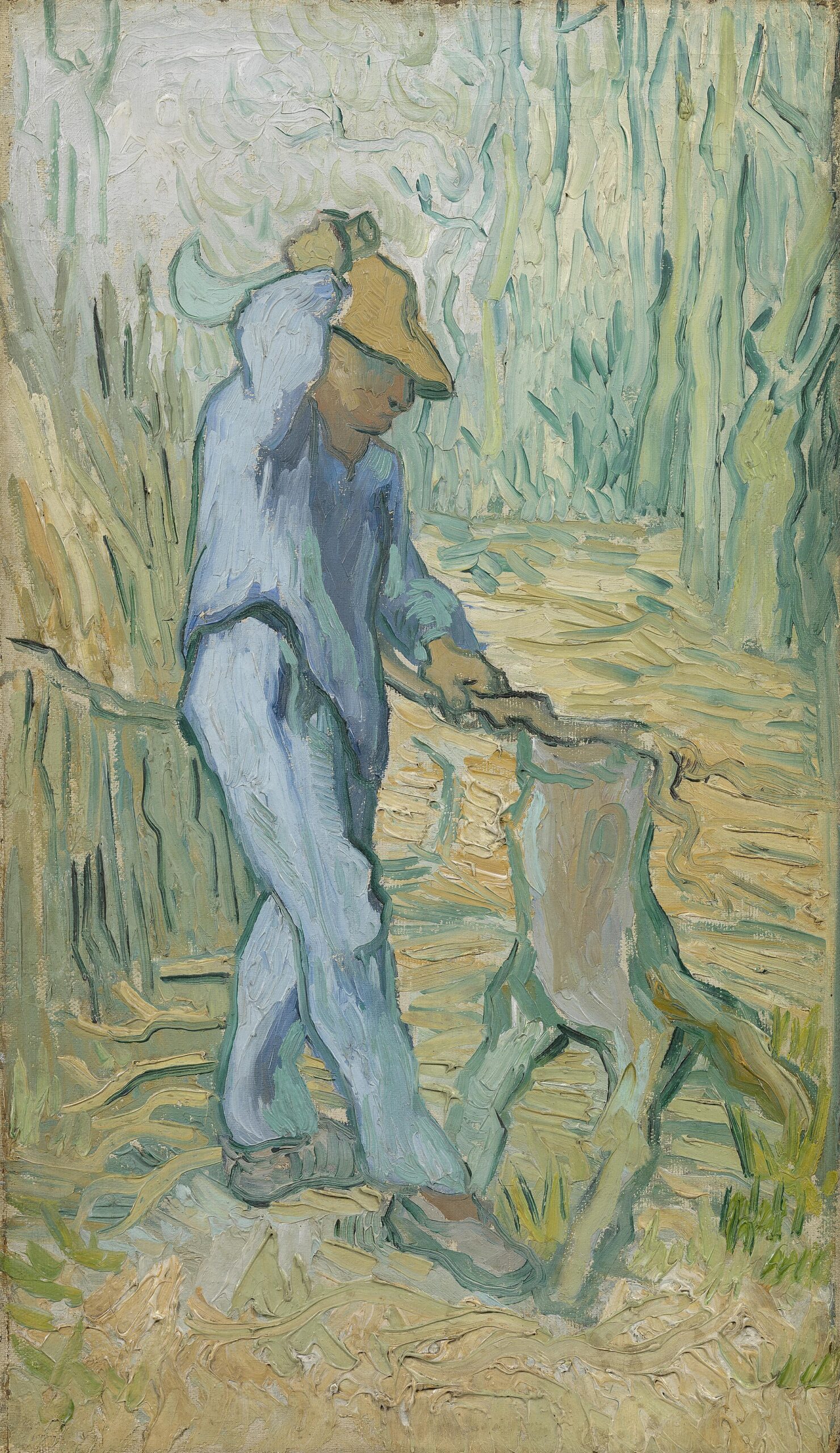
Table of Contents
Woe To Them That Decree Unrighteous Decrees
The six woes of chapter 5 have one more to come, and it lands on the people who write the laws.
“Woe unto them that decree unrighteous decrees, and that write grievousness which they have prescribed; To turn aside the needy from judgment, and to take away the right from the poor of my people, that widows may be their prey, and that they may rob the fatherless!”
Isaiah 10:1, 2
This is not corruption in the ordinary sense. Nobody here is taking a bribe in a doorway. These men are writing — drafting, prescribing, putting it in the statute book. The injustice has been through a legislature and come out the other side entirely legal.
And the targets are the same three from chapter 1: the needy, the widow, the fatherless. What God asked for there was judgment for exactly these people; what is being manufactured here is a legal apparatus for taking it away. The widow does not lose her case because the law was ignored. She loses it because the law was rewritten.
Then the question, which is one of the most searching in the book:
“And what will ye do in the day of visitation, and in the desolation which shall come from far? to whom will ye flee for help? and where will ye leave your glory?”
Isaiah 10:3
Where will ye leave your glory? Not lose — leave. It is the question you ask a man who is being taken somewhere and cannot bring his things. Everything these men accumulated by statute has to be set down, and there is nobody to leave it with.
O Assyrian, The Rod Of Mine Anger
“O Assyrian, the rod of mine anger, and the staff in their hand is mine indignation. I will send him against an hypocritical nation, and against the people of my wrath will I give him a charge, to take the spoil, and to take the prey, and to tread them down like the mire of the streets.”
Isaiah 10:5, 6
Assyria was the most efficient military power the ancient Near East had produced, and God calls it a stick.
Ellen White puts the principle in one sentence: “The Assyrians were merely the instruments that God used to carry out His purpose” (Prophets and Kings, p. 291). That is the claim, and it is a large one — that an empire acting entirely for its own reasons was serving a purpose it had never heard of.
Note the word hypocritical in verse 6. The nation being disciplined is not being punished for unbelief but for pretence — the same charge as chapter 1, where the feasts were kept and the hands were bloody.
Howbeit He Meaneth Not So
“Howbeit he meaneth not so, neither doth his heart think so; but it is in his heart to destroy and cut off nations not a few.”
Isaiah 10:7
One verse, and it holds the whole moral question of the chapter.
Assyria is being used, and Assyria does not know it. He meaneth not so. He is not attempting to discipline God’s people; it has never crossed his mind. What is in his heart is conquest for its own sake — to destroy and cut off nations not a few.
This is why the punishment of Assyria in verse 12 is not a contradiction. God is not judging a man for obeying orders. Assyria never received orders it was aware of, and never intended anything but its own aggrandisement. God directed the outcome; Assyria supplied the motive, and the motive is what it will answer for. The two are separable, and Isaiah separates them in a single sentence.
Is Not Samaria As Damascus?
“For he saith, Are not my princes altogether kings? Is not Calno as Carchemish? is not Hamath as Arpad? is not Samaria as Damascus?”
Isaiah 10:8, 9
The Assyrian recites his own record, and the list is a map of victories running steadily closer to Jerusalem. Each pair says the same thing: that one fell, so this one will. It is the reasoning of a man who has never lost.
Then he takes the last step:
“Shall I not, as I have done unto Samaria and her idols, so do to Jerusalem and her idols?”
Isaiah 10:11
There is the error, and it is a category error rather than a strategic one. He has filed the God of Jerusalem alongside the carved images of every city he has taken. From where he stands the evidence supports him — those cities had gods too, and their gods did not stop him. He has no way of knowing that the reason he beat them all is standing in the city he is about to attack.
As One Gathereth Eggs That Are Left
“For he saith, By the strength of my hand I have done it, and by my wisdom; for I am prudent: and I have removed the bounds of the people, and have robbed their treasures… And my hand hath found as a nest the riches of the people: and as one gathereth eggs that are left, have I gathered all the earth; and there was none that moved the wing, or opened the mouth, or peeped.”
Isaiah 10:13, 14
By the strength of my hand I have done it, and by my wisdom. Twice he names the cause, and both times it is himself.
The image in verse 14 is chillingly domestic. Taking the nations was like robbing a nest — and not even a defended one. Eggs that are left, from which the bird has already gone. He does not describe battles. He describes a man walking through a field with his hand in the hedgerows.
And the last clause is the boast he is proudest of: there was none that moved the wing, or opened the mouth, or peeped. Nothing so much as chirped at him. That silence, which he offers as the proof of his greatness, is about to end.
Shall The Axe Boast Itself?
“Shall the axe boast itself against him that heweth therewith? or shall the saw magnify itself against him that shaketh it? as if the rod should shake itself against them that lift it up, or as if the staff should lift up itself, as if it were no wood.”
Isaiah 10:15
Four tools in one verse, and the absurdity builds with each one. An axe congratulating itself on the woodpile. A saw taking credit for the cut. A rod waving itself. And the last clause is the sharpest thing in the chapter: as if it were no wood.
That is the whole delusion named in four words. The staff has forgotten what it is made of. It is not merely overestimating its contribution; it has stopped believing it is a stick. And a stick that thinks it is a woodsman is not dangerous to the woodsman. It is simply wrong, and about to be put back in the shed.
The verse cuts in more than one direction, and it is worth letting it. It answers the Assyrian, obviously. But an axe is a useful thing, and being used by God is not a small honor — it is only ruinous when the instrument starts reading its usefulness as evidence about itself. Isaiah 5 called that being wise in your own eyes. Here is the same fault, at imperial scale.
The Light Of Israel Shall Be For A Fire
“And the light of Israel shall be for a fire, and his Holy One for a flame: and it shall burn and devour his thorns and his briers in one day; And shall consume the glory of his forest, and of his fruitful field, both soul and body… And the rest of the trees of his forest shall be few, that a child may write them.”
Isaiah 10:17-19
The same God is light to Israel and fire to Assyria, and Isaiah puts both words in one line without embarrassment. It is not that God changes. It is that the same holiness which warms one thing consumes another, and what determines which is the thing itself.
And the last detail is almost gentle. The forest that swallowed nations will be reduced to a handful of trees — so few that a child may write them. Not a scholar with a ledger. A child, with the short list of what is left.
The Remnant Shall Return
“And it shall come to pass in that day, that the remnant of Israel, and such as are escaped of the house of Jacob, shall no more again stay upon him that smote them; but shall stay upon the LORD, the Holy One of Israel, in truth. The remnant shall return, even the remnant of Jacob, unto the mighty God.”
Isaiah 10:20, 21
The remnant shall return. That is a name. Years earlier God told Isaiah to take his son to meet King Ahaz, and the boy was called Shear-jashub — a remnant shall return. The prophet had been walking around with this sentence attached to his child long before the chapter that explains it.
And verse 20 names the specific thing they stop doing: they shall no more again stay upon him that smote them. Judah’s recurring policy was to lean on whichever great power had last hurt them — buy off Assyria, then hire Egypt against Assyria. What breaks is not merely the alliance but the reflex of looking for a strong arm to hide behind.
Note also that the remnant is small and the promise is not that it will be large. Isaiah has already said a tenth, and even that eaten. What the remnant has is not size. It is that it leans on the right thing, in truth.
Be Not Afraid Of The Assyrian
“Therefore thus saith the Lord GOD of hosts, O my people that dwellest in Zion, be not afraid of the Assyrian: he shall smite thee with a rod, and shall lift up his staff against thee, after the manner of Egypt. For yet a very little while, and the indignation shall cease, and mine anger in their destruction.”
Isaiah 10:24, 25
Read what the comfort actually is, because it is not what a frightened person would ask for. God does not say the Assyrian will not come, or that the blow will not land. He shall smite thee with a rod. The promise is about duration: yet a very little while.
And after the manner of Egypt is chosen deliberately. Egypt is the standing precedent for a power that held God’s people and then did not. Every reference to Egypt in this passage says the same thing: you have been here before, and you came out.
Verse 27 gives the outcome in a phrase worth carrying: “his burden shall be taken away from off thy shoulder, and his yoke from off thy neck, and the yoke shall be destroyed because of the anointing.” The yoke does not wear out and it is not slipped. It is destroyed, and the reason given is an anointing.
He Is Come To Aiath
“He is come to Aiath, he is passed to Migron; at Michmash he hath laid up his carriages: They are gone over the passage: they have taken up their lodging at Geba; Ramah is afraid; Gibeah of Saul is fled… As yet shall he remain at Nob that day: he shall shake his hand against the mount of the daughter of Zion, the hill of Jerusalem.”
Isaiah 10:28-32
Isaiah stops arguing and starts narrating, and the effect is entirely different. This is a route — town after town, north to south, each one a place his hearers could name and most could point to. The tense is present. He is come. He is passed. Ramah is afraid.
The baggage train is parked at Michmash, which means the army has gone light and fast. Villages empty as it passes. And it ends at Nob, close enough to see the city, where he does one thing: he shall shake his hand against the mount of the daughter of Zion.
That is where the march stops. Eleven place names to get him within sight of Jerusalem, and then a gesture — a fist raised at a hill — and nothing further. The reader braced for the assault gets a threat and a full stop. Chapters 36 and 37 will tell what happened to that army, and it did not involve a battle.
The High Ones Of Stature Shall Be Hewn Down
“Behold, the Lord, the LORD of hosts, shall lop the bough with terror: and the high ones of stature shall be hewn down, and the haughty shall be humbled. And he shall cut down the thickets of the forest with iron, and Lebanon shall fall by a mighty one.”
Isaiah 10:33, 34
The chapter closes with the axe answered by an axe. The forest that gathered the nations like eggs is felled, and the vocabulary is chapter 2’s again — the high ones of stature, the haughty shall be humbled. Cedars of Lebanon were the tallest timber known to that world, and they come down like everything else that was high.
And then the chapter division falls in the worst possible place, because the very next sentence is the point of all this felling: “And there shall come forth a rod out of the stem of Jesse, and a Branch shall grow out of his roots” (Isaiah 11:1).
A forest of empires is cut to the ground, and out of a stump nobody was looking at, something grows. That is the argument of the whole book compressed into two verses either side of a chapter break — and it is where the next study begins.