A book is handed to a scholar, who says he cannot read it because it is sealed, and then to a laborer, who says he cannot read at all. Between those two refusals Isaiah gives the reason worship goes hollow — a sentence Jesus quoted back at the men running the temple.
A study in Isaiah 29 · Arthur Baldwin · StandUp4Jesus.Org · 17 min read
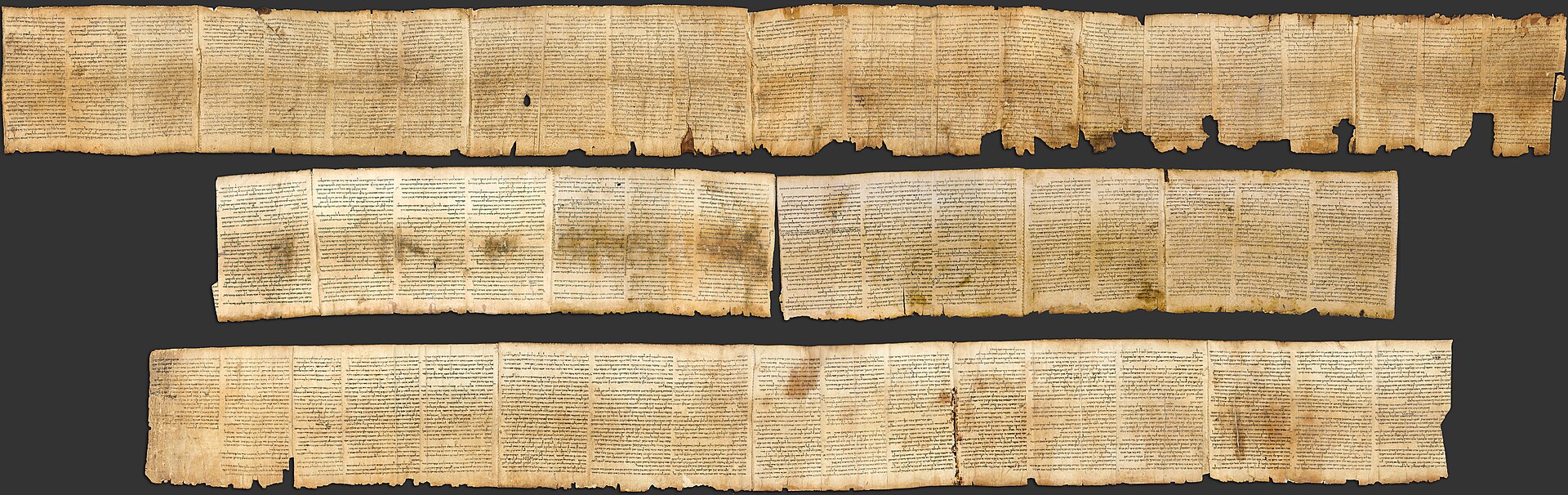
Table of Contents
Ariel, The City Where David Dwelt
“Woe to Ariel, to Ariel, the city where David dwelt! add ye year to year; let them kill sacrifices. Yet I will distress Ariel, and there shall be heaviness and sorrow: and it shall be unto me as Ariel.”
Isaiah 29:1, 2
Isaiah gives Jerusalem a code name, and it is a grim pun. Ariel can be read as lion of God, which is flattering, and as altar hearth — the place on top of the altar where things burn — which is not.
He plays both meanings against each other in two verses. The lion of God is the city where David dwelt. And it shall be unto me as Ariel — the city that keeps the altar burning is about to become the thing on it.
Notice the weary instruction in verse 1: add ye year to year; let them kill sacrifices. Carry on. Keep the calendar, keep the festivals, keep the animals coming. It is the same tone as chapter 1, where God was wearied by feasts He had Himself commanded. The machinery is running perfectly and that is the problem.
And then verse 4, which is one of the eeriest images in the book: “thy speech shall be low out of the dust, and thy speech shall be low out of the dust, and thy voice shall be, as of one that hath a familiar spirit, out of the ground.” The proud city will end up whispering from floor level like a medium’s voice at a séance — which is what Isaiah said the nation was consulting back in chapter 8. You become what you go to for answers.
As A Dream Of A Night Vision
“It shall even be as when an hungry man dreameth, and, behold, he eateth; but he awaketh, and his soul is empty: or as when a thirsty man dreameth, and, behold, he drinketh; but he awaketh, and, behold, he is faint, and his soul hath appetite: so shall the multitude of all the nations be, that fight against mount Zion.”
Isaiah 29:8
The siege ends the way Isaiah’s sieges tend to — suddenly, and without a battle. The besieging army becomes as small dust and as chaff that passeth away, and it happens in an instant suddenly.
But the image he chooses for it is not military at all. It is a man dreaming that he is eating.
Anyone who has been genuinely hungry knows this dream, and knows the specific cruelty of it: the food is there, the eating is happening, and waking does not merely end it — it reveals that nothing went in. His soul is empty. The dream did not feed him and it cost him the night.
That is what the nations besieging Zion amount to. They can taste it. And Isaiah applies the image with a precision worth noticing: it is not that the attackers are weak. It is that their victory is the kind of thing that stops existing when someone wakes up.
Drunken, But Not With Wine
“Stay yourselves, and wonder; cry ye out, and cry: they are drunken, but not with wine; they stagger, but not with strong drink. For the LORD hath poured out upon you the spirit of deep sleep, and hath closed your eyes: the prophets and your rulers, the seers hath he covered.”
Isaiah 29:9, 10
Chapter 28 had priests who were literally drunk. Chapter 29 has men with the same symptoms and no bottle.
Drunken, but not with wine. The staggering, the impaired vision, the confident nonsense — all present, with nothing in the glass to explain it. Isaiah is describing a condition that looks exactly like intoxication and is produced by something else entirely.
And who has it? The prophets and your rulers, the seers. Not the crowd. The men whose entire function is to see.
Verse 10 is uncomfortable and should be left uncomfortable: the LORD hath poured out upon you the spirit of deep sleep, and hath closed your eyes. Scripture speaks this way more than once — it attributes to God the settled state of people who have refused to see for long enough. Chapter 6 said the same thing to Isaiah at the start: make the heart of this people fat, and make their ears heavy, and shut their eyes. It is not that God prefers them blind. It is that a faculty which has been refused long enough is eventually taken away, and Scripture is willing to say who takes it.
The Book That Is Sealed
“And the vision of all is become unto you as the words of a book that is sealed, which men deliver to one that is learned, saying, Read this, I pray thee: and he saith, I cannot; for it is sealed: And the book is delivered to him that is not learned, saying, Read this, I pray thee: and he saith, I am not learned.”
Isaiah 29:11, 12
Here is the picture the chapter is named for, and it is constructed as a pair of excuses.
The book goes first to the educated man. He has the training, and his answer is about the book: I cannot; for it is sealed. The obstacle is external, and he is not to blame for it.
Then the same book goes to the man with no schooling, and his answer is about himself: I am not learned. The obstacle is internal, and he is not to blame for that either.
Between them the two answers cover the whole population, and neither man opens the book. And here is what makes the scene devastating rather than merely sad: nobody in the story breaks the seal. The learned man does not try. He hands it back. Both excuses are perfectly reasonable and both are final, and the vision of God goes unread in a city that is still killing sacrifices on schedule.
Both refusals are alive today, and they have not even changed their wording. It is sealed is the educated form: prophecy is obscure, the symbols are contested, serious people no longer read it that way. I am not learned is the other: I would need Greek, I would need a commentary, I am not the sort of person who understands this. One says the book cannot be opened; the other says I am not the one to open it. Both are ways of handing it back.
Isaiah does not leave the seal in place. Seven verses later he says “in that day shall the deaf hear the words of the book” (29:18) — the same book, opened, and read to people who could not even hear. And Daniel was told to “shut up the words, and seal the book, even to the time of the end” (Daniel 12:4), which is a seal with an expiry date on it. A sealed book in Scripture is never a closed subject. It is a book waiting for its hour.
Taught By The Precept Of Men
“Wherefore the Lord said, Forasmuch as this people draw near me with their mouth, and with their lips do honour me, but have removed their heart far from me, and their fear toward me is taught by the precept of men”
Isaiah 29:13
And there is the diagnosis, in one verse, of why the book stayed shut.
Read the anatomy of it. The mouth draws near. The lips do honor. The heart is removed far off. Two of the three are in the right place, and they are the two everybody can see.
Then the cause, and this is the part that matters: their fear toward me is taught by the precept of men. Their reverence is real. It is simply secondhand — assembled out of what they had been told by people, rather than out of anything God had said. And a religion built that way can be word-perfect and completely hollow, because nothing in it ever came from the source.
Jesus quoted this verse, and He aimed it at the men who had just criticized His disciples for not washing their hands the traditional way: “Ye hypocrites, well did Esaias prophesy of you, saying, This people draweth nigh unto me with their mouth, and honoureth me with their lips; but their heart is far from me. But in vain they do worship me, teaching for doctrines the commandments of men” (Matthew 15:7-9). Seven centuries on, the verse still fitted, and He said so to their faces.
Ellen White refuses to let anyone read that as a comment about first-century Judaism only: “Let all who accept human authority, the customs of the church, or the traditions of the fathers, take heed to the warning conveyed in the words of Christ, ‘In vain they do worship Me, teaching for doctrines the commandments of men’” (The Desire of Ages, p. 398).
That is a wide net and it is meant to be. The customs of the church is in the list, and every church has them. This verse is the reason a body of believers must be able to say, of any practice it holds, where in Scripture it came from — and must be willing to hear the answer if it turns out to be we have always done it. There is no version of Isaiah 29:13 that only applies to somebody else.
The Wisdom Of Their Wise Men Shall Perish
“Therefore, behold, I will proceed to do a marvellous work among this people, even a marvellous work and a wonder: for the wisdom of their wise men shall perish, and the understanding of their prudent men shall be hid.”
Isaiah 29:14
God’s response to secondhand religion is not a better argument. It is a marvelous work and a wonder — something done rather than said, and something the experts will not see coming.
Paul takes this verse and puts it at the front of his argument to the Corinthians about the cross: “For it is written, I will destroy the wisdom of the wise, and will bring to nothing the understanding of the prudent” (1 Corinthians 1:19). He had identified the marvelous work. It was a crucifixion, and it made the entire apparatus of religious expertise look irrelevant, because no amount of learning would have predicted it and no amount of learning was needed to receive it.
Which answers the two men with the book. The learned man could not read it because it was sealed. The unlearned man could not read it because he was unlearned. God’s solution was not to educate the second man or to hand the first a key. It was to do something so plain that the seal stopped mattering.
Shall The Work Say Of Him That Made It, He Made Me Not?
“Woe unto them that seek deep to hide their counsel from the LORD, and their works are in the dark, and they say, Who seeth us? and who knoweth us? Surely your turning of things upside down shall be esteemed as the potter’s clay: for shall the work say of him that made it, He made me not? or shall the thing framed say of him that framed it, He had no understanding?”
Isaiah 29:15, 16
The policy men are back, and they are doing their work at night: they seek deep to hide their counsel from the LORD. The verb is one of effort. It takes real work to keep a plan from God, and they are putting the work in.
Their operating assumption is stated in four words: Who seeth us? Not defiance — just a practical estimate of the odds, arrived at by men who have got away with things before.
And Isaiah answers with the potter, in the form of two questions that cannot be answered. Shall the work say of him that made it, He made me not? A pot denying the potter. Or shall the thing framed say of him that framed it, He had no understanding? That second one is sharper, and it is the actual charge: the pot conceding that it was made, and adding that the potter did not know what he was doing.
That is where the secret councils end up. Not atheism — these men still killed sacrifices, and their lips still honored Him. Their position was that God existed, and that on this particular question they had thought it through more carefully than He had.
The Deaf Shall Hear The Words Of The Book
“And in that day shall the deaf hear the words of the book, and the eyes of the blind shall see out of obscurity, and out of darkness. The meek also shall increase their joy in the LORD, and the poor among men shall rejoice in the Holy One of Israel.”
Isaiah 29:18, 19
And the seal comes off, and look who is in the room when it does.
Not the learned man. The deaf. Not the man who could have read it with a little help. The blind, seeing out of obscurity, and out of darkness — not brought into the light so much as given eyes where they are.
Then the meek and the poor among men. Isaiah 29 begins with an unopened book in the hands of the qualified and ends with the same book being heard by people who by every ordinary measure had less chance of understanding it than anybody in the city.
This is not a promise that study does not matter, and nobody should read it that way; the same prophet spent his life on precise words and expected them to be weighed. It is a statement about what the barrier actually was. The book was never sealed against ignorance. It was sealed against a heart removed far off — and the deaf man with his heart in the right place hears more of it than the scholar who handed it back.
That Make A Man An Offender For A Word
“For the terrible one is brought to nought, and the scorner is consumed, and all that watch for iniquity are cut off: That make a man an offender for a word, and lay a snare for him that reproveth in the gate, and turn aside the just for a thing of nought.”
Isaiah 29:20, 21
Three kinds of people are removed, and the third is the one worth stopping on.
All that watch for iniquity. Not people who commit it — people who watch for it. This is a full-time occupation with an air of piety about it, and Isaiah describes exactly how it operates.
That make a man an offender for a word. They take one sentence, and they build a case on it. The man is not charged with what he did or with what he meant; he is charged with a word, and the word will do.
And lay a snare for him that reproveth in the gate. The gate was where cases were heard and where a man who saw something wrong could stand up and say so. So the target is specifically the person who speaks up — and the method is a snare, which means it is prepared in advance and waits for him.
It is hard to read those two lines in any century and feel they have dated. And it is worth noticing that Isaiah puts them in a chapter about the sealed book, because they are connected: a community that hunts for offending words is a community in which nobody can afford to say a true thing out loud, and a book nobody dares read aloud might as well be sealed.
They That Murmured Shall Learn Doctrine
“They also that erred in spirit shall come to understanding, and they that murmured shall learn doctrine.”
Isaiah 29:24
The last verse of the chapter is easy to walk past and it is one of the kindest sentences in the book.
Two groups are named, and neither is impressive. They that erred in spirit — people who went wrong somewhere down in the disposition, not merely in an opinion. And they that murmured — the grumblers, the ones at the back with a complaint, a word Scripture normally uses of Israel in the wilderness at its least attractive.
What happens to them is not that they are corrected or removed. They shall come to understanding. They shall learn doctrine.
Which closes the chapter exactly where it should. It opened with a sealed book that two capable men handed back, and a city whose fear of God had been learned entirely from other people. It ends with the wanderers understanding and the complainers being taught — not by the precept of men this time, and not out of a book anybody had to break a seal to read.
