Who is the Holy Spirit? A force, an influence, the mind of God, or a divine Person? In recent years a movement inside and outside the Adventist church has argued that the Spirit is not a person at all. This study lets the Bible answer: who the Holy Spirit is, why He says so little about Himself, what the Hebrew and Greek words tell us, what He does in a believer’s life, and how to receive Him in the last days.
A Bible study · Arthur Baldwin · StandUp4Jesus.Org · 13 min read
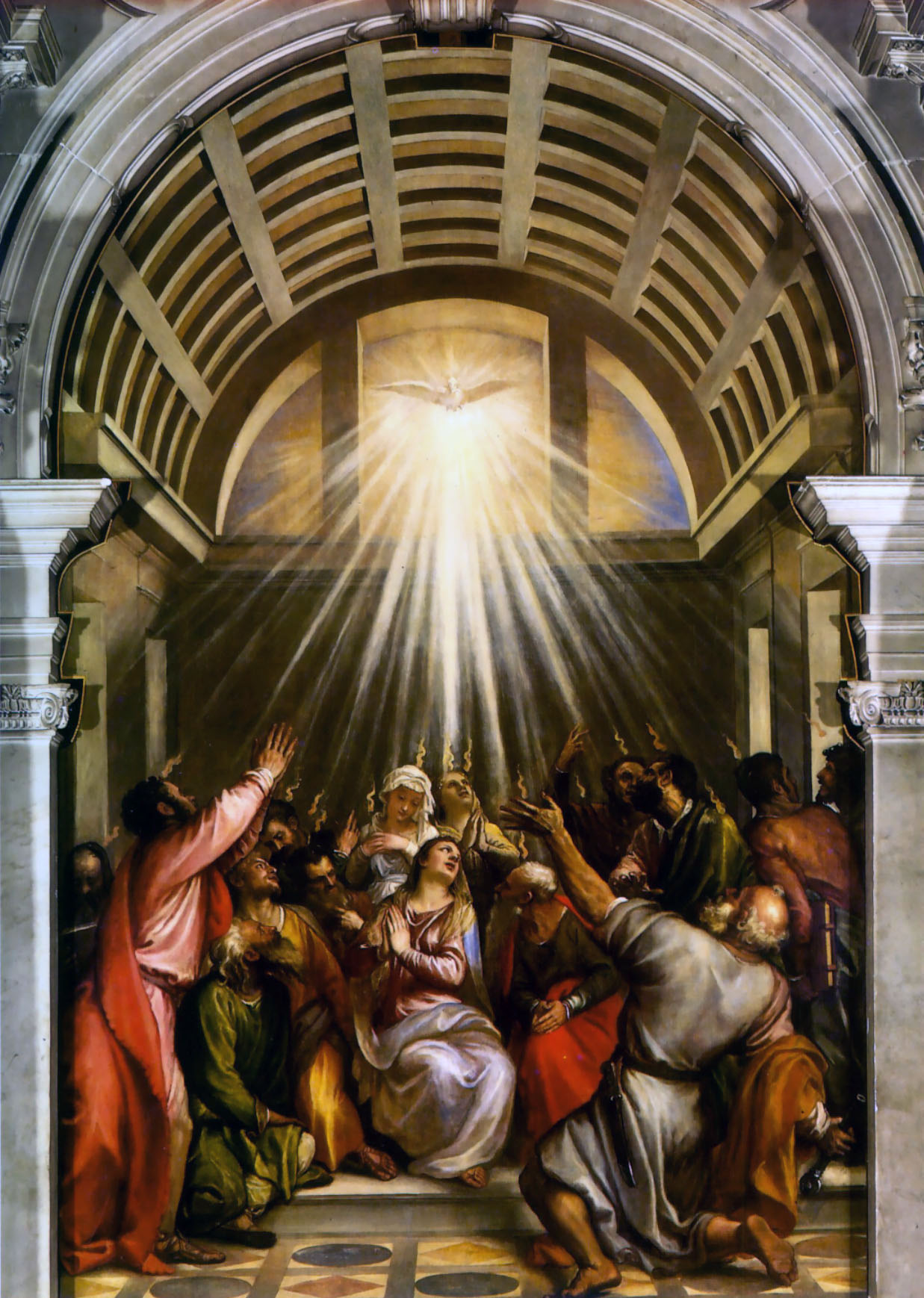
Why This Question Matters Now
Some teachers today say the Holy Spirit is only the power or presence of the Father and the Son, not a Person in His own right. This site has answered that claim before, in The Godhead Reviewed, and the history is laid out in Did Our Pioneers Believe In The Trinity? This article gathers the whole Bible picture in one place. It matters, because the Holy Spirit is the One who makes Jesus real in our hearts. We cannot cooperate well with Someone we do not know.
The Spirit In The Beginning
“And the earth was without form, and void; and darkness was upon the face of the deep. And the Spirit of God moved upon the face of the waters.”
Genesis 1:2
The Spirit was there at creation, moving over the dark waters. The same Spirit still creates and renews life:
“Thou sendest forth thy spirit, they are created: and thou renewest the face of the earth.”
Psalm 104:30
A Person, Not A Force
A force can be used, but it cannot be grieved. A power can be felt, but it cannot speak. Look at what the Bible says the Holy Spirit does:
- He teaches and reminds: “he shall teach you all things, and bring all things to your remembrance” (John 14:26).
- He speaks: “the Holy Ghost said, Separate me Barnabas and Saul for the work whereunto I have called them” (Acts 13:2).
- He forbids: Paul and Silas “were forbidden of the Holy Ghost to preach the word in Asia” (Acts 16:6).
- He prays for us: “the Spirit itself maketh intercession for us with groanings which cannot be uttered” (Romans 8:26).
- He chooses: He divides His gifts “to every man severally as he will” (1 Corinthians 12:11).
- He can be grieved: “grieve not the holy Spirit of God” (Ephesians 4:30).
- He can be lied to, as Ananias found out (Acts 5:3).
Teaching, speaking, praying, choosing and grieving are the actions of a Person.
“The Holy Spirit is a person, for He beareth witness with our spirits that we are the children of God… The Holy Spirit has a personality, else He could not bear witness to our spirits.”
Ellen G. White · Evangelism, p. 616
Those who deny the Spirit’s personhood often quote one sentence of Ellen White: “The Holy Spirit is Christ’s representative.” But read the whole sentence and the one after it:
“The Holy Spirit is Christ’s representative, but divested of the personality of humanity, and independent thereof. Cumbered with humanity, Christ could not be in every place personally.”
Ellen G. White · The Desire of Ages, p. 669
She is not saying the Spirit has no personality. She is saying He does not have a human personality, a body that can be in only one place at a time. That is exactly why Jesus said it was better for us that He go away and send the Comforter (John 16:7).
The Holy Spirit Is God
When Ananias lied about his offering, Peter told him who he had really lied to:
“But Peter said, Ananias, why hath Satan filled thine heart to lie to the Holy Ghost, and to keep back part of the price of the land? Whiles it remained, was it not thine own? and after it was sold, was it not in thine own power? why hast thou conceived this thing in thine heart? thou hast not lied unto men, but unto God.”
Acts 5:3-4
“Lie to the Holy Ghost”… “not lied unto men, but unto God.” Paul does the same thing with our bodies: “ye are the temple of God, and… the Spirit of God dwelleth in you” (1 Corinthians 3:16). And the Spirit has the qualities only God has:
- He is everywhere: “Whither shall I go from thy spirit? or whither shall I flee from thy presence?” (Psalm 139:7).
- He knows everything: “the Spirit searcheth all things, yea, the deep things of God” (1 Corinthians 2:10).
- He is eternal: Christ “through the eternal Spirit offered himself without spot to God” (Hebrews 9:14).
And Jesus said that the one sin that cannot be forgiven is blasphemy against the Holy Ghost (Matthew 12:31-32). No one can blaspheme a mere force. You can only blaspheme God.
Three Persons, One God
At the baptism of Jesus all three appeared at once: the Son in the water, the Spirit descending like a dove, the Father speaking from heaven:
“And Jesus, when he was baptized, went up straightway out of the water: and, lo, the heavens were opened unto him, and he saw the Spirit of God descending like a dove, and lighting upon him: And lo a voice from heaven, saying, This is my beloved Son, in whom I am well pleased.”
Matthew 3:16-17
Jesus then sent His followers to baptize “in the name of the Father, and of the Son, and of the Holy Ghost” (Matthew 28:19), and Paul closed a letter with a blessing from all three:
“The grace of the Lord Jesus Christ, and the love of God, and the communion of the Holy Ghost, be with you all. Amen.”
2 Corinthians 13:14
“There are three living persons of the heavenly trio; in the name of these three great powers—the Father, the Son, and the Holy Spirit—those who receive Christ by living faith are baptized.”
Ellen G. White · Evangelism, p. 615
(See The Godhead, Godhead Or Trinity? and Examine Yourselves Whether Ye Be In The Faith on 2 Corinthians 13.)
He Shall Not Speak Of Himself
If the Holy Spirit is God, why does the Bible say so much less about Him than about the Father and the Son? Jesus answered that question Himself:
“Howbeit when he, the Spirit of truth, is come, he will guide you into all truth: for he shall not speak of himself; but whatsoever he shall hear, that shall he speak: and he will shew you things to come. He shall glorify me: for he shall receive of mine, and shall shew it unto you.”
John 16:13-14
“But when the Comforter is come, whom I will send unto you from the Father, even the Spirit of truth, which proceedeth from the Father, he shall testify of me:”
John 15:26
The Holy Spirit does not draw attention to Himself. His whole work is to testify of the Father and the Son, like a light that shines on a painting rather than into your eyes. That is why the more a person is filled with the Spirit, the more they talk about Jesus, not about the Spirit or about their own experiences. A “spirit” that points people to itself, to sensations or to a human leader, is not the Spirit of truth.
“Of the Spirit Jesus said, ‘He shall glorify Me.’ The Saviour came to glorify the Father by the demonstration of His love; so the Spirit was to glorify Christ by revealing His grace to the world.”
Ellen G. White · The Desire of Ages, p. 671
He, She, Or It?
This question comes up often, and the original languages are worth knowing. In the Old Testament, the Hebrew word for spirit, ruach, is usually a feminine noun. In Genesis 1:2 the verb “moved” is even in the feminine form, and the same verb describes a mother eagle hovering over her nest:
“As an eagle stirreth up her nest, fluttereth over her young, spreadeth abroad her wings, taketh them, beareth them on her wings:”
Deuteronomy 32:11
In the New Testament, Jesus most often calls the Holy Spirit “the Comforter,” and comforting is something we associate above all with mothers. God Himself uses that picture:
“As one whom his mother comforteth, so will I comfort you; and ye shall be comforted in Jerusalem.”
Isaiah 66:13
On the other hand, the Greek word for spirit, pneuma, is neuter, which is why the King James Version sometimes says “the Spirit itself” (Romans 8:16, 26). And the Greek word for Comforter, parakletos, is masculine, and Jesus consistently called the Comforter “he.” Grammar alone cannot settle the question, because a word’s grammatical gender is not the same as a person’s sex. A neuter word does not make the Spirit an “it,” any more than a feminine word makes Him a woman.
My own belief is that the Holy Spirit is male, and I call Him “He,” as Jesus did. But the Bible’s feminine words and mothering pictures are not accidents. When God made humanity in His image, “male and female created he them” (Genesis 1:27). The tenderness, patience and comfort we see in the best mothers come from God too, and we meet them most clearly in the Comforter. (For more on this, see Godhead Or Trinity?)
What The Spirit Does
He Convicts
“Nevertheless I tell you the truth; It is expedient for you that I go away: for if I go not away, the Comforter will not come unto you; but if I depart, I will send him unto you. And when he is come, he will reprove the world of sin, and of righteousness, and of judgment:”
John 16:7-8
He Gives New Birth
“Jesus answered, Verily, verily, I say unto thee, Except a man be born of water and of the Spirit, he cannot enter into the kingdom of God. That which is born of the flesh is flesh; and that which is born of the Spirit is spirit.”
John 3:5-6
(See Except A Man Be Born Again.)
He Changes Our Character
“Sin could be resisted and overcome only through the mighty agency of the Third Person of the Godhead, who would come with no modified energy, but in the fullness of divine power. It is the Spirit that makes effectual what has been wrought out by the world’s Redeemer. It is by the Spirit that the heart is made pure.”
Ellen G. White · The Desire of Ages, p. 671
“But the fruit of the Spirit is love, joy, peace, longsuffering, gentleness, goodness, faith, Meekness, temperance: against such there is no law.”
Galatians 5:22-23
(See The Fruit Of The Spirit and More Than Conquerors on Romans 8.)
He Gives Gifts For Service
Wisdom, knowledge, faith, healing, prophecy, languages and more: “all these worketh that one and the selfsame Spirit, dividing to every man severally as he will” (1 Corinthians 12:11). No believer has all the gifts, and every believer has at least one. (See Now Ye Are The Body Of Christ.)
He Is Our Comforter
“And I will pray the Father, and he shall give you another Comforter, that he may abide with you for ever; Even the Spirit of truth; whom the world cannot receive, because it seeth him not, neither knoweth him: but ye know him; for he dwelleth with you, and shall be in you.”
John 14:16-17
“Circumstances may separate us from every earthly friend; but no circumstance, no distance, can separate us from the heavenly Comforter. Wherever we are, wherever we may go, He is always at our right hand to support, sustain, uphold, and cheer.”
Ellen G. White · The Desire of Ages, p. 669
The Former And The Latter Rain
In Israel, the “former rain” fell in autumn to sprout the seed, and the “latter rain” fell in spring to ripen the harvest. Joel used that picture for two great outpourings of God’s Spirit:
“Be glad then, ye children of Zion, and rejoice in the LORD your God: for he hath given you the former rain moderately, and he will cause to come down for you the rain, the former rain, and the latter rain in the first month.”
Joel 2:23
“And it shall come to pass afterward, that I will pour out my spirit upon all flesh; and your sons and your daughters shall prophesy, your old men shall dream dreams, your young men shall see visions: And also upon the servants and upon the handmaids in those days will I pour out my spirit.”
Joel 2:28-29
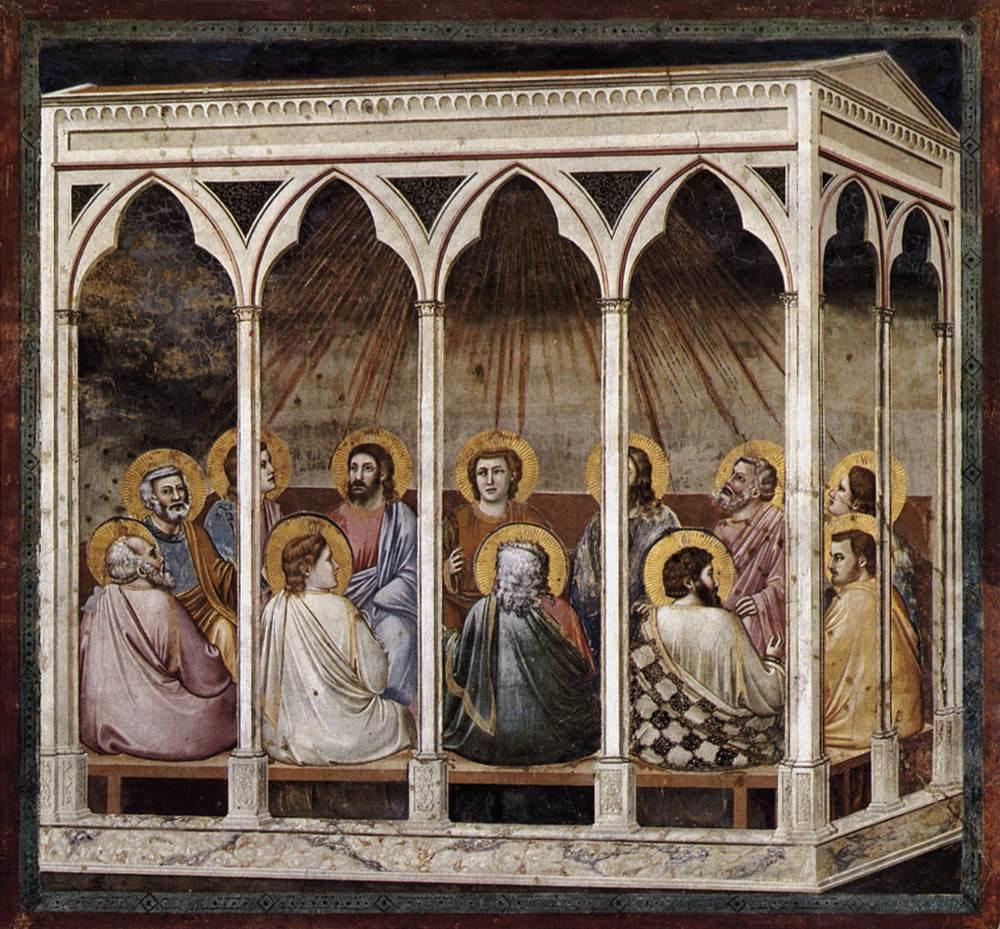
The former rain fell at Pentecost:
“And when the day of Pentecost was fully come, they were all with one accord in one place. And suddenly there came a sound from heaven as of a rushing mighty wind, and it filled all the house where they were sitting. And there appeared unto them cloven tongues like as of fire, and it sat upon each of them. And they were all filled with the Holy Ghost, and began to speak with other tongues, as the Spirit gave them utterance.”
Acts 2:1-4
“The outpouring of the Spirit in apostolic days was the ‘former rain,’ and glorious was the result. But the ‘latter rain’ will be more abundant.”
Ellen G. White · The Desire of Ages, p. 827
The latter rain is still ahead, to ripen God’s people for the harvest and to carry the last message to the world. (See The Latter Rain, I Will Pour Out My Spirit on Joel 2, Ye Shall Receive Power on Acts 1 and Not By Might, Nor By Power, But By My Spirit on Zechariah 4.)
How To Receive The Holy Spirit
God is not reluctant. He wants to give us His Spirit more than any parent wants to feed a hungry child:
“If ye then, being evil, know how to give good gifts unto your children: how much more shall your heavenly Father give the Holy Spirit to them that ask him?”
Luke 11:13
The Bible gives three simple conditions. Ask (Luke 11:13). Repent: “Repent, and be baptized… and ye shall receive the gift of the Holy Ghost” (Acts 2:38). And obey: the Holy Ghost is given “to them that obey him” (Acts 5:32). Before Pentecost, the disciples spent ten days praying together and putting away their differences. The latter rain will fall on a people who do the same.
(See Lord, Teach Us To Pray on Luke 11 and Grieve Not The Holy Spirit Of God on Ephesians 4.)
The Sin That Cannot Be Forgiven
“Wherefore I say unto you, All manner of sin and blasphemy shall be forgiven unto men: but the blasphemy against the Holy Ghost shall not be forgiven unto men. And whosoever speaketh a word against the Son of man, it shall be forgiven him: but whosoever speaketh against the Holy Ghost, it shall not be forgiven him, neither in this world, neither in the world to come.”
Matthew 12:31-32
Many sincere people have lain awake afraid they committed this sin. If you are worried about it, you almost certainly have not. It is not one careless word. It is a settled choice to reject the Spirit’s voice and call His work the work of Satan, until the heart can no longer hear Him at all.
“What constitutes the sin against the Holy Ghost? It is willfully attributing to Satan the work of the Holy Spirit.”
Ellen G. White · Testimonies for the Church, vol. 5, p. 634
As long as you want God, the Spirit is still drawing you. Answer Him today.
Keep Studying
- The Godhead
- Godhead Or Trinity?
- The Godhead Reviewed: answering the anti-Trinitarian claims
- Did Our Pioneers Believe In The Trinity?
- I Am The Way, The Truth, And The Life: John 14, the promise of the Comforter
- Be Of Good Cheer; I Have Overcome The World: John 16
- This Jesus Hath God Raised Up: Acts 2, Pentecost
- The Latter Rain
