What happens when a person dies? Most people have been told that the soul leaves the body and goes straight to heaven or hell. But the Bible says something very different, and far more comforting: death is a sleep, the dead “know not any thing,” and our loved ones who died in Christ are resting until Jesus wakes them at His coming. This study goes through what Scripture teaches, answers the texts that seem to say otherwise, and shows why this truth is a protection against one of the last great deceptions.
A Bible study · Arthur Baldwin · StandUp4Jesus.Org · 19 min read
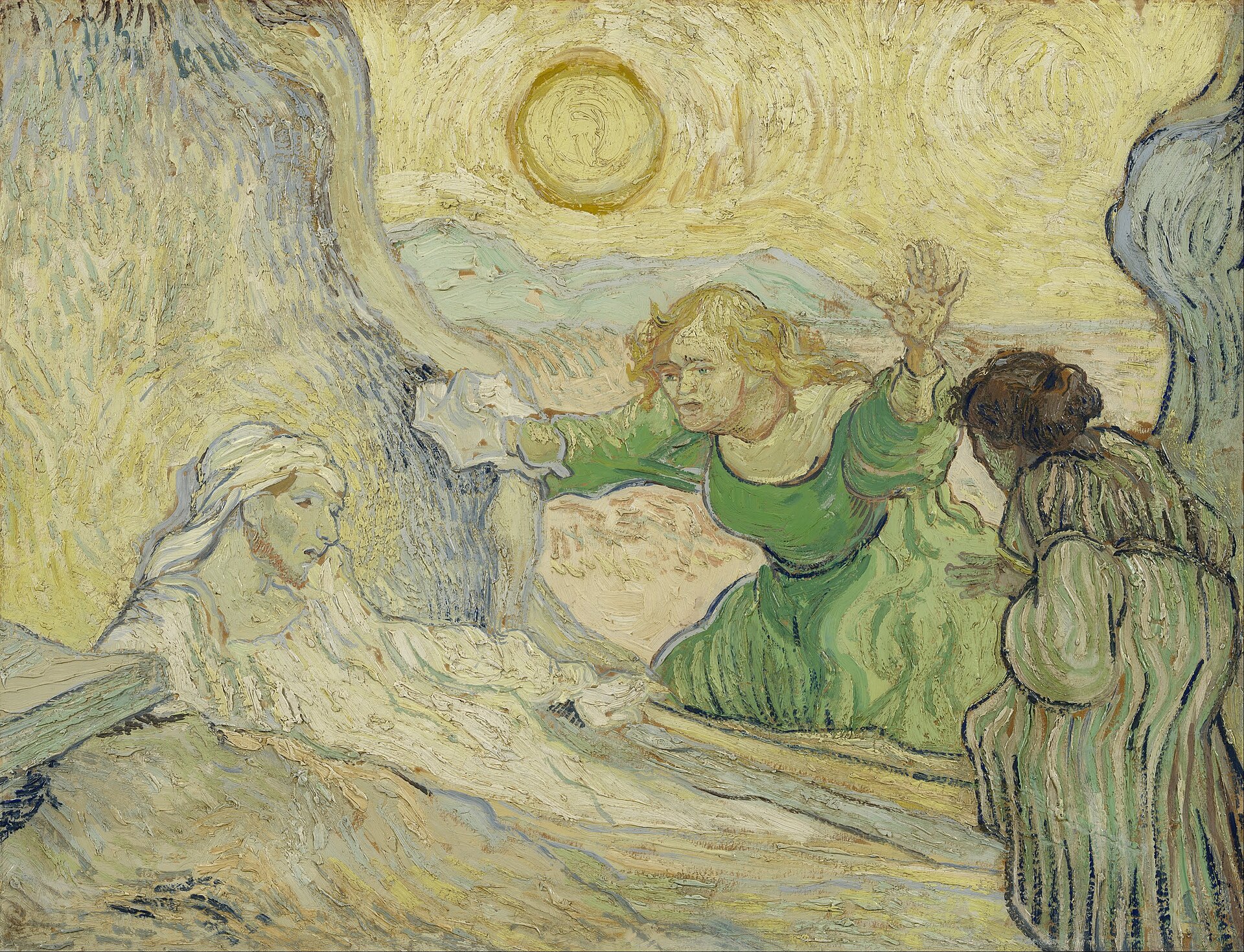
The First Lie
God told Adam plainly what sin would bring: “in the day that thou eatest thereof thou shalt surely die” (Genesis 2:17). Then the serpent contradicted Him:
“And the serpent said unto the woman, Ye shall not surely die: For God doth know that in the day ye eat thereof, then your eyes shall be opened, and ye shall be as gods, knowing good and evil.”
Genesis 3:4-5
“Ye shall not surely die.” That was Satan’s first lie, and he has never stopped telling it. Today it sounds like this: “No one really dies. You just pass on to another life.”
“The only one who promised Adam life in disobedience was the great deceiver. And the declaration of the serpent to Eve in Eden—‘Ye shall not surely die’—was the first sermon ever preached upon the immortality of the soul.”
Ellen G. White · The Great Controversy, p. 533
(The Deceptions page on this site opens with this same lie. Start there if you have not read it.)
What Is A Soul?
The Bible’s own definition of a soul is in its second chapter:
“And the LORD God formed man of the dust of the ground, and breathed into his nostrils the breath of life; and man became a living soul.”
Genesis 2:7
God did not put a soul into a body. He formed a body from the dust, breathed into it the breath of life, and the man became a living soul. Dust plus the breath of God equals a living soul. A soul is not a part of a person; it is the whole living person. That is why the Bible can speak of “souls” being counted, eating and dying.
“The soul that sinneth, it shall die. The son shall not bear the iniquity of the father, neither shall the father bear the iniquity of the son: the righteousness of the righteous shall be upon him, and the wickedness of the wicked shall be upon him.”
Ezekiel 18:20
At death the process simply runs backwards. The body returns to dust, and the breath returns to the God who gave it:
“Then shall the dust return to the earth as it was: and the spirit shall return unto God who gave it.”
Ecclesiastes 12:7
The Hebrew word for “spirit” here is ruach, the same word used for breath and wind. Job used it the same way: “All the while my breath is in me, and the spirit of God is in my nostrils” (Job 27:3). What goes back to God is the life-giving breath, not a conscious person. Nowhere does the Bible say the spirit that returns to God thinks, feels or remembers anything. (See Remember Now Thy Creator on Ecclesiastes 12 and Immortality Of The Soul!)
Only God Hath Immortality
The phrase “immortal soul” is not in the Bible even once. The Bible says only one Being has immortality by nature:
“Which in his times he shall shew, who is the blessed and only Potentate, the King of kings, and Lord of lords; Who only hath immortality, dwelling in the light which no man can approach unto; whom no man hath seen, nor can see: to whom be honour and power everlasting. Amen.”
1 Timothy 6:15-16
For human beings, immortality is something we are told to “seek for” (Romans 2:7). It is a gift God gives through the gospel: Jesus Christ “hath abolished death, and hath brought life and immortality to light through the gospel” (2 Timothy 1:10). And the Bible tells us exactly when we receive it: at the resurrection, when “this mortal must put on immortality” (1 Corinthians 15:53).
After Adam sinned, God barred the way to the tree of life, so that sin would not live for ever:
“Had man after his fall been allowed free access to the tree of life, he would have lived forever, and thus sin would have been immortalized. But cherubim and a flaming sword kept ‘the way of the tree of life’ (Genesis 3:24), and not one of the family of Adam has been permitted to pass that barrier and partake of the life-giving fruit. Therefore there is not an immortal sinner.”
Ellen G. White · The Great Controversy, p. 533
The Dead Know Not Any Thing
Scripture is remarkably plain about the condition of the dead:
“For the living know that they shall die: but the dead know not any thing, neither have they any more a reward; for the memory of them is forgotten. Also their love, and their hatred, and their envy, is now perished; neither have they any more a portion for ever in any thing that is done under the sun.”
Ecclesiastes 9:5-6
“Whatsoever thy hand findeth to do, do it with thy might; for there is no work, nor device, nor knowledge, nor wisdom, in the grave, whither thou goest.”
Ecclesiastes 9:10
“Put not your trust in princes, nor in the son of man, in whom there is no help. His breath goeth forth, he returneth to his earth; in that very day his thoughts perish.”
Psalm 146:3-4
“In that very day his thoughts perish.” Not after a period of purgatory, not after a trip to heaven, but the day he dies. The dead do not praise God (Psalm 115:17), and they do not remember Him:
“For in death there is no remembrance of thee: in the grave who shall give thee thanks?”
Psalm 6:5
Job asked the great question, and answered it with the only real hope there is:
“So man lieth down, and riseth not: till the heavens be no more, they shall not awake, nor be raised out of their sleep. O that thou wouldest hide me in the grave, that thou wouldest keep me secret, until thy wrath be past, that thou wouldest appoint me a set time, and remember me! If a man die, shall he live again? all the days of my appointed time will I wait, till my change come. Thou shalt call, and I will answer thee: thou wilt have a desire to the work of thine hands.”
Job 14:12-15
Job did not expect to go anywhere at death. He expected to wait in the grave, “till the heavens be no more,” until God called him and he answered. Even Martin Luther saw this in Ecclesiastes. Ellen White quotes his comment on it:
“Solomon judgeth that the dead are asleep, and feel nothing at all. For the dead lie there, accounting neither days nor years, but when they are awaked, they shall seem to have slept scarce one minute.”
Ellen G. White · The Great Controversy, p. 549
(See The Dead Know Not Any Thing, Put Not Your Trust In Princes, In Death There Is No Remembrance Of Thee and Man That Is Born Of A Woman Is Of Few Days.)
Our Friend Lazarus Sleepeth
Jesus had a name for death. He called it sleep:
“These things said he: and after that he saith unto them, Our friend Lazarus sleepeth; but I go, that I may awake him out of sleep. Then said his disciples, Lord, if he sleep, he shall do well. Howbeit Jesus spake of his death: but they thought that he had spoken of taking of rest in sleep. Then said Jesus unto them plainly, Lazarus is dead.”
John 11:11-14
“Christ represents death as a sleep to His believing children. Their life is hid with Christ in God, and until the last trump shall sound those who die will sleep in Him.”
Ellen G. White · The Desire of Ages, p. 527
Think about what that means for Lazarus. He had been dead four days. If his soul had gone to heaven, Jesus called him back out of paradise into a world of sorrow, and Lazarus, the man who had been to heaven and back, never said a single word about it. Not one line of Scripture records anything he saw, because he saw nothing. He was asleep.
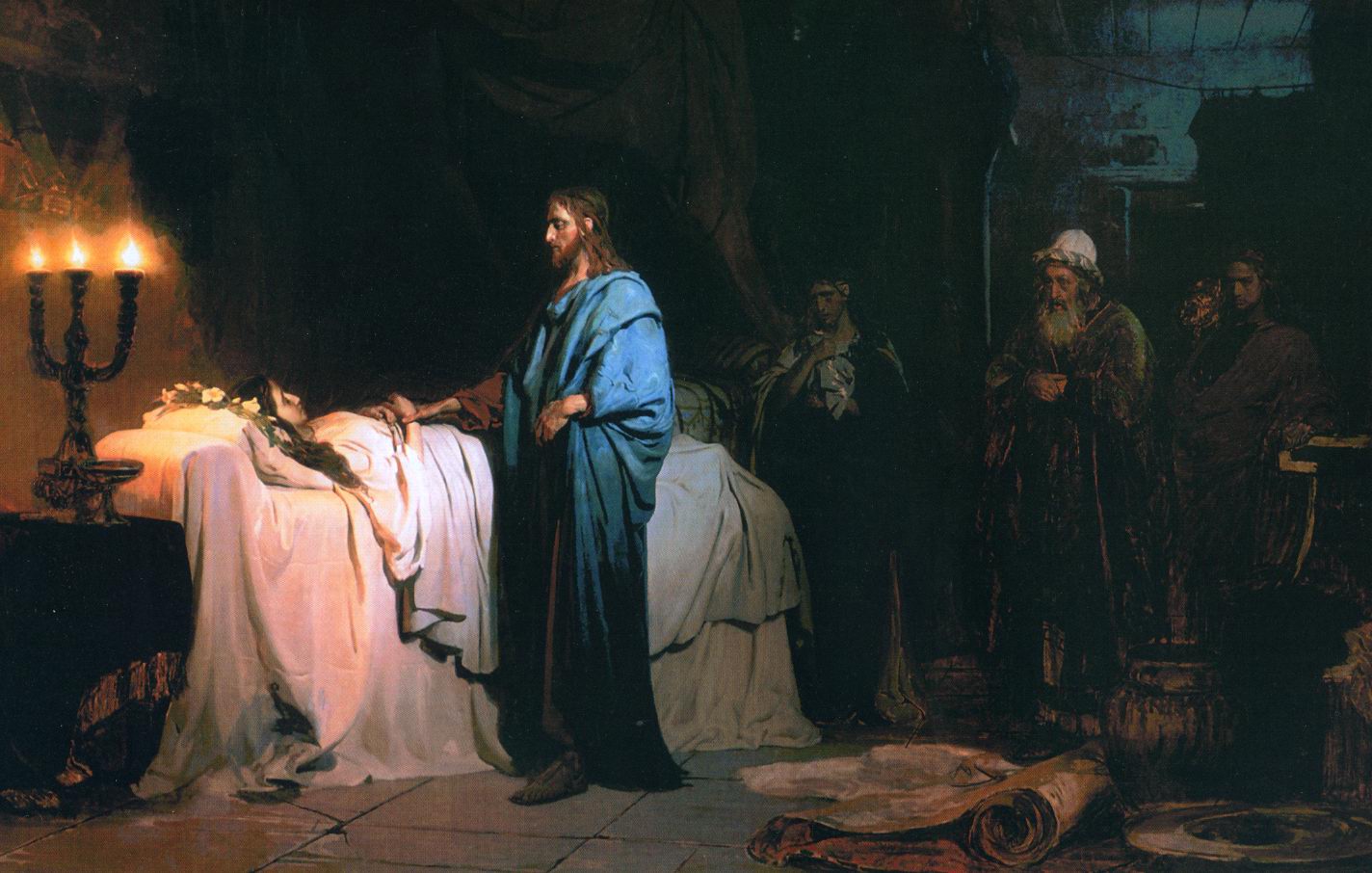
Jesus said the same thing at the bedside of Jairus’ daughter: “the damsel is not dead, but sleepeth” (Mark 5:39). Daniel used the same picture for the end of time:
“And many of them that sleep in the dust of the earth shall awake, some to everlasting life, and some to shame and everlasting contempt.”
Daniel 12:2
And Paul used it to comfort grieving believers in Thessalonica:
“But I would not have you to be ignorant, brethren, concerning them which are asleep, that ye sorrow not, even as others which have no hope. For if we believe that Jesus died and rose again, even so them also which sleep in Jesus will God bring with him.”
1 Thessalonians 4:13-14
(See I Am The Resurrection, And The Life on John 11, and the question asked on the Deceptions page: what kind of God would pull a man out of heaven to die a second time?)
David Is Not Ascended Into The Heavens
On the Day of Pentecost, Peter preached about King David, a man after God’s own heart. If anyone went to heaven at death, surely David did. But Peter said:
“Men and brethren, let me freely speak unto you of the patriarch David, that he is both dead and buried, and his sepulchre is with us unto this day.”
Acts 2:29
“For David is not ascended into the heavens: but he saith himself, The LORD said unto my Lord, Sit thou on my right hand,”
Acts 2:34
“The fact that David remains in the grave until the resurrection proves that the righteous do not go to heaven at death.”
Ellen G. White · The Great Controversy, p. 546
Hebrews 11 lists the heroes of faith, Abel, Noah, Abraham, Moses and many more, and then says they “received not the promise: God having provided some better thing for us, that they without us should not be made perfect” (Hebrews 11:39-40). They are waiting for us, so that all the faithful of every age can be rewarded together.
The Blessed Hope
If the dead were already in heaven, the resurrection would be almost pointless. But the Bible makes the resurrection the very center of our hope:
“For the Lord himself shall descend from heaven with a shout, with the voice of the archangel, and with the trump of God: and the dead in Christ shall rise first: Then we which are alive and remain shall be caught up together with them in the clouds, to meet the Lord in the air: and so shall we ever be with the Lord.”
1 Thessalonians 4:16-17
“Behold, I shew you a mystery; We shall not all sleep, but we shall all be changed, In a moment, in the twinkling of an eye, at the last trump: for the trumpet shall sound, and the dead shall be raised incorruptible, and we shall be changed. For this corruptible must put on incorruption, and this mortal must put on immortality. So when this corruptible shall have put on incorruption, and this mortal shall have put on immortality, then shall be brought to pass the saying that is written, Death is swallowed up in victory. O death, where is thy sting? O grave, where is thy victory?”
1 Corinthians 15:51-55
Paul even says that if there is no resurrection, “then they also which are fallen asleep in Christ are perished” (1 Corinthians 15:18). He could not have said that if the dead were already alive in heaven. And Paul himself expected his reward, not at his execution, but “at that day,” the day of Christ’s appearing (2 Timothy 4:8).
“Blessed rest for the weary righteous! Time, be it long or short, is but a moment to them. They sleep; they are awakened by the trump of God to a glorious immortality.”
Ellen G. White · The Great Controversy, p. 549
For the one who dies in Christ, the very next thing they know is the face of Jesus. Whether they slept a day or a thousand years, it will seem like a moment.
(See O Death, Where Is Thy Sting on 1 Corinthians 15 and So Shall We Ever Be With The Lord on 1 Thessalonians 4.)
What About These Texts?
A handful of passages are often used to teach that the dead are conscious. Each one makes sense when it is read in its setting and alongside the rest of Scripture.
The Thief On The Cross
“And Jesus said unto him, Verily I say unto thee, To day shalt thou be with me in paradise.”
Luke 23:43
The original Greek has no punctuation. The comma was placed by the translators. But Jesus Himself did not go to paradise that day. Three days later He told Mary, “I am not yet ascended to my Father” (John 20:17). He spent that Friday afternoon and the Sabbath in the tomb. So the promise was given “today,” in the darkest hour, while He hung dying, and it will be kept when Jesus comes into His kingdom, which is what the thief asked for: “Lord, remember me when thou comest into thy kingdom” (Luke 23:42).
“Soft and melodious the tone, full of love, compassion, and power the words: Verily I say unto thee today, Thou shalt be with Me in paradise.”
Ellen G. White · The Desire of Ages, p. 750
(See To Day Shalt Thou Be With Me In Paradise.)
The Rich Man And Lazarus
In Luke 16 Jesus tells of a rich man in flames who talks with Abraham across a great gulf. But this is a parable, one in a series of parables in Luke 15 and 16. Taken literally, heaven and hell would be close enough to hold a conversation, and a drop of water on a fingertip would relieve a disembodied soul. Jesus used a story His hearers already believed to teach a different lesson: this life is the only time to prepare, and there is no second chance after death.
“In this parable Christ was meeting the people on their own ground. The doctrine of a conscious state of existence between death and the resurrection was held by many of those who were listening to Christ’s words. The Saviour knew of their ideas, and He framed His parable so as to inculcate important truths through these preconceived opinions.”
Ellen G. White · Christ’s Object Lessons, p. 263
(See A Great Gulf Fixed.)
“To Depart, And To Be With Christ”
In Philippians 1:23 Paul says he has “a desire to depart, and to be with Christ.” And in 2 Corinthians 5:8 he would rather be “absent from the body, and to be present with the Lord.” Paul is not describing a soul floating away. In the same passage he says what he really longs for: not to be “unclothed, but clothed upon, that mortality might be swallowed up of life” (2 Corinthians 5:4). That happens at the resurrection. For the one who sleeps in Jesus, the next conscious moment after death is being with Christ, so for Paul the two could stand side by side. (See For To Me To Live Is Christ and We Have A Building Of God.)
The Souls Under The Altar
In Revelation 6:9-10, John sees “the souls of them that were slain” crying out from under an altar. This is a symbolic vision, full of horses, seals and a lamb with seven eyes. The martyrs’ cry for justice is like Abel’s: “the voice of thy brother’s blood crieth unto me from the ground” (Genesis 4:10). No one thinks Abel’s blood literally spoke. And no one would wish for the saved in heaven to spend eternity crying for revenge. (See Who Shall Be Able To Stand?)
Moses And Elijah On The Mountain
Moses and Elijah appeared with Jesus at the transfiguration (Matthew 17:3). But neither of them was a disembodied soul. Elijah never died; he “went up by a whirlwind into heaven” (2 Kings 2:11). And Moses was raised from the dead. That is why Michael disputed with the devil “about the body of Moses” (Jude 1:9).
“Moses passed through death, but Michael came down and gave him life before his body had seen corruption.”
Ellen G. White · The Story of Redemption, p. 206
(See This Is My Beloved Son; Hear Ye Him and Earnestly Contend For The Faith.)
The Spirits In Prison
1 Peter 3:19 says Christ “preached unto the spirits in prison.” Peter explains when: they were the people who “sometime were disobedient, when once the longsuffering of God waited in the days of Noah.” Christ preached to them by His Spirit, through Noah, while they were alive. It does not teach that Jesus preached to the dead. (See A Reason Of The Hope That Is In You.)
Saul And The Witch Of Endor
In 1 Samuel 28, King Saul, cut off from God, went to a medium and asked her to bring up the prophet Samuel. Something appeared and spoke. But God had forbidden that very practice:
“There shall not be found among you any one that maketh his son or his daughter to pass through the fire, or that useth divination, or an observer of times, or an enchanter, or a witch, Or a charmer, or a consulter with familiar spirits, or a wizard, or a necromancer. For all that do these things are an abomination unto the LORD: and because of these abominations the LORD thy God doth drive them out from before thee.”
Deuteronomy 18:10-12
Would God’s faithful prophet answer the call of a sorceress, when God Himself had refused to answer Saul “neither by dreams, nor by Urim, nor by prophets” (1 Samuel 28:6)? Saul “died for his transgression… for asking counsel of one that had a familiar spirit” (1 Chronicles 10:13).
“It was not God’s holy prophet that came forth at the spell of a sorcerer’s incantation. Samuel was not present in that haunt of evil spirits. That supernatural appearance was produced solely by the power of Satan.”
Ellen G. White · Patriarchs and Prophets, p. 679
(See David Encouraged Himself In The LORD His God.)
Why It Matters: The Last Great Deception
This is not a harmless difference of opinion. If the dead are conscious, then a voice that sounds like your mother, or a vision of a departed saint, could be exactly what it claims to be. But if the dead know nothing, then every such appearance comes from somewhere else. Paul warned that “Satan himself is transformed into an angel of light” (2 Corinthians 11:14), and Revelation warns that in the last days “the spirits of devils, working miracles” will go out to the whole world (Revelation 16:14).
“He has power to bring before men the appearance of their departed friends. The counterfeit is perfect; the familiar look, the words, the tone, are reproduced with marvelous distinctness.”
Ellen G. White · The Great Controversy, p. 552
God’s answer to every séance, medium and “message from beyond” is the same today as it was in Isaiah’s time:
“And when they shall say unto you, Seek unto them that have familiar spirits, and unto wizards that peep, and that mutter: should not a people seek unto their God? for the living to the dead? To the law and to the testimony: if they speak not according to this word, it is because there is no light in them.”
Isaiah 8:19-20
Ellen White saw that two false doctrines would prepare the world for the final deception. One is the immortality of the soul. The other is Sunday sacredness, covered in The Bible Sabbath.
“Through the two great errors, the immortality of the soul and Sunday sacredness, Satan will bring the people under his deceptions. While the former lays the foundation of spiritualism, the latter creates a bond of sympathy with Rome.”
Ellen G. White · The Great Controversy, p. 588
What About Hell?
If there is no immortal soul, there is no soul to burn for ever. The Bible says “the wages of sin is death; but the gift of God is eternal life through Jesus Christ our Lord” (Romans 6:23). The punishment of the wicked is real, and it is final. It is called “the second death” (Revelation 20:14), and Malachi says the wicked shall be “ashes under the soles of your feet” (Malachi 4:3). God does not keep sinners alive for ever in order to torture them. Sin and sinners will come to an end.
This subject is covered in depth in The Most Damaging Doctrine! and in Satan Bound For One Thousand Years on Revelation 20.
Comfort For Those Who Mourn
This truth is not cold. It is the most comforting teaching in the Bible for anyone who has buried someone they love. Your loved one who died in Christ is not watching your grief from heaven, and is not suffering anywhere. They are resting, safe in God’s memory, and the next voice they hear will be the voice of Jesus.
“Marvel not at this: for the hour is coming, in the which all that are in the graves shall hear his voice, And shall come forth; they that have done good, unto the resurrection of life; and they that have done evil, unto the resurrection of damnation.”
John 5:28-29
“Jesus said unto her, I am the resurrection, and the life: he that believeth in me, though he were dead, yet shall he live: And whosoever liveth and believeth in me shall never die. Believest thou this?”
John 11:25-26
Paul ended his teaching on the resurrection with these words, and they are still the right words to say at a graveside:
“Wherefore comfort one another with these words.”
1 Thessalonians 4:18
(For help with fear of death, see Conquering Fear And Death. For what awaits the redeemed, see All About Heaven!)
Keep Studying
- Deceptions: The Very First Lie!
- Immortality Of The Soul!
- The Most Damaging Doctrine!: the truth about hell
- Conquering Fear And Death
- The Dead Know Not Any Thing: Ecclesiastes 9
- I Am The Resurrection, And The Life: John 11
- O Death, Where Is Thy Sting: 1 Corinthians 15
- So Shall We Ever Be With The Lord: 1 Thessalonians 4
- To Day Shalt Thou Be With Me In Paradise: Luke 23
- A Great Gulf Fixed: Luke 16
- The Sanctuary And 1844: the judgment that comes before the resurrection
