A childless woman is told to sing about children and to start enlarging her tent. Then God calls Himself two things at once that ought not to fit — the One who made her, and the man she is married to — and stakes the whole promise on a rainbow.
A study in Isaiah 54-55 · Arthur Baldwin · StandUp4Jesus.Org · 17 min read
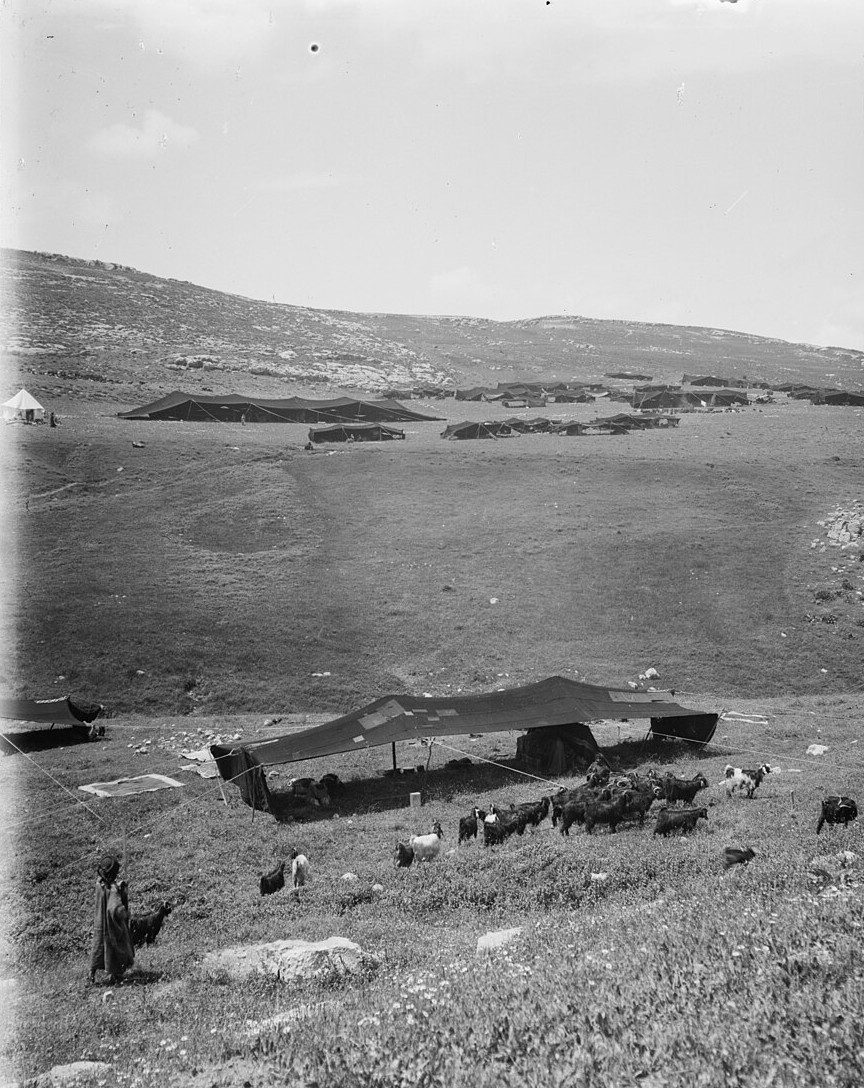
Table of Contents
Sing, O Barren
“Sing, O barren, thou that didst not bear; break forth into singing, and cry aloud, thou that didst not travail with child: for more are the children of the desolate than the children of the married wife, saith the LORD. Enlarge the place of thy tent, and let them stretch forth the curtains of thine habitations: spare not, lengthen thy cords, and strengthen thy stakes.”
Isaiah 54:1, 2
The chapter opens by telling a childless woman to sing about children, which is either cruelty or prophecy, and Isaiah leaves no doubt which.
Then it gets more demanding. She is not merely to be encouraged; she is to go outside and start letting out the guy ropes. Enlarge the place of thy tent. Lengthen thy cords. Strengthen thy stakes. That is physical work, done in public, on the strength of a family that does not exist yet, in front of neighbors who can count.
Notice the two halves of that instruction, because they are opposite motions and both are required. Lengthen the cords — reach further out. Strengthen the stakes — go deeper in. A tent enlarged in one direction only comes down in the first wind. Expansion without anchorage is not faith; it is optimism, and Isaiah asks for both in the same breath.
“The words of the Lord in the fifty-fourth chapter of Isaiah are for us… God’s people have a mighty work before them, a work that must continually rise to greater prominence. Our efforts in missionary lines must become far more extensive.”
Ellen G. White · Testimonies for the Church, vol. 6, p. 23
Paul saw the point of the verse and used it exactly where you would expect — arguing that the promise had always run wider than the bloodline. “Rejoice, thou barren that bearest not… for the desolate hath many more children than she which hath an husband” (Galatians 4:27). The barren woman’s household ends up bigger than the married one’s. That is the arithmetic of the whole chapter, and it is the same arithmetic as the quarry in chapter 51: God is very good at starting from nothing.
Thy Maker Is Thine Husband
“For thy Maker is thine husband; the LORD of hosts is his name; and thy Redeemer the Holy One of Israel; The God of the whole earth shall he be called. For the LORD hath called thee as a woman forsaken and grieved in spirit, and a wife of youth, when thou wast refused, saith thy God.”
Isaiah 54:5, 6
Two words are put side by side here that do not belong in the same sentence anywhere else in human speech. Maker. Husband.
A maker stands at the greatest possible distance from what he makes. A husband stands at the least possible distance. One relation is all authority and no intimacy; the other is meant to be all intimacy. Isaiah says they are the same person, and does not soften it or explain it away.
And the four titles in that verse climb outward as you read them — thy Maker, then the LORD of hosts (the armies of heaven), then thy Redeemer the Holy One of Israel, then The God of the whole earth. The sentence starts in a marriage and ends at the size of the planet, and it is one man being described the entire way.
Then verse 6, which is the tenderest and most specific description of the woman He is addressing: a woman forsaken and grieved in spirit, and a wife of youth, when thou wast refused. Not a bride at her best. A woman who was married young, and left, and has been carrying it since. He does not marry her in spite of that history. He marries her as that — the participle is attached to her, and He uses it.
This is not an isolated flourish. It is one of the load-bearing pictures of Scripture, and it runs from Hosea marrying an unfaithful wife on God’s instructions, through this verse, to Paul saying flatly of marriage that “this is a great mystery: but I speak concerning Christ and the church” (Ephesians 5:32), and on to the marriage supper of the Lamb. The site’s study of the book that develops the theme furthest is Song Of Solomon Prophecy.
For A Small Moment
“For a small moment have I forsaken thee; but with great mercies will I gather thee. In a little wrath I hid my face from thee for a moment; but with everlasting kindness will I have mercy on thee, saith the LORD thy Redeemer.”
Isaiah 54:7, 8
Read those two verses as a set of proportions and they are almost mathematical. A small moment against great mercies. A little wrath, for a moment, against everlasting kindness.
It has to be said honestly that this is not how it felt from inside. The exile ran seventy years. Nobody living through it would have called it a small moment, and God is not asking her to pretend she enjoyed it or that it was brief on her calendar.
What He is giving her is the ratio. Small and little are not measurements of her experience; they are measurements against everlasting, and against everlasting almost anything is a moment. That is a real comfort and a limited one, and Isaiah does not oversell it. He puts the two quantities beside each other and lets her look.
Notice also that God says I hid my face. Not I left. He was there the whole time with His face turned away, which is a very different thing from absence, and is exactly what Zion had complained about in 49:14.
The Waters Of Noah
“For this is as the waters of Noah unto me: for as I have sworn that the waters of Noah should no more go over the earth; so have I sworn that I would not be wroth with thee, nor rebuke thee. For the mountains shall depart, and the hills be removed; but my kindness shall not depart from thee, neither shall the covenant of my peace be removed, saith the LORD that hath mercy on thee.”
Isaiah 54:9, 10
Here God does something He rarely does: He offers evidence for a promise, and the evidence is another promise He has already been keeping in public for centuries.
The argument runs like this. You have watched it rain your whole life and the world has not gone under. Every time the clouds broke and did not become a flood, that was a sworn oath being kept where you could see it. So — on exactly that footing — take this one.
Which makes the rainbow a receipt. It was never only a decoration; it was posted as security, and Isaiah is now borrowing against it.
“With the assurance given to Noah concerning the Flood, God Himself has linked one of the most precious promises of His grace.”
Ellen G. White · Patriarchs and Prophets, p. 107
And then verse 10 raises the stakes as far as they can go. The mountains shall depart, and the hills be removed. Isaiah has already said the heavens will vanish like smoke; now the mountains go too. Everything a person would reach for as an image of permanence is put on the list of things that will not last — and then: but my kindness shall not depart from thee.
The word is kindness. Not power, not faithfulness in the abstract. The last thing standing when the mountains have gone is God being kind to a particular person.
No Weapon That Is Formed
“Behold, I have created the smith that bloweth the coals in the fire, and that bringeth forth an instrument for his work; and I have created the waster to destroy. No weapon that is formed against thee shall prosper; and every tongue that shall rise against thee in judgment thou shalt condemn. This is the heritage of the servants of the LORD, and their righteousness is of me, saith the LORD.”
Isaiah 54:16, 17
Verse 17 is quoted more often than almost anything else in Isaiah, and usually with verse 16 left off and the last clause left off, which between them are what the promise actually means. It is worth putting all three parts back.
First, the smith belongs to God. Before saying anything about weapons, God says He made the man who makes them — and, more startling, I have created the waster to destroy. The reason no weapon prospers is not that weapons will not be made. It is that the forge and the man at it are inside God’s government, the same argument Isaiah made about the Assyrian axe in chapter 10 and about Cyrus in chapter 45.
Second, weapons are formed. The verse plainly says so. It does not promise that nothing will be aimed at you, or that nothing aimed will land. Isaiah has spent the whole book describing God’s people being besieged, deported and killed. Anyone who reads this line as a guarantee of physical safety is being set up for a disappointment the text never authorized.
Third, the setting is a courtroom. Look at the parallel line: every tongue that shall rise against thee in judgment thou shalt condemn. The promise is about a verdict. What will not prosper is the case against you — which is precisely what the Servant said in his own defense in 50:8, who will contend with me?, and what Paul turns into a question nobody answers in Romans 8.
And then the clause that grounds all of it, and that almost nobody quotes: their righteousness is of me, saith the LORD.
There is the reason the case fails. Not because the servants of the LORD are innocent — the book has been unsparing about them from chapter 1. The charge cannot stick because the righteousness on the table is not theirs. It is of Him, issued rather than earned, and there is nothing in it for a prosecutor to attack. Ellen White quotes this exact clause as the reward of choosing right at cost, and it is the last line of that thought in Education.
Ho, Every One That Thirsteth
“Ho, every one that thirsteth, come ye to the waters, and he that hath no money; come ye, buy, and eat; yea, come, buy wine and milk without money and without price. Wherefore do ye spend money for that which is not bread? and your labour for that which satisfieth not?”
Isaiah 55:1, 2
It opens with a shout. Ho is what a trader calls across a market, and the whole passage is staged as a stall — come, buy, eat — with one impossible term written into it.
He that hath no money; come ye, buy. The invitation is addressed specifically to the people who cannot pay, and they are told to purchase. God does not say the goods are free, which would be a smaller thing to say. He keeps the language of a transaction, keeps the value of what is being handed over, and removes the price.
And the goods are not survival rations. Water, yes — but also wine and milk. Nobody needs wine to live. It is the drink of a feast, and it is on the same list as the water.
Verse 2 asks the question that follows: wherefore do ye spend money for that which is not bread? and your labour for that which satisfieth not? Not a rebuke for extravagance. A question about efficiency — you are paying, and it is not feeding you.
This is the verse that ended one man’s long attempt to earn what was being given away. John Wesley had spent years at it — fasts, alms, self-denial, method — and Ellen White records the moment the arithmetic broke:
“Now he had found Him; and he found that the grace which he had toiled to win by prayers and fasts, by almsdeeds and self-abnegation, was a gift, ‘without money and without price.’”
Ellen G. White · The Great Controversy, p. 256
He had been spending money for that which is not bread, and doing it devoutly.
While He May Be Found
“Seek ye the LORD while he may be found, call ye upon him while he is near: Let the wicked forsake his way, and the unrighteous man his thoughts: and let him return unto the LORD, and he will have mercy upon him; and to our God, for he will abundantly pardon.”
Isaiah 55:6, 7
Twice: while. It is a window, not a standing arrangement, and Isaiah says so without threatening anybody. He may be found — now. He is near — now.
Then the turning is described in two parts, and the second is the one we would have left out. Let the wicked forsake his way — his conduct, the obvious half. And the unrighteous man his thoughts — the way he has been reasoning about the whole business.
Hold on to that word. It is about to be used again, and everything depends on the connection.
And the promise at the end is deliberately excessive: he will abundantly pardon. Not adequately. Not on conditions to be reviewed. The Hebrew is closer to he will multiply to pardon — pardon heaped on pardon, past the point of what the case requires.
My Thoughts Are Not Your Thoughts
“For my thoughts are not your thoughts, neither are your ways my ways, saith the LORD. For as the heavens are higher than the earth, so are my ways higher than your ways, and my thoughts than your thoughts.”
Isaiah 55:8, 9
This is one of the most quoted passages in the Old Testament and one of the most consistently misapplied, and the misapplication is worth correcting gently, because it is usually made by people trying to be reverent.
It is generally produced at a funeral, or after a diagnosis, to mean something like: God is inscrutable, His reasons are beyond us, stop asking. Used that way it is a lid on the conversation, and a kind one, and it is not what the verse says.
Look at the first word. For. It is not a new subject; it is the reason for the sentence before it. And the sentence before it is about pardon.
Verse 7 says the wicked man should forsake his thoughts and come back, because God will abundantly pardon. Verse 8 explains why that is believable: for my thoughts are not your thoughts. The two occurrences of the word are four lines apart and they are the same word on purpose.
So the contrast is not between our small minds and God’s unknowable ones. It is between a man’s thoughts about forgiveness and God’s. The unrighteous man is being told that his instinct — that he has gone too far, that there must be a limit, that a pardon this size cannot be real — is precisely the thinking he has to abandon, because God’s thoughts on the subject are as far above his as the sky is above the ground.
The height in verse 9 is a measurement of mercy, not of mystery. Read in context it is not a door closing on our questions. It is a door opening much wider than we expected, and being told so.
None of which means God is not also beyond us; He plainly is, and other passages say so. But this passage says something better and more specific, and flattening it into a general statement about divine mystery costs the very reader who most needs it the one thing it was written to tell him.
It Shall Not Return Unto Me Void
“For as the rain cometh down, and the snow from heaven, and returneth not thither, but watereth the earth, and maketh it bring forth and bud, that it may give seed to the sower, and bread to the eater: So shall my word be that goeth forth out of my mouth: it shall not return unto me void, but it shall accomplish that which I please, and it shall prosper in the thing whereto I sent it.”
Isaiah 55:10, 11
Rain goes down and does not come back up as rain. It comes back as bread — by way of soil, seed, harvest, mill and oven, none of which look like weather while they are happening.
That is the shape of the promise, and it includes the delay. Nobody watching a wet field has any evidence that bread is coming. The chain is long, most of it is underground, and the guarantee is not that you will see the connection.
One caution, since this verse gets borrowed. The promise is made about my word that goeth forth out of my mouth — not about our sermons, our arguments or our opinions, and certainly not about every use we make of a text. What is guaranteed to accomplish something is what God actually said. Our part is closer to the sower’s, and Ellen White puts it exactly there:
“Not less confidently are we, in the spiritual sowing, to labor, trusting His assurance: ‘So shall My word be that goeth forth out of My mouth: it shall not return unto Me void, but it shall accomplish that which I please, and it shall prosper in the thing whereto I sent it.’”
Ellen G. White · Education, p. 105
Instead Of The Thorn
“For ye shall go out with joy, and be led forth with peace: the mountains and the hills shall break forth before you into singing, and all the trees of the field shall clap their hands. Instead of the thorn shall come up the fir tree, and instead of the brier shall come up the myrtle tree: and it shall be to the LORD for a name, for an everlasting sign that shall not be cut off.”
Isaiah 55:12, 13
The two chapters end with the landscape joining in, and with one substitution that is more than scenery.
Instead of the thorn. Thorns are not a random example of an unpleasant plant. They are the first thing named when the ground was cursed: “cursed is the ground for thy sake… Thorns also and thistles shall it bring forth to thee” (Genesis 3:17, 18). Thorns are what a fallen world grows by itself, and they have been the standing evidence of it ever since.
So a fir tree standing where a thorn was is not landscaping. It is the curse of Genesis 3 being reversed, item by item, and Isaiah offers it as the closing sign.
And it is impossible to read the word and not think of where the thorns ended up. They were gathered, plaited into a circle, and pressed onto the head of the man who was undoing the curse — “when they had platted a crown of thorns, they put it upon his head” (Matthew 27:29). The sign of the curse was worn by the one removing it, which is the same movement as the cup in chapter 51, taken out of her hand and drunk by Him.
The last line makes the whole thing a monument: it shall be to the LORD for a name, for an everlasting sign that shall not be cut off. A tree where a thorn was, standing permanently, with His name on it.
Which is where two chapters that began with a barren woman being told to sing have been going the whole time. Enlarge the tent. Your Maker is your husband. The rainbow was a receipt. The case against you fails because the righteousness is not yours. Come and buy without money. And the thorns are coming out.
