A chapter that opens by handing a people their own name back, promises company in the water and the fire rather than exemption from either, calls the blind to the witness stand, and then, without a word of transition, tells them they have worn God out.
A study in Isaiah 43 · Arthur Baldwin · StandUp4Jesus.Org · 24 min read
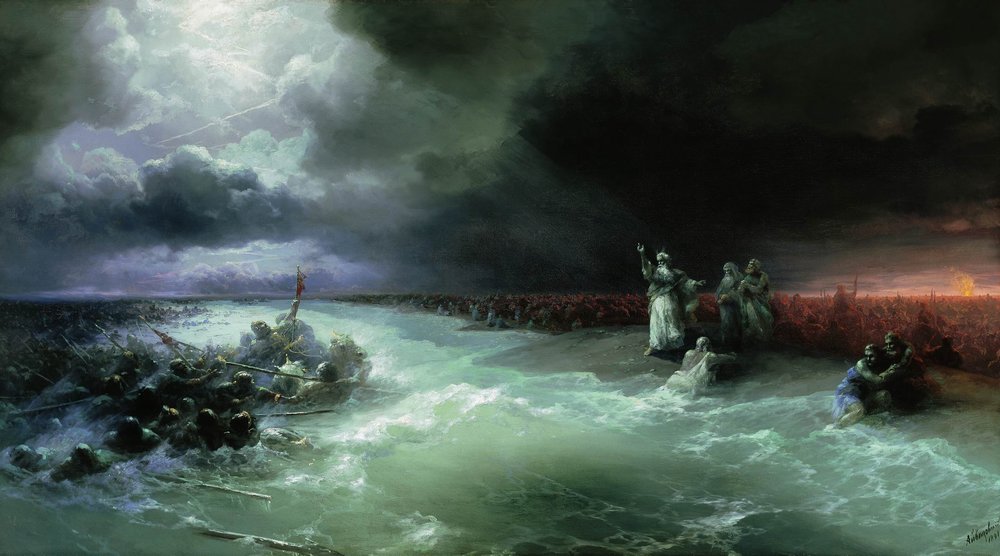
Table of Contents
But Now
You cannot read this chapter properly without reading the last three verses of the one before it. Isaiah 42 ends badly.
“Who gave Jacob for a spoil, and Israel to the robbers? did not the LORD, he against whom we have sinned? for they would not walk in his ways, neither were they obedient unto his law. Therefore he hath poured upon him the fury of his anger, and the strength of battle: and it hath set him on fire round about, yet he knew not; and it burned him, yet he laid it not to heart.”
Isaiah 42:24, 25
A nation on fire and not aware of it. That is where the chapter division falls, and the division is a nuisance, because the very next words are these:
“But now thus saith the LORD that created thee, O Jacob, and he that formed thee, O Israel, Fear not: for I have redeemed thee, I have called thee by thy name; thou art mine.”
Isaiah 43:1
But now. Two words, and the whole direction of the address reverses. Nothing has been retracted — the spoiling was deserved, and Isaiah does not soften it later. What changes is that God begins to speak about Himself instead of about their record.
And notice what He does with the fire. Chapter 42 said it set him on fire round about. Chapter 43 will say when thou walkest through the fire, thou shalt not be burned. The image is picked straight up out of the previous paragraph and handed back transformed. Whatever else Isaiah 43 is, it is an answer to the sentence immediately before it.
Created, Formed, Redeemed, Called
Four verbs in one verse, and they are not interchangeable.
Created and formed are the words of Genesis. God does not say He chose Jacob, as though picking from a shelf; He says He made him. A nation, here, is spoken of the way a man is spoken of in Genesis 2 — something shaped deliberately, by hand, for a purpose.
Redeemed is a legal word, and a family one. In Israel’s law the redeemer was the nearest relative — the man obliged to buy back a kinsman’s field, or the kinsman himself, when debt had swallowed them. It is not the language of a benefactor helping a stranger. It is the language of a relative paying because the relationship gives him no choice.
Called thee by thy name is the one that gets past people’s defenses, and it should. Isaiah has been dealing in nations for forty chapters — Moab, Damascus, Egypt, Tyre, Assyria, Babylon. Whole peoples weighed and sentenced. Then the same voice says by thy name.
And then the last three words, which are the point of the other four: thou art mine. Ownership. Not a compliment, and not a reward — a claim of title. It is worth holding onto, because by the end of this chapter the same God who says thou art mine will say He has given Jacob to the curse. Both sentences are true, and they are true for the same reason. He is not indifferent to what belongs to Him.
When Thou Passest Through The Waters
“When thou passest through the waters, I will be with thee; and through the rivers, they shall not overflow thee: when thou walkest through the fire, thou shalt not be burned; neither shall the flame kindle upon thee.”
Isaiah 43:2
Read the first word again. It is when, not if. Four times over, and not once does God offer to route anybody around the trouble.
This is a promise people quote to each other in hospital corridors, and it deserves the use, but it is habitually quoted as though it said something it does not. It does not say the waters will be drained. It says they will not overflow you. It does not say the fire will be put out. It says it will not kindle upon you. The circumstances stand exactly as they are; what is promised is that you will come out the other side, and that you will not be alone in the middle.
And the four images are not decoration. Israel had been through water twice — the Red Sea and the Jordan — and both times the record is careful to say that the people walked. “The priests that bare the ark of the covenant of the LORD stood firm on dry ground in the midst of Jordan, and all the Israelites passed over on dry ground” (Joshua 3:17). They were not carried over in their sleep. They went in.
The fire had not happened yet when Isaiah wrote it. It happened about a century and a half later, in Babylon, to three young men who had been carried off in the deportation this same book keeps warning about — and Nebuchadnezzar, looking into his own furnace, said the thing Isaiah 43:2 promises: “Lo, I see four men loose, walking in the midst of the fire, and they have no hurt; and the form of the fourth is like the Son of God” (Daniel 3:25). Four men. The promise was I will be with thee, and it was kept literally, and it was kept inside the furnace rather than instead of it.
“The three Hebrews declared to the whole nation of Babylon their faith in Him whom they worshiped. They relied on God. In the hour of their trial they remembered the promise, ‘When thou passest through the waters, I will be with thee…’”
Ellen G. White · Prophets and Kings, p. 512
The New Testament reaches for the same verse in a boat. Peter walks toward Christ on the water, looks at the waves, and goes under — and the comment on it runs straight to Isaiah 43: “Jesus did not bid Peter come to Him that he should perish; He does not call us to follow Him, and then forsake us” (The Desire of Ages, p. 382), followed by these verses quoted in full.
Which is worth saying plainly, because it is the difference between this promise and a superstition. Peter did sink. The three Hebrews were thrown in. What God undertakes here is not that the water will stay off you. It is that it will not close over you.
I Gave Egypt For Thy Ransom
“For I am the LORD thy God, the Holy One of Israel, thy Saviour: I gave Egypt for thy ransom, Ethiopia and Seba for thee. Since thou wast precious in my sight, thou hast been honourable, and I have loved thee: therefore will I give men for thee, and people for thy life.”
Isaiah 43:3, 4
This needs care, because it is easy to make it say more than it does.
Isaiah is talking about history, not about the atonement. The setting is the deliverance from Babylon that the next two chapters will pin to a named Persian king, and the plain sense is a transaction between empires: God will hand Cyrus the south — Egypt, Ethiopia, Seba — in exchange for the release of a small captive people who are worth nothing on the open market. Cyrus’s son took Egypt within a generation. Nobody at the time would have called that a fair trade in Israel’s favor. That is exactly the point being made.
So the verse is not saying Egypt paid for anybody’s sin. Egypt did not atone. What it establishes is a habit: when God recovers His people, He pays, and He is not careful about the price.
Hold that habit in mind for nine chapters. The same book that says I gave Egypt for thy ransom will eventually name a price that is not a country. In Isaiah 53 the ransom stops being real estate.
One more thing in verse 4, since it is easy to read past. Since thou wast precious in my sight, thou hast been honorable, and I have loved thee. The order of that sentence is the whole gospel in miniature. They did not become precious by being honorable. They became honorable because He held them precious. Value came first and conduct followed, and every attempt to reverse those two has ended in a religion of merit.
Bring My Sons From Far
“I will say to the north, Give up; and to the south, Keep not back: bring my sons from far, and my daughters from the ends of the earth; Even every one that is called by my name: for I have created him for my glory, I have formed him; yea, I have made him.”
Isaiah 43:6, 7
God addresses the compass points as though they were jailers. Give up. Keep not back. The nations that swallowed Israel are not negotiated with; they are told to open their hands.
And verse 7 supplies the reason, which is the sentence the rest of the chapter turns on: I have created him for my glory.
That can sound self-regarding if it is read the way we read human ambition, and it is worth pausing to say why it is not. Moses once asked to see exactly this. “I beseech thee, shew me thy glory,” he said — and the answer came back, “I will make all my goodness pass before thee” (Exodus 33:18, 19). God substituted goodness for glory without comment, as though the two words named the same thing; and what actually passed before Moses was a character reference — “merciful and gracious, longsuffering, and abundant in goodness and truth” (Exodus 34:6). So created for my glory does not mean created to flatter Him. It means created to make Him legible. That is a job, and in a few verses these same people are going to be called into court to do it.
The Blind People That Have Eyes
“Bring forth the blind people that have eyes, and the deaf that have ears. Let all the nations be gathered together, and let the people be assembled: who among them can declare this, and shew us former things? let them bring forth their witnesses, that they may be justified: or let them hear, and say, It is truth.”
Isaiah 43:8, 9
The courtroom of chapters 41 and 42 reopens. The idols have already been dared to explain the past or predict the future and have produced nothing; the case is now at the stage where each side calls witnesses.
And look who God calls. The blind people that have eyes, and the deaf that have ears. That is not a description of the pagans. It is His own people, and He said it about them one page earlier — who is blind, but my servant? or deaf, as my messenger that I sent? (Isaiah 42:19). The witness God summons is the witness He has just finished calling blind.
There is no way to make that flattering, and there is no need to. God is not calling character witnesses; He is calling eyewitnesses. Their competence is not in their insight. It is in the fact that they were there. They came out of Egypt, they stood at Sinai, they have a history with this God that nobody in the room can duplicate — and a witness box does not require a good man, it requires a present one.
This is the point at which a church that believes it has been entrusted with something ought to be careful, and it is the same caution the second chapter of this book forces on us. Being handed the assignment is not the same as being better than the people you were handed it for. Isaiah 2 makes the nations flow toward the mountain to be taught by Him, not by us. Isaiah 43 makes the same adjustment more bluntly: the blind are called to testify, and the reason it works is that the testimony is not about them.
Ye Are My Witnesses
“Ye are my witnesses, saith the LORD, and my servant whom I have chosen: that ye may know and believe me, and understand that I am he: before me there was no God formed, neither shall there be after me.”
Isaiah 43:10
Three verbs, in an order worth noticing: know, believe, understand. Not the order we would have written. We would have put understanding first and expected belief to follow from it. Isaiah puts acquaintance first, trust second, and comprehension last — which is how it actually goes with a person, and God is being treated here as a person rather than a proposition.
Then the clause that ends the verse. Before me there was no God formed, neither shall there be after me. Formed is a manufacturer’s word, and Isaiah is about to use it of idols in so many words — “Who hath formed a god, or molten a graven image that is profitable for nothing?” (Isaiah 44:10), with the smith at his coals and the carpenter with his rule described in the two verses after it. So the sentence is sharper than a general claim to be first. It says that no god has ever been produced, before or since, and it forecloses the idea in both directions. There was no god-making in the past and there will be none in the future.
“I have declared, and have saved, and I have shewed, when there was no strange god among you: therefore ye are my witnesses, saith the LORD, that I am God.”
Isaiah 43:12
Three things again, and this time they are a chain of evidence. Declared — He said in advance what He would do. Saved — He then did it. Shewed — He explained it afterwards so that nobody had to guess. Prediction, event, interpretation. That is the same method the previous chapters put the idols on trial for failing, and it is why the prophetic material in this book is offered as evidence and not merely as comfort.
What are the witnesses supposed to testify to? Two of Ellen White’s comments answer that from opposite ends, and together they say something a lot of us get wrong.
“‘Ye are My witnesses, saith the Lord, that I am God’ (Isaiah 43:12)—witnesses that He is good, and that goodness is supreme.”
Ellen G. White · Education, p. 154
That is the great controversy in a line. The question on trial has never been whether God exists — the idols in this courtroom were not accused of atheism. The question is whether God is good, and whether goodness is strong enough to run a universe. Satan says it is not. The witnesses are people whose lives are the exhibit.
And the second comment says how the testimony is delivered:
“The people of the world are worshiping false gods. They are to be turned from their false worship, not by hearing denunciation of their idols, but by beholding something better. God’s goodness is to be made known.”
Ellen G. White · Christ’s Object Lessons, p. 299
Not by denunciation of their idols. That is a rebuke to a great deal of the way we have argued, including on websites like this one. Isaiah does ridicule idols — chapter 44 is merciless about the man who burns half a log and worships the other half — but the ridicule is God’s own commentary in His own court, and it is never what the witnesses are asked to supply. They are asked for something better, seen.
A note in passing, since the phrase is well known. A denomination took its name from these words in 1931, and the verse deserves to be read for what it says about them and about everyone else who claims it. The witnesses of verse 10 are the blind people of verse 8. The title is an assignment, not a certificate, and the very next verse defines the content of the testimony in a way that ought to give any claimant pause.
Beside Me There Is No Saviour
“I, even I, am the LORD; and beside me there is no saviour.”
Isaiah 43:11
Isaiah is not making a modest claim. He is not saying God is the best saviour available, or the only one worth trusting. He is saying the category has exactly one occupant, and that the occupant is the LORD — the covenant name, the four letters, the name that belongs to no one else.
Now set the New Testament beside it. An angel tells Joseph to call the child “JESUS: for he shall save his people from their sins” (Matthew 1:21). An angel tells shepherds “unto you is born this day in the city of David a Saviour, which is Christ the Lord” (Luke 2:11). Samaritans who had heard Him for two days concluded “this is indeed the Christ, the Saviour of the world” (John 4:42). Peter told the Sanhedrin “there is none other name under heaven given among men, whereby we must be saved” (Acts 4:12). Paul told Titus to look for “the glorious appearing of the great God and our Saviour Jesus Christ” (Titus 2:13).
Put Isaiah 43:11 next to those and there are only two ways out. Either the New Testament writers were assigning to Jesus a title that Isaiah says belongs to God alone — which would make them blasphemers, and Peter’s none other name a direct contradiction of the verse he had memorized as a boy — or the man from Nazareth is not a second saviour standing beside the first.
This is not a proof text dropped in from outside. It is Isaiah’s own courtroom logic. The whole case against the idols rests on there being exactly one God who acts, and the New Testament’s whole case for Christ rests on Him doing what that one God does. The site’s longer treatment is under The Godhead; the verse belongs there.
Behold, I Will Do A New Thing
“Thus saith the LORD, which maketh a way in the sea, and a path in the mighty waters; Which bringeth forth the chariot and horse, the army and the power; they shall lie down together, they shall not rise: they are extinct, they are quenched as tow.”
Isaiah 43:16, 17
That is the Red Sea, and it is told in the present tense. Not who made a way in the sea — which maketh. Isaiah is not reciting a national anniversary. He is describing something God does, and the Exodus happens to be the example everybody in the room already has.
Which makes the next two verses startling.
“Remember ye not the former things, neither consider the things of old. Behold, I will do a new thing; now it shall spring forth; shall ye not know it? I will even make a way in the wilderness, and rivers in the desert.”
Isaiah 43:18, 19
Two verses after retelling the Exodus, God says stop thinking about it. And three chapters later He says the opposite in as many words: “Remember the former things of old: for I am God, and there is none else” (Isaiah 46:9).
The contradiction is only apparent, and the way out is in verse 16. He cannot be forbidding memory of the Red Sea when He has just described it Himself. What He is forbidding is treating it as the ceiling. A people whose entire idea of what God can do is fixed by something He did eight hundred years ago will not recognize Him when He does the next thing — and the next thing is deliberately unlike the last one. The first deliverance was a way through water. This one is a way through desert, with the water supplied instead of parted. Same God, opposite problem, and the man watching for a repeat of the Red Sea will miss it entirely.
That warning has an obvious edge for a movement with a history it reveres, and it should be allowed to have it. But the guard belongs in the same breath, because this verse has been abused. A new thing here is a new deliverance, not a new doctrine. It is the same God, keeping the same covenant, on the same terms, by a different route. Isaiah is not licensing novelty; he is refusing to let the past become the limit of expectation. Anyone who quotes verse 19 to introduce something God has not said should be asked to read verse 16 first.
Verses 20 and 21 finish the thought with an odd congregation. The beast of the field shall honor me, the dragons and the owls — the creatures of the waste places, the ones nobody keeps. Water arrives in the desert and even they recognize where it came from. Then: This people have I formed for myself; they shall shew forth my praise. Back to formed, and back to the purpose. The witnesses again.
Thou Hast Wearied Me With Thine Iniquities
“But thou hast not called upon me, O Jacob; but thou hast been weary of me, O Israel… I have not caused thee to serve with an offering, nor wearied thee with incense… but thou hast made me to serve with thy sins, thou hast wearied me with thine iniquities.”
Isaiah 43:22, 23, 24
This is the most quietly devastating thing in the chapter, and the KJV keeps the mechanism visible. Two pairs of words are held up and then reversed.
I have not caused thee to serve … thou hast made me to serve.
Nor wearied thee … thou hast wearied me.
The charge is not that they failed to bring enough sacrifices. Read it again: God says He never made the system a burden in the first place. He did not conscript them with offerings or wear them out with incense. The religion was never the weight they made it out to be.
The weight went the other way. Thou hast made me to serve with thy sins. The word for what a slave does, applied to God, with their sins as the workload. They complained of being tired of Him — weary of me, verse 22 — while He was the one doing the carrying.
And put that against Isaiah 40, which said of this same God that “fainteth not, neither is weary” (Isaiah 40:28). Both are true, and the difference between them is the whole distance between strength and grief. Nothing exhausts God’s power. Sin exhausts His patience, and He says so.
There is one more thing buried here, and Isaiah will spend the rest of the book digging it out. The servant who was supposed to carry has made God carry instead. That is a role reversal the book does not walk back — it completes it. Nine chapters later a Servant appears who “hath borne our griefs, and carried our sorrows” (Isaiah 53:4). The complaint of 43:24 and the announcement of 53:4 describe the same transaction. In chapter 43 it is stated as an indictment. In chapter 53 it is stated as a plan.
I, Even I, Am He That Blotteth Out
“I, even I, am he that blotteth out thy transgressions for mine own sake, and will not remember thy sins.”
Isaiah 43:25
There is no transition. The sentence before it is thou hast wearied me with thine iniquities. The sentence after it is this. God does not build up to forgiveness, and He does not ask for anything first.
Three things in one verse are worth separating out.
“I, even I.” The emphasis is on the doer. Nobody else does this — not the priest, not the sacrifice, not the sinner by improving. It is the same construction as verse 11, where the point was that there is no other saviour. Forgiveness is not a service God authorizes. It is something He performs personally.
“For mine own sake.” This is the clause people trip over, and it is the safest clause in the verse. It means the reason for the pardon is on His side of the table. Nothing in the paragraph above it could have earned anything; the whole paragraph is a list of what they did not do. He forgives because of who He is. Isaiah says it flatly a few chapters later: “For mine own sake, even for mine own sake, will I do it” (Isaiah 48:11). If the reason for our forgiveness were located in us, it could be lost the way anything in us can be lost.
“Blotteth out.” This is the Bible’s strongest image for the disposal of sin, and it is a book-keeping one — ink taken off a page, a record erased rather than a debt filed away. Isaiah uses it again in the next chapter: “I have blotted out, as a thick cloud, thy transgressions” (Isaiah 44:22). Peter uses the same word and attaches a time to it — “Repent ye therefore, and be converted, that your sins may be blotted out, when the times of refreshing shall come from the presence of the Lord” (Acts 3:19).
That when is why this language matters to Adventists more than it does to most. Pardon is granted the moment it is asked for; the removal of the record from the books of heaven is a distinct act with a distinct time, and Peter is the one who says so.
“The work of the investigative judgment and the blotting out of sins is to be accomplished before the second advent of the Lord.”
Ellen G. White · The Great Controversy, p. 485
None of which is Isaiah’s subject here, and it should not be imported into his verse. His subject is the character of the One who does it. But the word he chose is the word the doctrine is built out of, and a reader who has met it here will recognize it when Peter picks it up.
Ellen White read these verses together as one movement — the promise of verse 2, and then the pardon of verse 25:
“There is forgiveness with God; there is acceptance full and free through the merits of Jesus, our crucified and risen Lord.”
Ellen G. White · Prophets and Kings, p. 724
Put Me In Remembrance
“Put me in remembrance: let us plead together: declare thou, that thou mayest be justified.”
Isaiah 43:26
Read that as what it is. The judge has just stated the verdict, and now He invites the defendant to argue. Put me in remembrance — if there is anything on your side I have overlooked, produce it. Let us plead together — make your case and I will hear it. Declare thou, that thou mayest be justified — speak, so that you can be acquitted.
Forty-two chapters earlier the same book opened with the same offer, in almost the same words: “Come now, and let us reason together, saith the LORD” (Isaiah 1:18). Everything in between — the woes, the burdens, the fallen nations, the Assyrian at the gate — has not altered the posture. God is still asking the same people to sit down and talk it through.
And then the chapter does not end warmly.
“Thy first father hath sinned, and thy teachers have transgressed against me. Therefore I have profaned the princes of the sanctuary, and have given Jacob to the curse, and Israel to reproaches.”
Isaiah 43:27, 28
The invitation to plead was genuine, and there was nothing to plead. The record runs back past the current generation to the founder, and forward through the very men whose job was to keep it from happening — thy teachers. Not the pagans, not the politicians. The instructors. Isaiah is a man who spent his life speaking to a nation whose religious leadership was the problem, and he does not spare them at the end of a chapter about forgiveness.
So the chapter that begins thou art mine ends given Jacob to the curse, and both are the same God on the same day. That is not a contradiction; it is what ownership costs. A man does not discipline someone else’s household. The claim in verse 1 is precisely what makes the sentence in verse 28 possible, and it is also why the sentence is not the last word — the next chapter opens “Yet now hear, O Jacob my servant” and starts again.
What the chapter asks of a reader is smaller than it looks. Not to explain the fire. Not to earn the pardon. Only to be a witness — to have been through the water with Him and to be willing to say so, and to let a watching universe see, in one ordinary life, that God is good and that goodness is supreme.
