A figure comes up the road in blood-stained clothes and is asked who He is. His answer is the half of Isaiah 61 that Jesus refused to read aloud — and then the whole thing collapses into the most honest prayer in the Old Testament.
A study in Isaiah 63-64 · Arthur Baldwin · StandUp4Jesus.Org · 16 min read
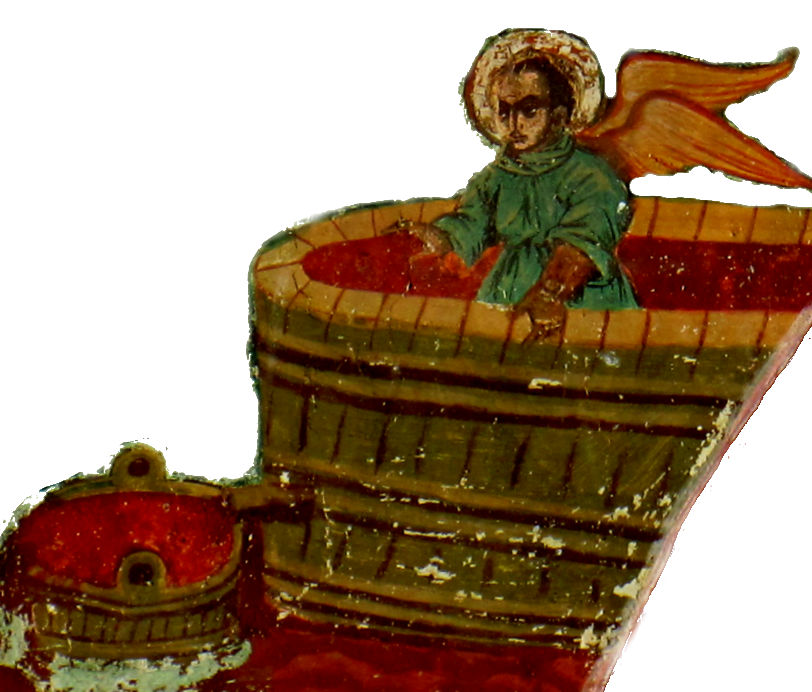
Table of Contents
Who Is This That Cometh From Edom?
“Who is this that cometh from Edom, with dyed garments from Bozrah? this that is glorious in his apparel, travelling in the greatness of his strength? I that speak in righteousness, mighty to save.”
Isaiah 63:1
A watchman sees someone coming and cannot make Him out. The clothes are magnificent and they are the wrong colour, and the figure is walking like a man who has just done something strenuous.
The answer comes back in the first person and it is not what the question expected: “I that speak in righteousness, mighty to save.” Whoever this is, He introduces Himself as a rescuer — which makes the state of His clothes stranger, not less strange. So the watchman asks again:
“Wherefore art thou red in thine apparel, and thy garments like him that treadeth in the winefat? I have trodden the winepress alone; and of the people there was none with me.”
Isaiah 63:2, 3
A winepress was a stone trough where men crushed grapes with their feet, and anyone who has seen it done knows what the treaders’ legs and clothes look like afterwards. Isaiah takes that ordinary agricultural sight and makes it terrible: this is a judgment, and the stains are not grape juice.
John saw the same figure at the end of the Bible and described Him in the same words:
“And he was clothed with a vesture dipped in blood: and his name is called The Word of God… and he treadeth the winepress of the fierceness and wrath of Almighty God.”
Revelation 19:13, 15
And the phrase that governs the whole scene, in both books, is three words long: alone, none with me, none to help. Whatever is happening here, no human being is participating in it. Nobody is invited to help God with this, and nobody has ever been.
That is worth holding on to, because the day of judgment is the doctrine most often preached by people who seem to be looking forward to assisting.
The Half He Would Not Read
“For the day of vengeance is in mine heart, and the year of my redeemed is come.”
Isaiah 63:4
Anyone who has read Isaiah 61 should feel the ground shift here.
Two chapters ago the Anointed One announced “the acceptable year of the LORD, and the day of vengeance of our God” in a single breath (61:2). When Jesus read that passage aloud in the Nazareth synagogue He stopped in the middle of the sentence, closed the book, and said this day is this scripture fulfilled in your ears (Luke 4:20, 21). He read the acceptable year. He did not read the day of vengeance.
Isaiah 63 is the sentence He did not finish.
And look how the prophet pairs them even here: the day of vengeance is in mine heart, and the year of my redeemed is come. Both halves again, in one verse, in that order. Isaiah cannot say the one without the other, and neither should we.
Which settles a question people argue about badly. There is no version of the Bible in which God only ever comforts, and no version in which He is mainly angry. The same figure who binds up the brokenhearted in chapter 61 comes up the road from Edom in chapter 63, and He is not two people. The gap between the two is not a change of character. It is time — and we are living in the part He read out loud.
None To Uphold
“And I looked, and there was none to help; and I wondered that there was none to uphold: therefore mine own arm brought salvation unto me; and my fury, it upheld me.”
Isaiah 63:5
If that sounds like something you have read before in this book, you have — four chapters back:
“And he saw that there was no man, and wondered that there was no intercessor: therefore his arm brought salvation unto him; and his righteousness, it sustained him.”
Isaiah 59:16
The same three movements, in the same order, in both places: He looked. He was astonished that there was nobody. His own arm did it.
The repetition is doing structural work. Isaiah 59 and Isaiah 63 stand on either side of the great promises of 60, 61 and 62 — the light rising, the robe of righteousness, the new name that means my delight is in her — and both bookends say the same thing about where all of it came from. Nobody helped. There was nobody to help.
One difference is worth marking. In 59:16 what sustained Him was his righteousness. In 63:5 it is my fury. Same arm, two different chapters of the same work, and the second one costs Him something the first did not.
In All Their Affliction He Was Afflicted
And then, at verse 7, the whole chapter changes voice. The winepress is behind us and somebody begins to remember out loud.
“In all their affliction he was afflicted, and the angel of his presence saved them: in his love and in his pity he redeemed them; and he bare them, and carried them all the days of old.”
Isaiah 63:9
This is one of the tenderest sentences in the Old Testament, and it is placed six verses after the winepress on purpose.
In all their affliction he was afflicted. Not He observed their affliction. Not He was sorry about it. Whatever was happening to them was happening to Him — which is a startling thing for a prophet to say about God seven hundred years before anyone watched Him prove it.
And then: he bare them, and carried them all the days of old. Two verbs for the same action, because Isaiah wants you to feel the weight. This is the God who, earlier in this same half of the book, promised to keep doing it to the end: “even to your old age I am he; and even to hoar hairs will I carry you” (46:4).
They Vexed His Holy Spirit
“But they rebelled, and vexed his holy Spirit: therefore he was turned to be their enemy, and he fought against them.”
Isaiah 63:10
Notice the order of that sentence, because people habitually reverse it. The rebellion comes first. The turning comes second, and it is described as a change in relation rather than a change in nature — he was turned to be their enemy. This is the same diagnosis as 59:2: the separation is real, and it is not God who erects it.
The word vexed is worth pausing on. Paul says the same thing to a church:
“And grieve not the holy Spirit of God, whereby ye are sealed unto the day of redemption.”
Ephesians 4:30
You cannot grieve something that does not care. The instruction assumes a Person with feelings about how you are getting on, and both Isaiah and Paul take that for granted.
What follows in verses 11 to 14 is a man ransacking his own memory: where is he that brought them up out of the sea? where is he that put his holy Spirit within him? The prayer that runs to the end of chapter 64 is built on the Exodus — not on anything the present generation can point to, because they have nothing. They are reduced to reminding God what He used to do.
Then, in 63:16, the appeal goes past the ancestors entirely: “Doubtless thou art our father, though Abraham be ignorant of us, and Israel acknowledge us not.” Even if the founders would not recognise what has become of us, You are our father. That is a prayer prayed by people with no religious credit left, and it is one of the safest prayers in the Bible.
Oh That Thou Wouldest Rend The Heavens
“Oh that thou wouldest rend the heavens, that thou wouldest come down, that the mountains might flow down at thy presence.”
Isaiah 64:1
Here is the cry the whole prayer has been building toward, and it is not polite. Tear the sky open and come down here.
It is the prayer of everyone who has ever looked at the state of things and wanted God to stop being subtle. And the remarkable thing about it — the thing that makes Isaiah 64 more than a lament — is that it was answered, twice, and neither time the way the prayer imagined.
He did come down, and the mountains did not flow. He arrived as an infant in a town nobody respected, and thirty years later the heavens opened over a river while He stood in it. And at the end, the tearing happened — but not to the sky:
“And, behold, the veil of the temple was rent in twain from the top to the bottom; and the earth did quake, and the rocks rent.”
Matthew 27:51
Isaiah asked God to tear open the thing separating heaven from earth. What was torn was the curtain in front of the Most Holy Place, from the top — which is to say, from His end — and the rocks split after all.
A few verses later comes a promise Paul could not resist:
“For since the beginning of the world men have not heard, nor perceived by the ear, neither hath the eye seen, O God, beside thee, what he hath prepared for him that waiteth for him.”
Isaiah 64:4
“But as it is written, Eye hath not seen, nor ear heard, neither have entered into the heart of man, the things which God hath prepared for them that love him.”
1 Corinthians 2:9
Isaiah says it is prepared for him that waiteth; Paul says them that love him. Between the two you have a fair definition of faith: waiting for somebody because you love them.
All Our Righteousnesses Are As Filthy Rags
“But we are all as an unclean thing, and all our righteousnesses are as filthy rags; and we all do fade as a leaf; and our iniquities, like the wind, have taken us away.”
Isaiah 64:6
This is the most quoted verse in the chapter and it is quoted carelessly more often than not, so read what it actually says.
It is not our sins that are called filthy rags. Everyone already knew about those. It is our righteousnesses — the good bits, the achievements, the parts of the ledger we were counting on. Isaiah takes the column we were proud of and calls it soiled cloth.
Notice too that this is a confession made by the faithful. The speaker is not an enemy of God being denounced; it is the praying remnant, using the word we, in the middle of an appeal for mercy. This verse is what honest people say about themselves at their best, not what God says about the wicked at their worst.
And it has already been answered. Three chapters earlier, in the middle of all that light:
“He hath clothed me with the garments of salvation, he hath covered me with the robe of righteousness.”
Isaiah 61:10
Rags in 64:6, a robe in 61:10, and the difference between them is a single question: who made it? Isaiah has been running this contrast since 59:6, where he said that what we weave will never become a garment. He is not being cruel about human effort. He is being accurate about what it produces, so that the robe means something when it is handed over.
We Are The Clay
“But now, O LORD, thou art our father; we are the clay, and thou our potter; and we all are the work of thy hand.”
Isaiah 64:8
The verse turns on but now — two words doing the work of an entire theology.
Everything before it was rags, fading leaves, and iniquities blowing people away like wind. But now, having admitted all of that and not one word less, they say we are the clay.
It is a brilliant thing to say at that particular moment. Clay is not being modest — clay is the one raw material whose entire value is that somebody skilled is holding it. A confession of worthlessness would end the prayer. A confession of workability continues it, and puts the whole matter back where the chapter has been arguing it belongs: in His hands.
And they call Him father for the second time in two chapters — a form of address the Old Testament uses rarely, and which these people use when they have nothing else left to appeal to.
Wilt Thou Hold Thy Peace?
“Thy holy cities are a wilderness, Zion is a wilderness, Jerusalem a desolation. Our holy and our beautiful house, where our fathers praised thee, is burned up with fire: and all our pleasant things are laid waste. Wilt thou refrain thyself for these things, O LORD? wilt thou hold thy peace, and afflict us very sore?”
Isaiah 64:10-12
Two chapters that began with a warrior in blood-stained clothes end with a question mark, and the question is whether God intends to say anything at all.
That is where the prayer stops. No resolution, no promise, no closing doxology — just wilt thou hold thy peace? hanging in the air. It is one of the few places in Scripture where a chapter ends on an unanswered question, and the honesty of it is the reason people who are actually in trouble can pray these two chapters when they can pray nothing else.
But it is only unanswered if you stop reading. The very next verse in the book is God’s reply, and it is not what anyone expected:
“I am sought of them that asked not for me; I am found of them that sought me not: I said, Behold me, behold me, unto a nation that was not called by my name.”
Isaiah 65:1
He was never holding His peace. He had been saying behold me, behold me the entire time — and to people who were not even asking.
Which brings this study of Isaiah to its last chapters, and to the new heavens and the new earth. The prayer that ends in a question is answered by a God who says He has been visible and audible all along, and whose reply to wilt thou hold thy peace is, in effect, I never did.