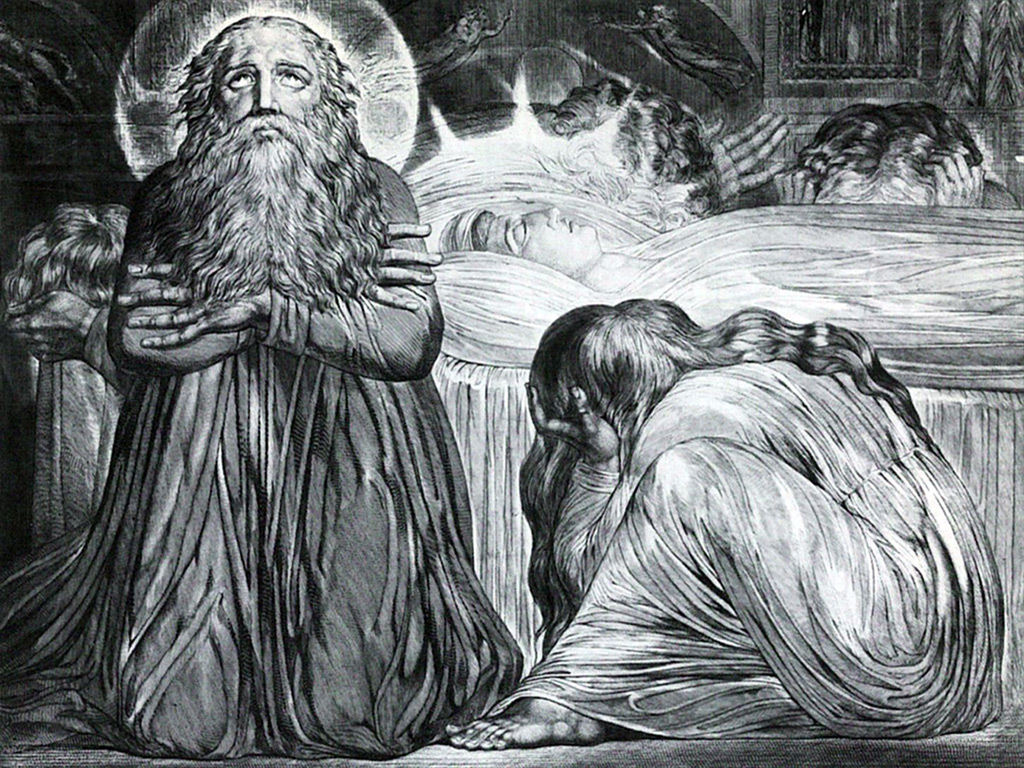
A city weighed and found to be slag, a search for one man who would stand in the gap, and the morning Ezekiel buried his wife and was forbidden to weep.
A Bible study on Ezekiel 22–24 · Arthur Baldwin · StandUp4Jesus.Org · 13 min read
Table of Contents
These three chapters bring the first half of Ezekiel to its end. The indictment is read out, the verdict is given, the siege actually begins — and the prophet who has spent twenty-four chapters being made into a sign is asked for something no sermon could have cost him.
The Bloody City, Itemized
“Now, thou son of man, wilt thou judge, wilt thou judge the bloody city? yea, thou shalt shew her all her abominations.”
Ezekiel 22:2
What follows is not a general complaint. It is an itemized list, and the items are startlingly ordinary:
“In thee have they set light by father and mother: in the midst of thee have they dealt by oppression with the stranger: in thee have they vexed the fatherless and the widow. Thou hast despised mine holy things, and hast profaned my sabbaths.”
Ezekiel 22:7, 8
Contempt for parents. Squeezing the immigrant. Taking advantage of the fatherless and the widow. Treating holy things as ordinary. Profaning the Sabbath. Later in the chapter: bribes, usury, extortion, slander.
Notice how the list runs. It moves between what we would call religious offenses and what we would call social ones without pausing at the border, because in this chapter there is no border. Profaning the Sabbath and cheating a widow appear in the same breath, as one thing.
And verse 12 ends the catalogue with a phrase that explains all of it: “and hast forgotten me, saith the Lord GOD.” Every item on the list is downstream of that.
A Furnace That Produced Only Dross
“Son of man, the house of Israel is to me become dross: all they are brass, and tin, and iron, and lead, in the midst of the furnace; they are even the dross of silver.”
Ezekiel 22:18
Dross is what floats to the top when ore is melted — the worthless material the whole process exists to remove. Isaiah had used the same figure a century earlier and kept the hope in it: “Thy silver is become dross” — but then, “I will turn my hand upon thee, and purely purge away thy dross” (Isaiah 1:22, 25).
Ezekiel’s version has no such clause. Jerusalem is gathered into the furnace of the siege, and God says: “I will leave you there, and melt you” (22:20).
And in chapter 24 the same metaphor returns as a cooking pot, and finishes the thought in the bleakest way it could:
“She hath wearied herself with lies, and her great scum went not forth out of her: her scum shall be in the fire. In thy filthiness is lewdness: because I have purged thee, and thou wast not purged, thou shalt not be purged from thy filthiness any more, till I have caused my fury to rest upon thee.”
Ezekiel 24:12, 13
Because I have purged thee, and thou wast not purged. The refining had already been attempted. Every prophet, every reform, every warning was a turn of the heat — and the metal came out of the fire the same as it went in.
That is worth holding beside the way the figure normally runs in Scripture, because the ordinary case is full of hope:
“It is in the heat of the furnace that the dross is separated from the true gold of the Christian character.”
Ellen G. White · Patriarchs and Prophets, p. 129
That is what a furnace is for. Ezekiel 22 and 24 describe the one outcome the furnace was never meant to have — heat applied, and nothing separated, because there was no gold in the ore to find.
Five Groups, And Not One Exception
The end of chapter 22 does something no other passage in the book attempts. It goes through the society class by class, and finds every one of them complicit.
- The prophets — “like a roaring lion ravening the prey; they have devoured souls” (22:25), and later, they “daubed them with untempered morter” (22:28), the charge we followed in Untempered Mortar.
- The priests — “they have put no difference between the holy and profane, neither have they shewed difference between the unclean and the clean, and have hid their eyes from my sabbaths” (22:26).
- The princes — “like wolves ravening the prey, to shed blood, and to destroy souls, to get dishonest gain” (22:27).
- The people of the land — “have used oppression, and exercised robbery, and have vexed the poor and needy” (22:29).
The charge against the priests is the one that should arrest us, because it is not a charge of doing evil. It is a charge of blurring a line. They put no difference. A priest’s whole office was to teach people to tell one thing from another — holy from common, clean from unclean — and they had stopped, until nobody in the country could tell either.
And note where the Sabbath keeps appearing. It is in verse 8, in verse 26, and it was in chapter 20 as the sign between us. The priests did not abolish it. They hid their eyes from it — which is a quieter thing, and worked better.
The list ends with ordinary people, and that matters. A corrupt leadership is not the whole story here. The oppression at the top was matched by oppression in the street.
I Sought For A Man
“And I sought for a man among them, that should make up the hedge, and stand in the gap before me for the land, that I should not destroy it: but I found none.”
Ezekiel 22:30
This is one of the saddest verses in Scripture, and it is worth reading slowly enough to feel what it is actually saying.
God went looking. That is the picture. Not a judge reaching for a gavel — a search, conducted through a whole nation, for one person who would step into the breach.
And the standard is astonishingly low. Not a righteous generation. Not a reform movement. One man. The same arithmetic Abraham had bargained down at Sodom, and lower still — Abraham stopped at ten.
The language is the language of chapter 13, deliberately. There God charged the prophets: “Ye have not gone up into the gaps, neither made up the hedge for the house of Israel to stand in the battle in the day of the LORD” (13:5). Here He says He went looking for anyone at all who would, and the search failed.
Others had stood in that place before. Moses did, when Israel made the calf — “stood before him in the breach, to turn away his wrath” (Psalm 106:23). Abraham did for Sodom. Ezekiel and Jeremiah and Daniel were alive as this was spoken, and each of them prayed for this people. What the verse says is that in Jerusalem, among the men who actually held the offices, there was no one.
And the whole tragedy is in the middle clause: “that I should not destroy it.” God was looking for a reason not to. He states His own preference in the act of describing the search — which is exactly what He had said twice in chapter 18: I have no pleasure in the death of him that dieth.
One man would have been enough. There wasn’t one.
The Day The Siege Began
Chapter 24 opens with an instruction unlike any other in the book:
“Again in the ninth year, in the tenth month, in the tenth day of the month, the word of the LORD came unto me, saying, Son of man, write thee the name of the day, even of this same day: the king of Babylon set himself against Jerusalem this same day.”
Ezekiel 24:1, 2
Write thee the name of the day. Ezekiel is in Babylon, eight hundred miles from Jerusalem, with no possible way of knowing what is happening there. He is told to record the date, because on that day the siege has begun.
Now turn to the history, written by someone else, from the other end:
“And it came to pass in the ninth year of his reign, in the tenth month, in the tenth day of the month, that Nebuchadnezzar king of Babylon came, he, and all his host, against Jerusalem, and pitched against it.”
2 Kings 25:1
Ninth year. Tenth month. Tenth day. The same date, in two books written by two men who could not have compared notes, one of them recording it as it happened at a distance no messenger could cross in the time available.
This is why Ezekiel dates everything. It is not a habit; it is a claim, and it can be checked. The exiles who wrote that date down were able, months later when the refugees arrived, to hold it against the news.
The Desire Of Thine Eyes
And then, on the same day, the hardest passage in the book:
“Son of man, behold, I take away from thee the desire of thine eyes with a stroke: yet neither shalt thou mourn nor weep, neither shall thy tears run down.”
Ezekiel 24:16
The desire of thine eyes. That is how God describes Ezekiel’s wife — not as a detail of his household, but with the tenderest phrase in the chapter, spoken by the One who is about to take her.
Then verse 18, which is eighteen words long and contains a whole life:
“So I spake unto the people in the morning: and at even my wife died; and I did in the morning as I was commanded.”
Ezekiel 24:18
He preached in the morning. His wife died that evening. And the next morning he did as he was told — no mourning, no covered lip, no bread of mourners, shoes on his feet and turban on his head as if it were an ordinary day.
There is no complaint recorded, and no explanation offered to him. We looked in Each Day For A Year at the one time Ezekiel did object to an instruction — over defilement, and God gave way at once. He does not object here.
The people finally ask the question the sign was designed to provoke: “Wilt thou not tell us what these things are to us, that thou doest so?” (24:19). And the answer explains everything:
“Behold, I will profane my sanctuary, the excellency of your strength, the desire of your eyes, and that which your soul pitieth… And ye shall do as I have done… ye shall not mourn nor weep; but ye shall pine away for your iniquities.”
Ezekiel 24:21–23
The same phrase, transferred. The desire of thine eyes was his wife. The desire of your eyes is the temple. God is telling a people who cannot imagine losing the sanctuary exactly what that loss will feel like, by putting His own prophet through it first and making them watch.
Two things should be said about this plainly, because it is the passage most likely to trouble a thoughtful reader.
God does not say He killed her to make a point. The text says He takes her “with a stroke” and that Ezekiel is forbidden to mourn publicly. What is unmistakably commanded is the silence, not the death. That distinction is worth keeping, because Scripture is careful with it and we should be too.
And the silence was not indifference. The prohibition is on the public rites of mourning — the covered lip, the bare head, the mourners’ bread. Nothing forbids grief. A man can be broken and still get dressed. The exiles are told they will do the same, and the reason given is not that the loss is small but that it will be too great for the ordinary forms: ye shall pine away for your iniquities.
Why Her, And Why This
Nobody reads this chapter without asking it: why did God take her? The passage never answers that directly, and I do not think we should pretend otherwise. But several things can be said, and together they go a long way.
Begin with what is not claimed. Scripture regularly names God as the one who takes life, without meaning that each death is a special act arranged for a purpose — “the LORD gave, and the LORD hath taken away” (Job 1:21) is said of an ordinary catastrophe. And our Lord once corrected His disciples for assuming that a man’s affliction must have a cause in somebody’s sin, saying instead that it was “that the works of God should be made manifest in him” (John 9:3). A death that God foreknew, and to which He appointed a meaning, is not the same claim as a death He caused in order to have something to illustrate. The text will bear the first reading, and it does not require the second.
Then ask why a bereavement, of all things. The answer is in what the temple had become to these people. They could not imagine losing it — not because they loved God so much, but because they had made the building itself their security. Jeremiah was preaching against exactly that in Jerusalem, in the temple gate, at that very hour:
“Trust ye not in lying words, saying, The temple of the LORD, The temple of the LORD, The temple of the LORD, are these… Behold, ye trust in lying words, that cannot profit. Will ye steal, murder, and commit adultery… and come and stand before me in this house, which is called by my name, and say, We are delivered to do all these abominations?”
Jeremiah 7:4, 8–10
Three times over, like a charm. The building had stopped being the place where they met God and had become the reason they assumed they were safe from Him. And God’s answer is blunt: “Therefore will I do unto this house, which is called by my name, wherein ye trust… as I have done to Shiloh” (Jeremiah 7:14).
Now the transferred phrase in Ezekiel 24 reads differently. When God calls the temple “the desire of your eyes, and that which your soul pitieth” (24:21), that is not only a description of how much they loved it. It is an indictment. A thing had grown, in their affections, into the place that belonged to God — and the proof is that they could go on committing the abominations of chapter 8 inside it and still feel secure.
So the sign needed a loss of that exact weight. Argument had failed for twenty-three chapters. To make a nation feel in advance what it would be to lose the thing it could not imagine living without, God needed an analogy nothing smaller could carry.
And here is the warning for us, which is the reason this chapter is still in the Bible. Anything can occupy that place. It does not have to be a sin; the temple was God’s own gift, built at His command. A church, a doctrine we are proud of holding, a ministry, a reputation for soundness, a building — any of them can quietly stop being where we meet God and start being the reason we assume we are fine. Ellen White puts the danger at precisely the moment of greatest confidence:
“At the very time when the acclamation is made, ‘The temple of the Lord, The temple of the Lord, are these,’ temptations come in, and darkness gathers about the soul — earthliness, selfishness, and self-glorification.”
Ellen G. White · Testimonies for the Church, vol. 5, pp. 485, 486
At the very time. Not when the acclamation has faded — while it is still being shouted.
One thing must be said carefully, though, or this passage will wound the wrong reader. Nothing here suggests that Ezekiel loved his wife too much, or that she was taken because she occupied a place she should not have. God calls her the desire of thine eyes Himself, tenderly, and never once rebukes him for it. The idolatry in this chapter belongs to a nation and its building, not to a marriage. If you have lost someone, this text is not an accusation against your love for them.
And the last thing to notice is who paid. God did not ask Israel to imagine the loss. He asked His own prophet to undergo it, in public, and then to explain it to the people who still had time to repent. That is the shape of how God does things — the cost of making a truth visible falls on the messenger. It is the same shape, at infinitely greater cost, as “He that spared not his own Son, but delivered him up for us all” (Romans 8:32). A God who asks a man to give up the desire of his eyes to make something plain is not asking of him anything He was unwilling to do Himself.
The chapter — and the whole first half of the book — closes with a promise that is really an appointment:
“In that day shall thy mouth be opened to him which is escaped, and thou shalt speak, and be no more dumb: and thou shalt be a sign unto them; and they shall know that I am the LORD.”
Ezekiel 24:27
The silence laid on him back in chapter 3 has an end date, and it is the night a survivor walks into the camp. We will be there when it happens, in chapter 33.
What This Asks Of Us
The list does not separate religion from ethics. Profaned Sabbaths and cheated widows appear in the same sentence, and both end at “hast forgotten me.”
Watch for the line being blurred rather than crossed. The priests’ charge was that they put no difference — and that they hid their eyes from the Sabbath rather than attacking it. That is how a thing is lost.
A furnace can fail. Trials are meant to separate the gold; Ezekiel describes the terrible alternative — “I have purged thee, and thou wast not purged.” The heat is not automatically refining. What it does depends on what is in the ore.
God went looking for one man. Not a movement — one. If that is the standard, then the question of whether anyone is standing in the gap where you live is not a rhetorical one.
Let nothing grow into the place that belongs to God. The temple was His own gift, and they turned it into the reason they felt safe while sinning inside it. A good thing, a given thing, can become the thing we actually trust — and it is usually discovered only when it is taken away.
And God knows what the loss costs. Before He told a nation it would lose the sanctuary and be unable to mourn properly, He asked His own prophet to walk through it first. Whatever else that passage is, it is not the act of someone who does not understand.
Next in this series: Ezekiel 25 through 27 and 35 — the nations round about, and the fall of Tyre.
In one breath
- Chapter 22 itemizes the city’s sins and moves between religious and social offenses without a border — all of them downstream of “hast forgotten me” (22:12).
- Israel has become dross (22:18). Isaiah’s version of the figure keeps the hope — “I will … purely purge away thy dross” — and Ezekiel’s does not.
- “I have purged thee, and thou wast not purged” (24:13). The furnace had already been tried. Compare PP 129: the heat is what normally separates the gold.
- Prophets, priests, princes and people are all indicted — and the priests’ charge is that they “put no difference between the holy and profane” and hid their eyes from the Sabbath (22:26).
- “I sought for a man … that should … stand in the gap … but I found none” (22:30). God went looking, and the standard was one person.
- Ezekiel is told to write down the date the siege began (24:1, 2) — 800 miles away — and 2 Kings 25:1 records the identical date.
- His wife, “the desire of thine eyes”, dies that evening and he is forbidden the public rites of mourning (24:16–18). The same phrase is then transferred to the temple (24:21).
- What is commanded is the silence, not the death — and the silence forbids the outward forms, not grief.