Chapter 10 ended with a forest of empires cut to the ground. Chapter 11 opens on the stump nobody was watching — and a shoot coming out of it. What grows from that stump is a King who judges without looking, a creation that has stopped eating itself, and a song two verses long.
A study in Isaiah 11-12 · Arthur Baldwin · StandUp4Jesus.Org · 18 min read
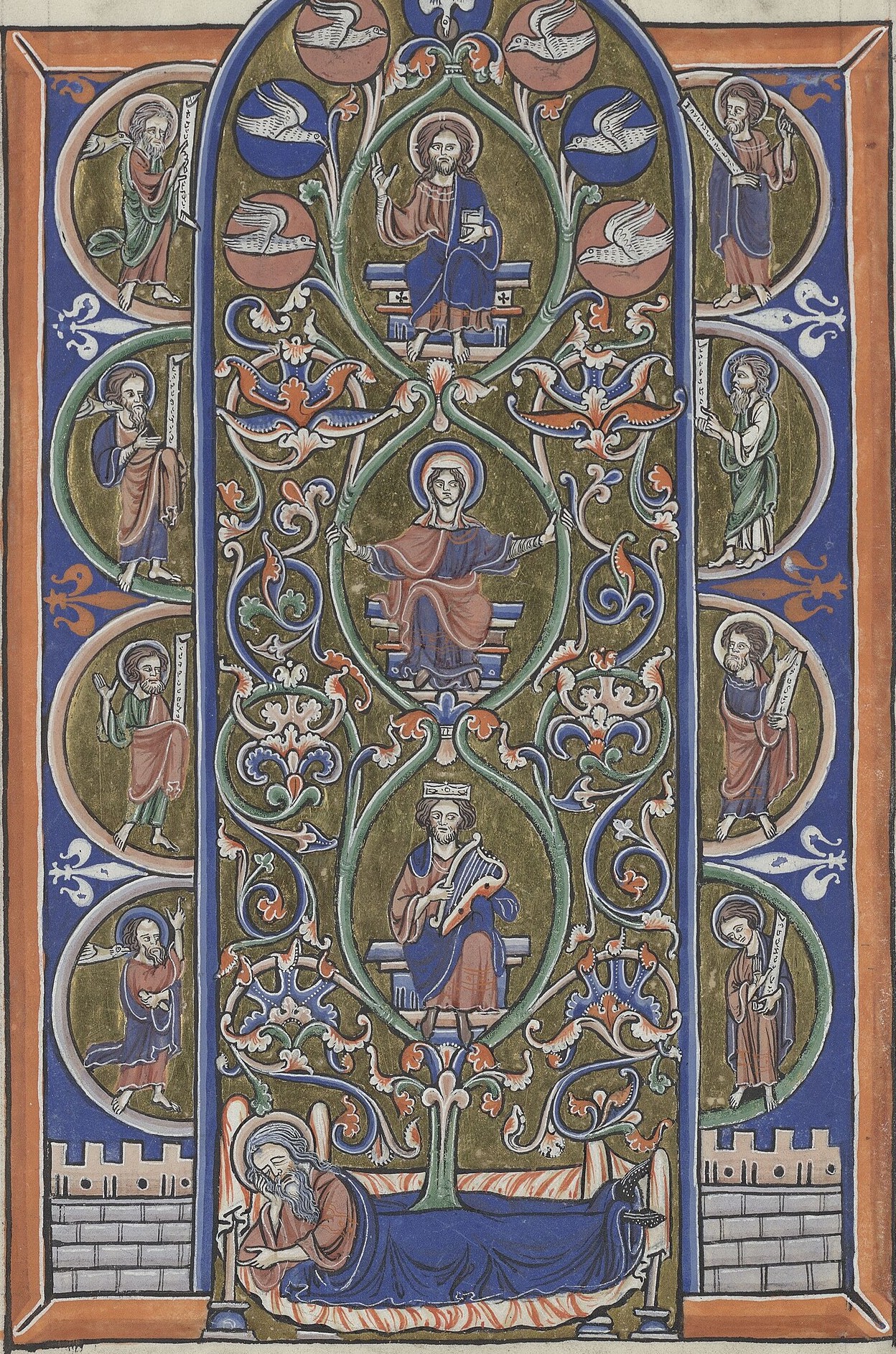
Table of Contents
A Rod Out Of The Stem Of Jesse
The chapter division here is one of the unhelpful ones. Isaiah has just finished felling a forest — the high ones of stature shall be hewn down, Lebanon shall fall by a mighty one — and the next sentence is not a new subject. It is the point of all that felling.
“And there shall come forth a rod out of the stem of Jesse, and a Branch shall grow out of his roots:”
Isaiah 11:1
Everything tall has come down. What is left standing is a stump, and the growth comes out of that.
Read the name carefully, because Isaiah chose it and could have chosen another. Not the stem of David. The stem of Jesse — David’s father, a farmer in Bethlehem with eight sons and some sheep, a man with no throne to his name and no reason for anyone outside his village to have heard of him. Isaiah does not trace the line back to the palace. He traces it back past the palace, to the farm it came from before there was a palace.
That is the whole picture in one word. The royal house is going to be cut down to the level it started at. By the time the Branch appears there will be no court, no crown, and no dynasty — only a family in Bethlehem again, and a carpenter engaged to a village girl. Ellen White places the sentence exactly there: “Through the promised Seed, the God of Israel was to bring deliverance to Zion” (Prophets and Kings, pp. 694, 695), and then quotes this verse alongside the virgin of chapter 7.
There is a further detail worth mentioning with appropriate care. The Hebrew word for Branch in this verse is netzer, and it has long been suggested that the name of the town called Nazareth stands behind Matthew’s otherwise unlocatable line, “He shall be called a Nazarene” (Matthew 2:23) — a prophecy Matthew attributes to “the prophets” in the plural and never quotes. It is a proposal, not a certainty, and the argument of this study does not rest on it. But it is a fair observation that Matthew ties the Messiah’s hometown to a word for a shoot, and that Isaiah calls the Messiah a shoot.
The Spirit Of The LORD Shall Rest Upon Him
“And the spirit of the LORD shall rest upon him, the spirit of wisdom and understanding, the spirit of counsel and might, the spirit of knowledge and of the fear of the LORD;”
Isaiah 11:2
Seven mentions of the Spirit, arranged as one and then three pairs: the Spirit of the LORD, then wisdom and understanding, counsel and might, knowledge and the fear of the LORD. Wisdom is what you see; understanding is what you make of it. Counsel is knowing what should be done; might is being able to do it. Knowledge is what is true; the fear of the LORD is what that knowledge does to a person who holds it.
Notice the pairing in the last one especially. Isaiah will not let knowledge stand by itself. In this book the men who go wrong are almost never ignorant; they are wise in their own eyes (5:21), and the priests who teach the sealed book are educated men. Knowledge without the fear of the LORD is exactly what chapter 5 pronounced a woe on.
And the verb is rest. Not fall, not seize, not come mightily upon — the word used for Samson and Saul and Gideon, where the Spirit arrives for a job and leaves afterward. On this one He settles and stays. When the Spirit descended at the Jordan, John recorded precisely that: “I saw the Spirit descending from heaven like a dove, and it abode upon him” (John 1:32). Abode. Isaiah had said it would rest, and it did.
He Shall Not Judge After The Sight Of His Eyes
“And shall make him of quick understanding in the fear of the LORD: and he shall not judge after the sight of his eyes, neither reprove after the hearing of his ears: But with righteousness shall he judge the poor, and reprove with equity for the meek of the earth:”
Isaiah 11:3, 4
This is a strange qualification for a judge, and it is the most practical sentence in the chapter.
Every human court runs on the sight of the eyes and the hearing of the ears. It has nothing else. It sees how a man is dressed, hears how well he speaks, notices who came with him, and weighs testimony it cannot verify. That is not corruption; it is the built-in limit of the equipment. Corruption is what happens when someone learns to work that limit on purpose — and Isaiah has just spent a chapter on men who did exactly that, drafting statutes to turn aside the needy from judgment (10:2).
Against that, here is a Judge whose verdict owes nothing to appearances. And look immediately at who benefits: the poor and the meek of the earth. Those are precisely the people who lose in a court run on appearances, because appearances are the one thing they cannot afford. A judge who cannot be impressed is the only kind of judge a poor man has ever wanted.
Jesse’s own household supplies the illustration. When Samuel came to Bethlehem to anoint a king, he looked at the eldest son and made up his mind on the spot — and was told, “the LORD seeth not as man seeth; for man looketh on the outward appearance, but the LORD looketh on the heart” (1 Samuel 16:7). Isaiah is promising a King out of that same family who judges the way God judged that day.
The Rod Of His Mouth
“and he shall smite the earth with the rod of his mouth, and with the breath of his lips shall he slay the wicked.”
Isaiah 11:4
The word rod has now been used three ways in two chapters, and Isaiah is doing it deliberately. Assyria was the rod of mine anger (10:5) — a stick swung by someone else. The Messiah is a rod out of the stem of Jesse (11:1) — a living shoot. And here is the rod of his mouth, which is not a stick at all. It is what He says.
That is the entire armament. No cavalry, no siege works, no baggage train parked at Michmash. The Assyrian needed an empire to accomplish less than this King accomplishes by speaking, and the contrast is the argument: God does not actually require Assyria. He used Assyria, which is a different thing.
Paul takes the phrase straight over when he describes the end of the man of sin: “whom the Lord shall consume with the spirit of his mouth, and shall destroy with the brightness of his coming” (2 Thessalonians 2:8). John sees it as a sword out of the mouth of the rider on the white horse (Revelation 19:15). Three writers, one weapon, and it is speech.
This matters for how we picture the second advent. Christ does not arrive to fight a battle He might lose. He arrives and speaks, and the thing that has been resisting Him for six thousand years is over. There is no contest in the passage because Isaiah does not think there is a contest.
Righteousness Shall Be The Girdle Of His Loins
“And righteousness shall be the girdle of his loins, and faithfulness the girdle of his reins.”
Isaiah 11:5
Chapter 3 itemized the finery of the daughters of Zion — the chains, the bracelets, the bonnets, twenty-one items of it — and promised that instead of a girdle there would be a rent. Here the King’s one named garment is a belt, and it is not decorative.
A girdle in that world is the working garment. You gird up your loins to run, to fight, to serve at a table. It is the thing that gathers the loose robe so a man can move, and everything else hangs from it. Isaiah names two: righteousness — being right — and faithfulness, which is staying right over time. Neither is an ornament, and there is nothing else in the wardrobe.
Paul hands the same belt to us. “Stand therefore, having your loins girt about with truth” (Ephesians 6:14) — the first item of the armor, and the one that holds the rest on. What the King wears, the servants are issued.
The Wolf Also Shall Dwell With The Lamb
“The wolf also shall dwell with the lamb, and the leopard shall lie down with the kid; and the calf and the young lion and the fatling together; and a little child shall lead them. And the cow and the bear shall feed; their young ones shall lie down together: and the lion shall eat straw like the ox. And the sucking child shall play on the hole of the asp, and the weaned child shall put his hand on the cockatrice’ den.”
Isaiah 11:6-8
Every pairing here is a predator with its own prey. Wolf and lamb. Leopard and kid. Lion and calf. Bear and cow. And then two children, one still nursing and one just weaned, put where the venom is.
What is being described is not animals behaving better. Look at the one clause that gives it away: the lion shall eat straw like the ox. That is not restraint. A lion exercising restraint is a hungry lion, and hunger is only patience. Isaiah says the lion’s food has changed — which means the lion has changed, digestion and appetite and teeth and all. The whole arrangement by which one creature lives at another’s expense has been taken out.
That is a much larger claim than a peaceful world. It is a reversal of what happened in Eden, where the diet given to every beast was green (Genesis 1:30), and it cannot be produced by improving anybody’s conduct. It requires the creation to be remade.
And in the middle of it, twice, a child. A little child shall lead them — not a keeper, not a trainer, not a man with a spear. The safest creature in the passage is the smallest one in it. Isaiah measures the new world by what a toddler can do in it unattended.
When Does This Happen?
This is the point at which the passage has most often been misplaced, and it is worth being exact.
For most of the nineteenth century the standard reading in the American churches was that Isaiah 11 described a coming golden age within history — a thousand years of the world steadily improving under the gospel, after which Christ would return to a Christianized planet. It was called the temporal millennium, and it was not a fringe opinion. It was what a person heard from the pulpit.
Ellen White grew up hearing it. She records a Methodist class meeting where she spoke of longing for Christ to come, and the presiding elder answered by speaking of something else entirely: “he expressed great joy in anticipating the temporal millennium, when the earth should be filled with the knowledge of the Lord as the waters cover the sea” (Testimonies for the Church, vol. 1, p. 36). That is Isaiah 11:9, used to say that the world would get better and the advent could wait. She left that meeting knowing she had been misunderstood, and the sentence she was answering came out of this chapter.
Two things settle where the passage belongs. The first is the text itself: nothing described in verses 6 to 9 is an improvement in human society. A wolf lying down with a lamb is not a social achievement, and no amount of preaching alters a lion’s digestion. Isaiah is not describing a better version of this creation; he is describing a different one.
The second is the way the rest of Scripture uses it. When Ellen White describes the earth made new — after the fire, after the wicked are no more — this is one of the passages she reaches for, quoting “the wolf also shall dwell with the lamb” and “they shall not hurt nor destroy in all My holy mountain” alongside Isaiah 35 and 65 to describe the home of the redeemed. Her summary of that country is one sentence long: “On those peaceful plains, beside those living streams, God’s people, so long pilgrims and wanderers, shall find a home” (The Great Controversy, p. 675).
So the chapter runs the full distance. Verses 1 to 5 are the first advent, and they were fulfilled in a stable and a carpenter’s shop. Verses 6 to 9 are the earth made new. Isaiah puts them in one breath because from where he stands they are one work, begun and finished by the same person — but they are not the same day, and a great deal of confusion has come from reading them as though they were.
They Shall Not Hurt Nor Destroy In All My Holy Mountain
“They shall not hurt nor destroy in all my holy mountain: for the earth shall be full of the knowledge of the LORD, as the waters cover the sea.”
Isaiah 11:9
The mountain is back. Chapter 2 opened with it — the mountain of the LORD’s house shall be established in the top of the mountains — and the symbol means the same thing here that it meant there. A mountain in prophecy is a kingdom; Daniel 2 says so outright, where the stone becomes a great mountain and the interpretation given is that “in the days of these kings shall the God of heaven set up a kingdom, which shall never be destroyed” (Daniel 2:44). It is God’s kingdom, not a church body, and it is worth repeating that the traffic in these passages runs the wrong way for any denomination: the nations come to it and are taught by Him.
Then the reason, and it is not the one we would give. Why will nothing hurt or destroy? Not because the dangerous have been removed, and not because the law is enforced. For the earth shall be full of the knowledge of the LORD.
The image is worth holding still for a moment. As the waters cover the sea. Not as water covers the seabed — as the waters cover the sea. The sea is not a container that happens to have water in it. Take the water out and there is no sea left. That is the saturation Isaiah is describing: not a world that has been taught about God, but a world in which knowing Him is what the place is made of.
And that answers a question people ask about the new earth — whether it is safe because sin has been made impossible. Isaiah gives a better answer. It is safe because nobody there wants it any other way, and nobody wants it any other way because everybody there knows Him.
An Ensign Of The People
“And in that day there shall be a root of Jesse, which shall stand for an ensign of the people; to it shall the Gentiles seek: and his rest shall be glorious.”
Isaiah 11:10
He was the rod out of the stem in verse 1 and He is the root here, which is not a slip. He comes out of Jesse’s line and He is also what that line grew from. Revelation keeps both: “the Root of David” in one place (5:5), and in the last chapter of the Bible, from His own mouth, “I am the root and the offspring of David” (Revelation 22:16). Descendant and origin at once — which is only possible if the descendant existed first.
An ensign is a standard on a pole: the thing raised on high ground so scattered people can find where to gather. What is being raised is a person, and the gathering is not limited to Israel. To it shall the Gentiles seek.
Paul settles how to read this verse by quoting it. Arguing that the Gentiles were always in the plan and not an afterthought, he stacks up four Old Testament texts and ends with this one: “And again, Esaias saith, There shall be a root of Jesse, and he that shall rise to reign over the Gentiles; in him shall the Gentiles trust” (Romans 15:12). That is an apostle telling us plainly that Isaiah 11:10 is about the gospel going to the nations, and it is being fulfilled every time it does.
And the last clause is easy to walk past: his rest shall be glorious. The ensign is raised, the nations come — and what they arrive at is rest. Isaiah has a habit of ending his biggest promises there, and he is not done with it: chapter 30 will say in returning and rest shall ye be saved, and chapter 58 will make a whole day of it.
The Second Time
“And it shall come to pass in that day, that the Lord shall set his hand again the second time to recover the remnant of his people, which shall be left, from Assyria, and from Egypt, and from Pathros, and from Cush, and from Elam, and from Shinar, and from Hamath, and from the islands of the sea. And he shall set up an ensign for the nations, and shall assemble the outcasts of Israel, and gather together the dispersed of Judah from the four corners of the earth.”
Isaiah 11:11, 12
The second time assumes a first, and Isaiah names it in the same breath by putting Egypt on the list. The first time God set His hand to recover His people, He brought them out of Egypt. This is that again, at a larger scale — eight regions and the islands of the sea, which is Isaiah’s way of saying everywhere else.
It is worth being careful here, because these two verses have carried a great deal of weight in modern prophetic speculation. Read them in their own context and they are not obscure. The dispersion Isaiah names is the Assyrian and Babylonian one, and the return from it is history. But verse 12 is deliberately larger than that return ever was — the four corners of the earth — and verse 10 has already told us what the ensign is and who comes to it. Paul then quotes verse 10 and applies it to the Gentiles coming to Christ.
So the gathering runs on the same track as everything else in this chapter: a literal fulfilment in Isaiah’s own history, and the real one at the ensign. What is being assembled from the four corners of the earth is not a nation-state but the people who came when they saw who was lifted up. Jesus said the same thing about Himself in one sentence: “And I, if I be lifted up from the earth, will draw all men unto me” (John 12:32).
Ephraim Shall Not Envy Judah
“The envy also of Ephraim shall depart, and the adversaries of Judah shall be cut off: Ephraim shall not envy Judah, and Judah shall not vex Ephraim.”
Isaiah 11:13
Of all the things promised in this chapter, this is the one Isaiah’s first hearers would have thought least likely.
The kingdom had split at Solomon’s death, and by Isaiah’s day the two halves had been separate for roughly two centuries — separate capitals, separate sanctuaries, separate armies, and a long record of fighting each other. Only a few chapters back, Ephraim had marched on Jerusalem in alliance with Syria, which is what put Ahaz on the road where he refused a sign. This is not a family disagreement. It is a war with a history.
And notice how precisely the verse is worded. Two different faults, one for each side. Ephraim envies — the smaller, richer, more populous north resenting the tribe that kept the temple and the throne. Judah vexes — the south needling the north about it. Isaiah does not assign the blame to one of them. He names what each one does, and says both stop.
It sits here rather than anywhere else for a reason. Once the ensign is raised and the gathering begins, the old grievances have nothing left to attach to. People who have all come the same distance to the same standard find it hard to keep a quarrel going about which of them was closer to begin with. That is worth saying plainly to any church: the envy and the vexing do not end because someone won the argument. They end because everybody involved has finally looked at something else.
A Highway For The Remnant
“And the LORD shall utterly destroy the tongue of the Egyptian sea; and with his mighty wind shall he shake his hand over the river, and shall smite it in the seven streams, and make men go over dryshod. And there shall be an highway for the remnant of his people, which shall be left, from Assyria; like as it was to Israel in the day that he came up out of the land of Egypt.”
Isaiah 11:15, 16
Isaiah closes the chapter by staging the exodus again, and he uses the original vocabulary to do it: a sea, a mighty wind, and people walking across on dry ground. The word dryshod is the tell — not merely a crossing but a crossing that does not get your feet wet, which is the detail Exodus is proudest of.
The geography has been doubled. There is a sea in the way, as before, and now a river as well — the Euphrates, on the far side of which the northern captives were taken. Both are dealt with by the same wind. And the road runs from Assyria, which is the direction nobody ever came home from.
Isaiah will build this highway properly in chapter 35, where it gets a name — the way of holiness — and a promise that the wayfaring men, though fools, shall not err therein. Here he only lays it. But he has now done everything the first exodus did, and there is exactly one thing left over from that pattern.
When Israel came through the sea, they sang.
And In That Day Thou Shalt Say
“And in that day thou shalt say, O LORD, I will praise thee: though thou wast angry with me, thine anger is turned away, and thou comfortedst me. Behold, God is my salvation; I will trust, and not be afraid: for the LORD JEHOVAH is my strength and my song; he also is become my salvation.”
Isaiah 12:1, 2
Chapter 12 is six verses long, and it is the shortest chapter in Isaiah. It is also the Song of the Sea, sung a second time.
Compare the lines. Moses, on the far shore: “The LORD is my strength and song, and he is become my salvation” (Exodus 15:2). Isaiah, after his own crossing: the LORD JEHOVAH is my strength and my song; he also is become my salvation. That is not an allusion. It is the same sentence, and Isaiah expects it to be recognized. He has just described a second exodus, and he supplies the second song to go with it — the words the redeemed already know.
Then the line that makes the song honest: though thou wast angry with me, thine anger is turned away.
The singer does not pretend the anger was a misunderstanding. Eleven chapters of woes stand behind this sentence and none of them are withdrawn. He does not say thou wast never angry, or I did not deserve it. He says the anger was real, it is over, and what came next was comfort. That is the only ground on which a forgiven person can sing without lying, and it is why the next great section of the book opens with the word comfort.
And I will trust, and not be afraid is placed where it costs something. This is the answer, at last, to Ahaz — who was told in chapter 7 to fear not and could not manage it, and hired Assyria instead. The song is what Ahaz could have sung.
The Wells Of Salvation
“Therefore with joy shall ye draw water out of the wells of salvation.”
Isaiah 12:3
One verse, and it turns out to have had a liturgy built around it.
At the Feast of Tabernacles the most anticipated ceremony of the week involved a flagon of water. At first light a priest went down and drew from the flowing waters of the Kedron, carried it up the temple steps to the sound of trumpets, and poured it into a silver basin at the altar. Ellen White explains what it was for: “This display of the consecrated water represented the fountain that at the command of God had gushed from the rock to quench the thirst of the children of Israel” (The Desire of Ages, p. 449). And she records what the crowd sang as it was poured — the LORD Jehovah is my strength and my song, and therefore with joy shall ye draw water out of the wells of salvation. Isaiah 12:2 and 3, every year, in front of everyone.
Which is the setting for one of the boldest sentences Jesus ever spoke. He had stayed away from that feast and then taught through it, and on the final day — when the ceremony reached its climax, when the water was going into the basin and the crowd was singing this verse — He stood up.
“In the last day, that great day of the feast, Jesus stood and cried, saying, If any man thirst, let him come unto me, and drink. He that believeth on me, as the scripture hath said, out of his belly shall flow rivers of living water.”
John 7:37, 38
He is naming Himself as the well. The rock in the wilderness that the flagon commemorated, the wells of salvation the crowd was singing about — He says, in effect, come here and drink. John adds that He was speaking of the Spirit (7:39), which brings the whole thing back to Isaiah 11:2, where the Spirit rested on Him first so that it could be poured out afterward.
One grammatical detail rewards attention. The song of chapter 12 is singular throughout — thou shalt say, I will praise thee, my strength and my song. Then verse 3 goes plural: with joy shall ye draw water. Salvation is received one at a time; the drawing is done together. And the plural stays for the rest of the chapter, because from here on it is a congregation singing.
Great Is The Holy One Of Israel In The Midst Of Thee
“And in that day shall ye say, Praise the LORD, call upon his name, declare his doings among the people, make mention that his name is exalted. Sing unto the LORD; for he hath done excellent things: this is known in all the earth. Cry out and shout, thou inhabitant of Zion: for great is the Holy One of Israel in the midst of thee.”
Isaiah 12:4-6
Six imperatives in three verses, and every one of them points outward. Praise, call, declare, make mention, sing, cry out. Nobody is told to reflect quietly. Declare his doings among the people — the song is not finished until somebody outside the congregation has heard it, which is the same movement as the ensign in chapter 11. The nations were coming to it; here the news is going out to meet them.
And then the last four words, which are where the whole thing has been going: in the midst of thee.
Chapter 6 had the Holy One high and lifted up, with a throne, a train that filled the temple, seraphim covering their faces, and a prophet on the floor saying woe is me. That was the right response and it is not withdrawn. But the book has moved. The same Holy One is now described as being in the middle of His people — near enough to be shouted about rather than only trembled before — and that is not a softening of chapter 6. It is chapter 7’s name coming true. Immanuel: God with us.
The song is six verses long because that is all a rescued person needs. He was angry; He is not angry now; He is my strength; He is here. Isaiah will spend fifty-four more chapters on the details, and there is a great deal still to come — burdens against the nations, an earth turned upside down, a Servant with His back to the smiters. But he stops here first, at a stump with a shoot in it and a short song, and lets his readers sing it before he goes on.
