Sixty-six chapters of warning, exile and a suffering Servant end with houses, vineyards, work that nobody steals, and a Sabbath still being kept. Isaiah’s last word is not judgment. It is a world.
A study in Isaiah 65-66 · Arthur Baldwin · StandUp4Jesus.Org · 19 min read
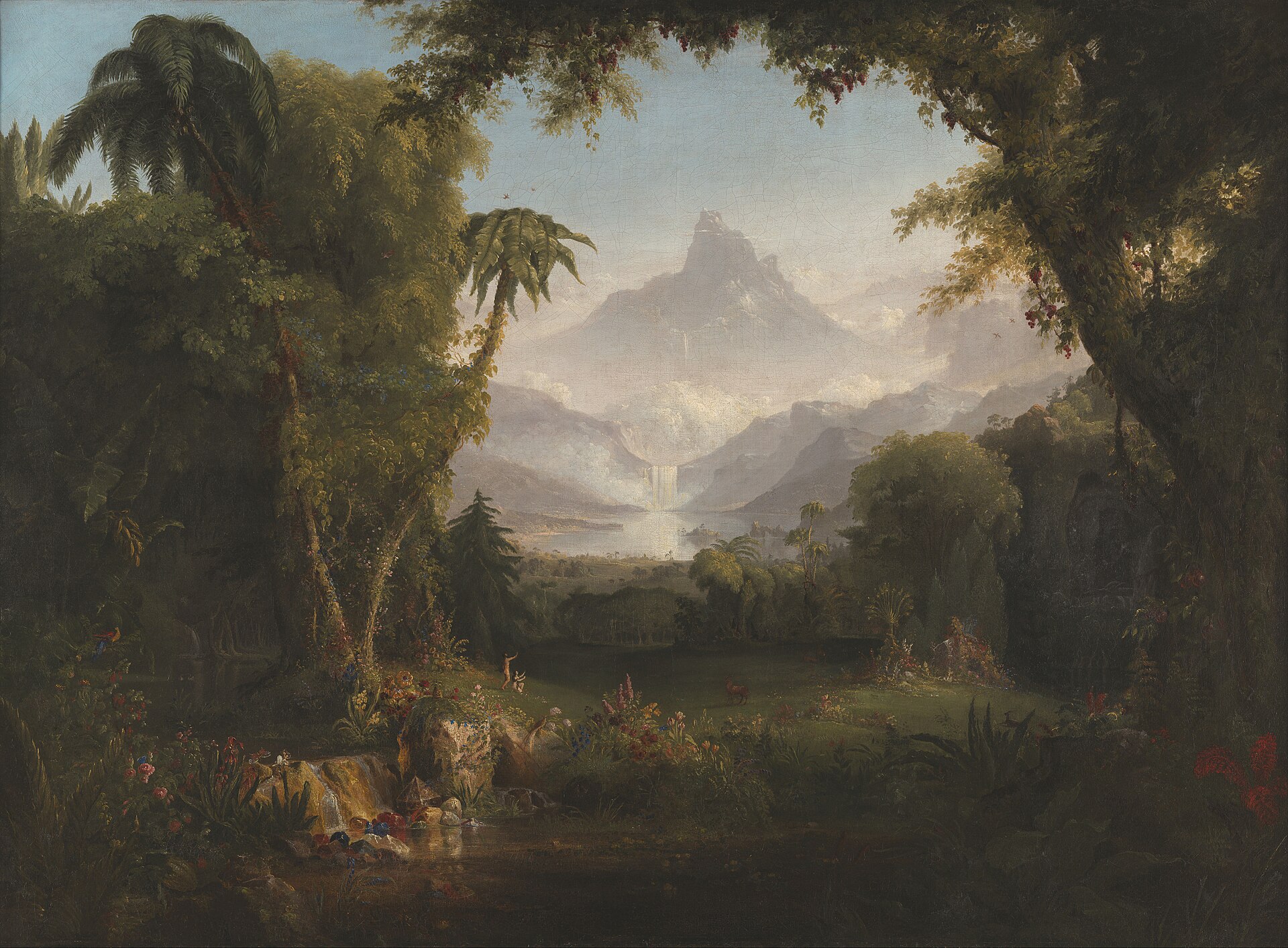
Table of Contents
How The Book Ends
A prophet who opened by calling heaven and earth to witness against a rebellious nation could reasonably have finished on judgment. Isaiah does not. He finishes on creation — a fresh act of making, in the same verb the book has been using of God since chapter 40.
“For, behold, I create new heavens and a new earth: and the former shall not be remembered, nor come into mind.”
Isaiah 65:17
The point of the whole book is not that Judah gets punished, or even that a Servant suffers. It is that the story ends with a world — a real one, with ground in it.
And He says it three times in two verses. I create new heavens and a new earth… rejoice for ever in that which I create… behold, I create Jerusalem a rejoicing. The verb is the one reserved in Hebrew for what only God does — the verb of Genesis 1:1, which is never used with a human subject anywhere in the Old Testament.
That matters for how the promise should be read. This is not repair work, and it is not the present world improved by degrees. It is the same order of act as the first chapter of Genesis, performed a second time, by the same Person, on the same subject matter — heavens, earth, and a people to live in it.
Not Remembered, Nor Come Into Mind
That second clause troubles people, and it should be handled rather than hurried past. If the former things are not remembered, does that mean the redeemed are given amnesia — that a mother simply forgets a child she lost?
Read what it is set against. Two verses later: the voice of weeping shall be no more heard in her, nor the voice of crying. The promise is about grief, not about data. And the Hebrew idiom for remembering is not mental retrieval — it is bringing to bear, letting something press on you. To say a thing is not remembered is to say it no longer has purchase.
The old world will not be erased from the record. It will lose its power to hurt. Scripture keeps the scars of Christ in the new creation; it does not keep the ache.
Houses, Vineyards, And Work
“And they shall build houses, and inhabit them; and they shall plant vineyards, and eat the fruit of them.”
Isaiah 65:21
Set that against the popular picture of eternity — disembodied, cloudlike, vaguely musical, and frankly a little dull. Isaiah’s version has carpentry in it. Houses that people design and build and then live in. Vineyards, which take years to come into bearing and reward patience. Fruit eaten by the person who planted the vine.
Ellen White’s description of the same hope keeps the same concreteness — “the wide-spreading plains swell into hills of beauty, and the mountains of God rear their lofty summits” (The Great Controversy, p. 675). Plains, hills, mountains. A landscape, not an atmosphere.
And note what is not abolished: work. The redeemed build and plant. Eden had a garden to dress and keep before there was any curse on it; labor was never the punishment. Futility was.
They Shall Not Build, And Another Inhabit
“They shall not build, and another inhabit; they shall not plant, and another eat… They shall not labour in vain, nor bring forth for trouble.”
Isaiah 65:22, 23
This is one of the most quietly devastating promises in Scripture, because of what it assumes about the world we have.
Isaiah is not promising that work will be pleasant. He is promising that it will not be taken. Behind the verse stands every conquered farmer whose harvest fed an occupying army, every tenant evicted from a house he built, every generation that raised children into a war. It is the grievance of the whole ancient world, and of a good deal of the modern one, answered in a sentence.
Nor bring forth for trouble is the sharpest clause of all. To bring forth is to bear children. The promise is to a woman who has watched what the world does to what she made.
The Verse That Is Hard
“There shall be no more thence an infant of days, nor an old man that hath not filled his days: for the child shall die an hundred years old; but the sinner being an hundred years old shall be accursed.”
Isaiah 65:20
An honest study has to stop here, because this verse does not obviously fit a world where the voice of weeping is heard no more. There is dying in it, and there is a sinner in it.
Three readings are seriously held, and it is worth knowing all three rather than being handed one.
- Hyperbole for longevity. The point of the verse is that nobody dies young — a hundred years would be a childhood. On this reading the deaths mentioned are a rhetorical measure, not a feature of the new world.
- A nearer fulfillment. Isaiah frequently describes a further thing in the vocabulary of a nearer one, as he does with the Immanuel sign. The restored land after exile is being described in language that opens onto the final restoration without being confined to it.
- Language from inside Isaiah’s frame. The blessing is described in the only terms his hearers had — long life, secure property, children who survive — because the alternative is describing an unfallen world to people who have never seen one.
What none of them do is overturn the plain statements around them. Revelation, taking up this same promise, states flatly that there shall be no more death. Where a difficult verse and a clear one meet, the clear one governs — and it is better to say the verse is hard than to pretend a tidy answer that will not survive a careful reader.
Before They Call, I Will Answer
“And it shall come to pass, that before they call, I will answer; and while they are yet speaking, I will hear.”
Isaiah 65:24
Every believer who has prayed into what felt like an empty room has the exact opposite experience in view: speaking, and waiting, and wondering whether anything is at the other end.
The promise is not merely faster service. It is the removal of the gap — the answer already moving before the request is finished. And it sits beside the complaint of chapter 40, my way is hid from the LORD, as its final and complete refutation.
Then the animals, and the one detail everybody skips:
“The wolf and the lamb shall feed together, and the lion shall eat straw like the bullock: and dust shall be the serpent’s meat. They shall not hurt nor destroy in all my holy mountain.”
Isaiah 65:25
Everything in that verse is reconciled except one creature. The wolf is at peace, the lion has changed its diet — and the serpent is still eating dust, which is the sentence pronounced in Eden and never lifted. Isaiah’s new world is not a world where every judgment was quietly dropped. One of them stands, permanently, in the middle of the peace.
The Heaven Is My Throne
“Thus saith the LORD, The heaven is my throne, and the earth is my footstool: where is the house that ye build unto me? and where is the place of my rest?”
Isaiah 66:1
Chapter 66 opens by dismantling the one thing Judah was proudest of. There was a temple in Jerusalem. It had been built at enormous cost, and the people had come to treat it as the guarantee that God was on their side — a building He was, in some sense, obliged to protect.
God’s reply is a question about scale. Where is the house that ye build unto me? The heavens are the chair; the planet is where the feet rest. Then the next verse says what He does look at, and it is not a structure at all:
“For all those things hath mine hand made, and all those things have been, saith the LORD: but to this man will I look, even to him that is poor and of a contrite spirit, and trembleth at my word.”
Isaiah 66:2
Three marks, and not one of them is an achievement. Poor — not self-sufficient. Contrite — literally stricken, a person whose own case has broken down. Trembling at His word — taking what God says seriously enough to be moved by it.
This is the same footing the book has been describing all along. The Servant of chapter 53 does the work; the beneficiary brings nothing but need. And it is worth noticing where the verse sits — immediately before the last description of the new creation in the Old Testament. The character God is looking for is stated in the same breath as the world He is about to make for them to live in.
Verse 3 then says the quiet part out loud. A man who sacrifices an ox without that spirit is as if he slew a man. Correct worship offered by an unbroken heart is not neutral in God’s sight; it is counted as the crime it most resembles. That is a severe standard, and it applies to the careful and the orthodox rather than to the careless.
From One Sabbath To Another
“And it shall come to pass, that from one new moon to another, and from one sabbath to another, shall all flesh come to worship before me, saith the LORD.”
Isaiah 66:23
Two chapters after the new heavens and the new earth are announced, and one verse from the end of the book, the Sabbath is still being kept.
“‘From one Sabbath to another’ the inhabitants of the glorified new earth shall go up ‘to worship before Me, saith the Lord.’”
Ellen G. White · The Desire of Ages, p. 283
This closes a loop that runs through the whole book. Chapter 56 gave the Sabbath to the foreigner and the eunuch as their way in. Chapter 58 refused to discuss it until the hungry were fed. And chapter 66 carries it past the end of the present world entirely.
Whatever the Sabbath is, Isaiah does not treat it as a temporary arrangement for one nation in one era. It is there before the exile, it is offered to the outsider, and it is still there when the heavens are new. An institution that survives the destruction of the old creation is not a piece of Jewish civil law.
The Objection, Stated Fairly
There is an obvious answer to all of that, and anyone arguing from this verse had better meet it rather than hope the reader misses it. The same sentence says new moon. If verse 23 proves the Sabbath continues into the new earth, it proves the monthly new-moon observance continues too — and no Sabbath-keeper I know of observes new moons.
Nor can the objection be escaped by appealing to Isaiah 1, where God says He cannot away with them. Read it exactly:
“…the new moons and sabbaths, the calling of assemblies, I cannot away with; it is iniquity, even the solemn meeting.”
Isaiah 1:13
That verse rejects both, and the assemblies with them. It cuts against the argument as readily as for it, and it settles nothing about permanence — because Isaiah 1 is not about which observances are valid. It is about worship offered by hands full of blood. God is refusing the worshippers, not retiring the calendar.
So the honest answer is a narrower claim than the one usually made from this verse, and a sturdier one. Isaiah 66:23 does not by itself prove the Sabbath is perpetual; the pairing with new moons is real and should not be waved away. What it does establish is this: in the last description of the new creation in the Old Testament, gathered worship still runs on a recurring cycle, and the Sabbath is named as part of it.
The weight of the Sabbath argument was never carried here. It is carried by the fourth commandment, and behind that by the seventh day of creation week — a memorial set up before there was a Hebrew, an exile, or a temple. The new moon has neither of those, and it was never the sign God said He had given between Himself and His people. What chapter 66 adds is that the day was not quietly dropped somewhere between Eden and eternity. A day scheduled for abolition at the cross is a strange thing to find one verse from the end of Isaiah, in a world that does not exist yet.
And the verse before it supplies the word the whole promise hangs on:
“For as the new heavens and the new earth, which I will make, shall remain before me, saith the LORD, so shall your seed and your name remain.”
Isaiah 66:22
Shall remain. The measure of how long the redeemed last is how long the new creation lasts — and God stakes the second on the first. There is also a line in verse 21 that is easy to read past: I will also take of them for priests and for Levites. Of them — the gathered nations of verses 18 to 20, the outsiders. Not merely admitted. Given the office.
The Last Verse
“And they shall go forth, and look upon the carcases of the men that have transgressed against me: for their worm shall not die, neither shall their fire be quenched; and they shall be an abhorring unto all flesh.”
Isaiah 66:24
Isaiah ends on this, and Christ quotes it. It is the source of the phrase about the undying worm and the unquenchable fire, and it is worth reading exactly.
What the redeemed look upon are carcases. Not sufferers. Corpses. The verse describes people going out and seeing the dead bodies of those who set themselves against God — and a worm and a fire at work on them.
That governs what the imagery can mean. A worm that does not die and a fire that is not quenched are, in ordinary Hebrew usage, images of a destruction that cannot be interrupted — nobody puts this fire out, nothing survives it, the work finishes. Jerusalem’s own rubbish valley burned that way. The fire is unquenchable because it will not be stopped, not because it never completes.
A reader who wants eternal conscious torment has to supply living victims, and this verse supplies corpses. That is a textual observation rather than an argument from sentiment, and it is the strongest kind there is.
Where Isaiah Stops And John Begins
Read the last two chapters of Isaiah and the last two of Revelation together and the seam barely shows. New heavens and a new earth. The former things gone. No more weeping. God dwelling with His people. Nations walking in the light. A promise that the new creation shall remain.
John is not inventing an ending. He is finishing Isaiah’s. And the fact that the Bible’s first and last visions of a made world answer each other across seven centuries and two Testaments is itself an argument about who is doing the writing.
One Book, One Author, One Plan
Which is the right place to say plainly what this whole series has assumed, and what sixty-six chapters have been quietly demonstrating.
This book is God’s. Not a collection of religious writing that God later approved of. Not an anthology stitched together by editors. One book, given by God through Isaiah, with one plan running through it from the first chapter to the last — and given for a purpose that has not expired.
Isaiah says so himself, in the middle of the book, in a line that is easy to walk past:
“Seek ye out of the book of the LORD, and read: no one of these shall fail… for my mouth it hath commanded, and his spirit it hath gathered them.”
Isaiah 34:16
The book of the LORD. That is what the prophet calls the thing he is writing, while he is writing it. And he names both hands at work in it in a single clause — my mouth commanded it, his spirit gathered it — which is exactly how the rest of Scripture describes the process.
Paul: “All scripture is given by inspiration of God” (2 Timothy 3:16). Peter: “holy men of God spake as they were moved by the Holy Ghost” (2 Peter 1:21). Notice that Peter keeps both halves in one sentence. Men spoke. They were moved to it. Neither half is optional, and it is worth being careful about how they fit, because a great deal hangs on it.
God did not dictate this book to a stenographer. He did something harder and better: He gave a man the truth, and let the man say it in his own voice.
“The union of the divine and the human, manifest in Christ, exists also in the Bible. The truths revealed are all ‘given by inspiration of God;’ yet they are expressed in the words of men and are adapted to human needs.”
Ellen G. White · Testimonies for the Church, vol. 5, p. 747
And Isaiah is the proof of it. The man’s own life is all over his book. He knows the court, because he worked in it. He knows the fashions of the women of Jerusalem well enough to itemize them. He twice sends a king to the same street corner — the conduit of the upper pool in the highway of the fuller’s field — because it was a real place he could have walked to. Nobody dictating from heaven supplies that detail twice, thirty years apart. A man who lived there does.
That is not a weakness in the book’s inspiration. It is the design. God’s whole method in these chapters was to call witnesses — “ye are my witnesses, saith the LORD” (Isaiah 43:10) — and a witness is precisely someone who was there and says what he saw in his own words. Isaiah is the first man to obey his own chapter 43.
It also settles something. Scholars have long divided this book in two, giving chapters 40 to 66 to an anonymous writer in Babylon a century and a half later, mainly because the vocabulary changes and the tone turns from warning to comfort. But that is what happens to a man across a lifetime of ministry, four kings, and a national catastrophe. It is not what happens when you swap authors — it is what happens when you do not. One mind, one Spirit, one plan, and a voice that aged.
“Those who pronounce upon the inspiration of the Scriptures, accepting some portions as divine while they reject other parts as human, overlook the fact that Christ, the divine, partook of our human nature, that He might reach humanity.”
Ellen G. White · Testimonies for the Church, vol. 5, p. 747
Now stand back from the sixty-six chapters and look at what the one Author actually built.
It opens with a courtroom and an offer to talk it over. It cleanses one man’s lips so he can be sent. It promises a child called God with us, and a Branch out of a stump, and a government on His shoulder. It buries the nations one by one, and Lucifer with them. It comforts. It puts the idols on trial and names a Persian king a century before his birth. It lays out the death of the Servant in such detail that the chapter reads like an eyewitness account written seven hundred years early. It calls the thirsty to come without money. It sets the Sabbath in the middle of the invitation and again at the end of the new earth. And it finishes with houses and vineyards and no more weeping.
That is not an anthology. That is one argument, told once, at length. Salvation offered, refused, paid for, and finished.
And it works on two levels at once, which is the thing most easily missed. Prophetically, it is evidence: Cyrus named, Babylon fallen in a night, the Servant described before the cross, the Sabbath still being kept after the new creation. God rests His entire claim to deity on exactly this — “I have declared, and have saved, and I have shewed” (43:12) — and then files the exhibits.
Personally, it is a hand on the shoulder. The same book that names an emperor also says I have called thee by thy name. It promises company in the water and the fire rather than exemption from either. It says the high and lofty One who inhabits eternity lives in two addresses, and the second is “with him also that is of a contrite and humble spirit” (57:15). It carries a man from the womb to his grey hair. It tells anyone at all, anywhere, to look and be saved.
Both at once, from the same Author, in the same chapters. The prophecy is what makes the promise trustworthy; the promise is what the prophecy was for.
And none of it was written to be admired at a distance. Paul says the old records were set down “for our admonition, upon whom the ends of the world are come” (1 Corinthians 10:11), and “whatsoever things were written aforetime were written for our learning, that we through patience and comfort of the scriptures might have hope” (Romans 15:4). Isaiah was written for the people who are watching for Christ’s return — and for anybody at all who picks it up and reads.
So the book is not a museum. It is a letter, from God, still open, still addressed, and still describing the world it says He is about to make.
And one line stands over all of it — the humblest sentence in the book, and the one worth carrying out of it:
“…but to this man will I look, even to him that is poor and of a contrite spirit, and trembleth at my word.”
Isaiah 66:2
The God who is about to make a universe says what He is looking at while He does it. Not the architecture. A person who takes Him seriously.
They shall build houses, and inhabit them; and they shall plant vineyards, and eat the fruit of them.
