Two oracles about foreign policy, and between them the sentence the whole book has been driving at: at that day shall a man look to his Maker. One chapter takes away everything Israel was leaning on; the next shows God apparently doing nothing at all, and explains why that is not the same as absence.
A study in Isaiah 17-18 · Arthur Baldwin · StandUp4Jesus.Org · 17 min read
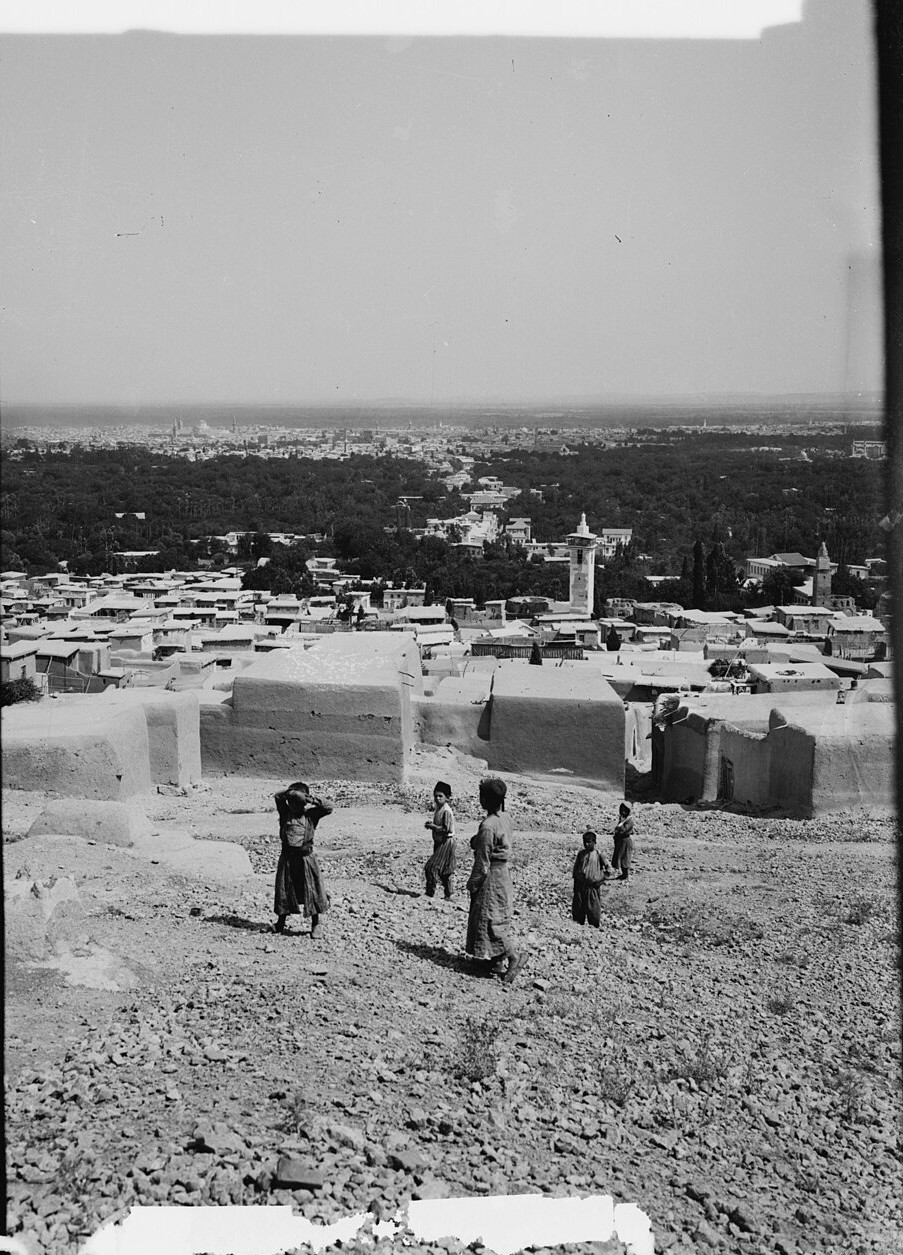
Table of Contents
The Burden Of Damascus
“The burden of Damascus. Behold, Damascus is taken away from being a city, and it shall be a ruinous heap.”
Isaiah 17:1
Damascus is one of the oldest continuously inhabited cities on earth, and Isaiah says it will stop being a city at all.
But the surprise is in verse 3, because the oracle does not stay in Syria.
“The fortress also shall cease from Ephraim, and the kingdom from Damascus, and the remnant of Syria: they shall be as the glory of the children of Israel, saith the LORD of hosts.”
Isaiah 17:3
Ephraim is not Syria. Ephraim is the northern kingdom — God’s own people, ten of the twelve tribes — and it is inside a burden addressed to a pagan capital.
The reason is the alliance. Back in chapter 7, Syria and Ephraim had made a pact and marched on Jerusalem together; that is the crisis that sent Ahaz out to the conduit, refusing a sign and hiring Assyria instead. Isaiah is now settling the account, and he does not write two oracles. He writes one, because the two parties had made themselves one thing.
That is a principle worth carrying out of the chapter. Ephraim did not become Syrian; it kept its own name and its own territory. But it had tied its future to Damascus, and when the judgment came it could not be extracted from what it had tied itself to. Alliances are not neutral arrangements. You inherit the outcome of the thing you attached yourself to, whatever your intentions were when you signed.
The Glory Of Jacob Made Thin
“And in that day it shall come to pass, that the glory of Jacob shall be made thin, and the fatness of his flesh shall wax lean. And it shall be as when the harvestman gathereth the corn, and reapeth the ears with his arm; and it shall be as he that gathereth ears in the valley of Rephaim.”
Isaiah 17:4, 5
Made thin. It is a strange word for a nation and an exact one for a body. Isaiah describes the decline of a kingdom the way you would describe a man losing weight he needed — not a wound, not a blow, just a steady wasting that anyone looking at him could see.
The harvest image that follows is worse than it sounds. A reaper gathering with his arm takes everything; that is what harvesting is. And the valley of Rephaim was the fertile plain outside Jerusalem where the crop was heaviest — so the picture is of the best field being cleared completely, in the ordinary way, by a man doing his job well.
There is nothing dramatic in it. That is the point. Isaiah has already shown us the spectacular judgments — the darkened sun of chapter 13, the pit of chapter 14. This one looks like agriculture.
Two Or Three Berries In The Top Of The Uppermost Bough
“Yet gleaning grapes shall be left in it, as the shaking of an olive tree, two or three berries in the top of the uppermost bough, four or five in the outmost fruitful branches thereof, saith the LORD God of Israel.”
Isaiah 17:6
And then the word Isaiah cannot stop saying: yet.
Olives were harvested by beating the tree with poles, and the beating was thorough — but it was never perfect. Some fruit always survived, because it was too high or too far out on a branch that would not take a man’s weight. The law made a rule of it: what the beating missed was to be left for the poor and the stranger.
Notice how precise Isaiah is willing to be about how little is left. Not a remnant in the abstract. Two or three berries in the top of the uppermost bough, four or five in the outmost fruitful branches. He counts them, and the total is under ten.
This is the doctrine of the remnant with all the romance taken out. A remnant is not a heroic minority that held the line. It is what the beating did not reach — a few berries, in the awkward places, still on the tree because nobody could get to them. Which is not a flattering picture, and it is the honest one; the remnant is never a compliment paid to survivors, it is a mercy that a harvest was not total.
At That Day Shall A Man Look To His Maker
“At that day shall a man look to his Maker, and his eyes shall have respect to the Holy One of Israel. And he shall not look to the altars, the work of his hands, neither shall respect that which his fingers have made, either the groves, or the images.”
Isaiah 17:7, 8
Here is the sentence the two chapters exist for, and it turns on a single verb used four times.
A man shall look to his Maker, and shall have respect to the Holy One. He shall not look to the altars, nor respect what his fingers have made. Same actions, opposite directions — and what changed was not the man’s theology but the direction of his eyes.
Note the two descriptions set against each other, because Isaiah chose them carefully. His Maker on one side. The work of his hands and that which his fingers have made on the other. The whole of idolatry is in that contrast: either you are looking at the one who made you, or you are looking at something you made. There is no third option, and the second one has an obvious defect that is invisible from inside — a thing you manufactured cannot possibly know more than you do.
And the timing matters. At that day — the day the fortress ceases, the glory is made thin, the harvest is stripped. The looking happens after everything worth looking at has been taken. That is not an accident of sequencing; it is very often the mechanism. As long as the fortress stood, the altars looked adequate.
Ellen White records that this actually happened, and that it was not a small thing: “The exhortations of the prophet to Judah to behold the living God, and to accept His gracious offers, were not in vain. There were some who gave earnest heed, and who turned from their idols to the worship of Jehovah. They learned to see in their Maker love and mercy and tender compassion” (Prophets and Kings, p. 320). They learned to see in their Maker love — which is what a person finds when the looking finally goes in the right direction, and is precisely what no altar of your own construction has ever been able to offer.
Pleasant Plants And Strange Slips
“Because thou hast forgotten the God of thy salvation, and hast not been mindful of the rock of thy strength, therefore shalt thou plant pleasant plants, and shalt set it with strange slips: In the day shalt thou make thy plant to grow, and in the morning shalt thou make thy seed to flourish: but the harvest shall be a heap in the day of grief and of desperate sorrow.”
Isaiah 17:10, 11
A slip is a cutting taken from one plant and set into new ground, and strange here means foreign — imported stock, brought in from somewhere else because it grows faster and looks better.
The speed is the whole complaint. In the day shalt thou make thy plant to grow, and in the morning shalt thou make thy seed to flourish. It works. It comes up overnight, exactly as advertised, and it looks marvelous. And then: the harvest shall be a heap in the day of grief.
Isaiah is describing imported religion the way a gardener would — something with no root of its own, cut from another stock, planted because it produces a quick and visible result. It flourishes, and there is nothing to harvest. The contrast is with what he called it a verse earlier: the rock of thy strength. Rock and slip. One you cannot move and did not make; the other comes up in a morning and is a heap by autumn.
The application does not need translating into modern terms, but it is worth noticing that our version of this is not usually idolatry in the old sense. It is more often the imported technique — the method that produced impressive growth somewhere else, planted on the strength of how fast it came up there.
Before The Morning He Is Not
“Woe to the multitude of many people, which make a noise like the noise of the seas; and to the rushing of nations, that make a rushing like the rushing of mighty waters! The nations shall rush like the rushing of many waters: but God shall rebuke them, and they shall flee far off… And behold at eveningtide trouble; and before the morning he is not. This is the portion of them that spoil us, and the lot of them that rob us.”
Isaiah 17:12-14
Listen to the sound of it. Noise, rushing, rushing, rushing, mighty waters — Isaiah is writing the noise an approaching army makes, and the noise is the whole of its power. That is what nations sound like from a city wall: an incoming sea.
And the answer to it is one word. God shall rebuke them. Not defeat, not destroy — rebuke, which is what you do to a noise.
Then the last verse, and it is one of the great sentences in the book: at eveningtide trouble; and before the morning he is not.
Nine words in the King James, and the whole event fits inside a night. In the evening there is trouble, of the kind nobody sleeps through. Before the morning — not defeated, not driven off — he is not. The threat has stopped existing, and Isaiah does not describe how.
He does not have to, because chapter 37 will. The Assyrian army camped outside Jerusalem, and in the morning the men who went out to look found that the situation had resolved itself overnight without a battle. Isaiah wrote the sentence long before he wrote the account. The same kind of night that took Ar and Kir from Moab took Sennacherib’s army from Sennacherib.
The Land Shadowing With Wings
“Woe to the land shadowing with wings, which is beyond the rivers of Ethiopia: That sendeth ambassadors by the sea, even in vessels of bulrushes upon the waters, saying, Go, ye swift messengers, to a nation scattered and peeled, to a people terrible from their beginning hitherto”
Isaiah 18:1, 2
Chapter 18 goes further from Jerusalem than any oracle so far — past Egypt, beyond the rivers of Ethiopia, into what the Bible calls Cush and what we would place along the upper Nile in modern Sudan. In Isaiah’s day the kings of that country ruled Egypt, and they were looking for allies against Assyria.
The details are those of a man who had seen the delegation arrive. Vessels of bulrushes — papyrus boats, light enough to carry past a cataract and fast on the river. Swift messengers. Ambassadors sent a very long way, by a government that meant business.
And Isaiah, having been handed the diplomatic opportunity of the century, does not take it. There is no reply to the delegation in this chapter. Instead God says something about Himself, and it is the reason the chapter is here.
I Will Take My Rest
“For so the LORD said unto me, I will take my rest, and I will consider in my dwelling place like a clear heat upon herbs, and like a cloud of dew in the heat of harvest.”
Isaiah 18:4
Ambassadors are racing up a river to arrange an alliance, empires are moving, and God says: I will take my rest, and I will consider.
To anyone in the middle of the crisis this is the least welcome sentence imaginable. It sounds like indifference. It is the complaint underneath most of the honest prayers ever prayed — that the situation is urgent and heaven appears to be sitting still.
So look at the two images God chooses to explain the stillness, because they are not images of inactivity at all.
Like a clear heat upon herbs. Not a storm — the steady, cloudless heat of the growing season, which does nothing visible and is the single thing a crop cannot ripen without.
Like a cloud of dew in the heat of harvest. Dew forms overnight, in silence, without weather. In that country it is the difference between a plant surviving the summer and not.
Both images are of the quietest forces in agriculture, and both are indispensable. God is not saying He will do nothing. He is saying that what He is doing does not make a noise — and the chapter has just spent two verses on how much noise everyone else is making, with their swift messengers and their papyrus boats and their rushing like mighty waters.
The stillness is not absence. It is ripening. And ripening cannot be hurried by anybody’s diplomacy, which is exactly why the delegation gets no answer.
Cut Off Before The Harvest
“For afore the harvest, when the bud is perfect, and the sour grape is ripening in the flower, he shall both cut off the sprigs with pruning hooks, and take away and cut down the branches.”
Isaiah 18:5
And then the stillness ends, and it ends at a precise moment: afore the harvest, when the bud is perfect, and the sour grape is ripening in the flower.
Anyone who has grown anything knows this moment. The fruit has set. It is not ripe, but it is committed — the flower has done its work and what comes next is only time. From here the crop is certain.
That is when the pruning hooks come out, and the timing is the judgment. The vine is cut when it is at its most confident and has not yet delivered anything. Everything is in the bud and the bud is exactly what is removed.
Put the two verses together and the argument of the chapter is complete. God waits, and the waiting looks like nothing, and the waiting is what allows the thing to come to the point where it can be dealt with honestly. He does not cut the vine in the spring when nobody could tell what it would have produced. He waits until it has shown what it is, and He does it at the last possible moment before anyone eats.
The Present Brought To Mount Zion
“In that time shall the present be brought unto the LORD of hosts of a people scattered and peeled, and from a people terrible from their beginning hitherto; a nation meted out and trodden under foot, whose land the rivers have spoiled, to the place of the name of the LORD of hosts, the mount Zion.”
Isaiah 18:7
The chapter opened with a woe and ends with a procession, and the direction of travel has reversed.
In verse 2 the messengers were going out from that country, looking for help. In verse 7 the traffic runs the other way: people from the same nation — described in the same words, scattered and peeled, terrible from their beginning hitherto — arrive at Zion bringing a gift.
This is the ensign of chapter 11 again, working exactly as promised. To it shall the Gentiles seek. Isaiah even repeats the equipment: verse 3 has an ensign lifted on the mountains and a trumpet blown, and tells all ye inhabitants of the world to watch and listen. The nations are not being conquered into the kingdom. They are being signaled, and they come.
A Man From That Country, Reading Isaiah
And there is a footnote to this chapter in the book of Acts that is too exact to pass over.
“and, behold, a man of Ethiopia, an eunuch of great authority under Candace queen of the Ethiopians, who had the charge of all her treasure, and had come to Jerusalem for to worship, Was returning, and sitting in his chariot read Esaias the prophet.”
Acts 8:27, 28
A high official from beyond the rivers of Ethiopia, who had come to Jerusalem for to worship — to the place of the name of the LORD of hosts, the mount Zion — and who is going home reading this prophet.
The scroll is open at chapter 53. “He was led as a sheep to the slaughter; and like a lamb dumb before his shearer, so opened he not his mouth” (Acts 8:32). He asks Philip the obvious question — of whom speaketh the prophet this? of himself, or of some other man? — and Philip “began at the same scripture, and preached unto him Jesus” (Acts 8:35).
Seven centuries after Isaiah wrote that the day would come when a present would be brought to Zion from the land beyond the rivers of Ethiopia, a man from that country made the journey, worshipped there, and went home carrying something considerably better than a gift.
It would be too much to claim that Luke is consciously fulfilling Isaiah 18; he says nothing of the kind, and the honest reading is that he is simply reporting what happened. But he did not need to say it. He put a man from that exact country, on that exact road, with this exact prophet open on his knees — and left the reader to notice.
Which is the pattern of both chapters, in the end. The alliances failed and the fortresses ceased and the imported cuttings came to nothing, and God took His rest and considered, and did not answer a single ambassador. And then, quietly, in the heat of the harvest, somebody from the far side of the world looked to his Maker.
