An Assyrian officer stands at a water channel outside Jerusalem and makes the best speech in the Old Testament — accurate, well-researched, and delivered in Hebrew so the men on the wall can hear it. Everything he says is nearly true. Isaiah puts the whole crisis at the exact spot where a different king once refused a sign.
A study in Isaiah 36-37 · Arthur Baldwin · StandUp4Jesus.Org · 18 min read
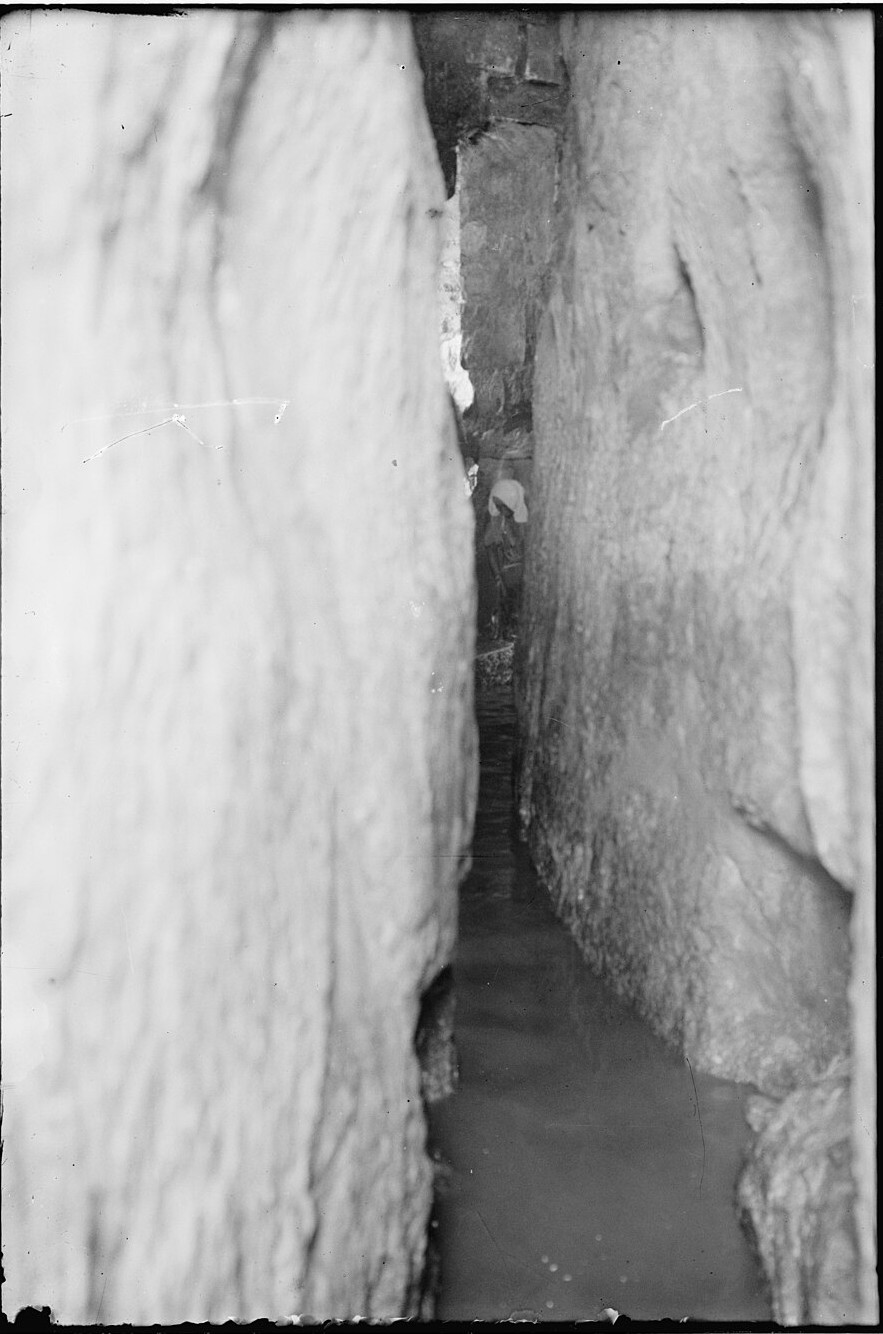
Table of Contents
By The Conduit Of The Upper Pool
“And the king of Assyria sent Rabshakeh from Lachish to Jerusalem unto king Hezekiah with a great army. And he stood by the conduit of the upper pool in the highway of the fuller’s field.”
Isaiah 36:2
Isaiah has stopped writing poetry. Chapters 36 and 37 are narrative prose, and after thirty-five chapters of warning about Assyria, Assyria arrives.
And the first thing to notice is the address, because it is not a new one. The conduit of the upper pool in the highway of the fuller’s field.
That is exactly where this book began. In chapter 7, God told Isaiah to take his son and “go forth now to meet Ahaz… at the end of the conduit of the upper pool in the highway of the fuller’s field” (Isaiah 7:3). Same water channel, same stretch of road, roughly thirty years apart.
At that spot Ahaz was offered a sign of any size he liked and refused it, and went and hired Assyria instead. Now Assyria is standing on the same ground, and there is a different king in the city.
Isaiah did not have to record where Rabshakeh stood. He recorded it because the whole book is arranged around that piece of ground, and because the question being put to Hezekiah is the question Ahaz was asked and got wrong.
What Confidence Is This Wherein Thou Trustest?
“Thus saith the great king, the king of Assyria, What confidence is this wherein thou trustest? I say, sayest thou, (but they are but vain words) I have counsel and strength for war: now on whom dost thou trust, that thou rebellest against me?”
Isaiah 36:4, 5
Rabshakeh’s speech is a genuinely impressive piece of work, and it is worth reading as the professional performance it is rather than as villainy.
He has done his research. He knows what Hezekiah has been saying in council. He knows about the Egyptian negotiations. He knows about the religious reforms — he even knows which altars were removed. Somebody has been briefing Assyria very thoroughly, and the speech is built out of it.
And notice the word he keeps returning to: trust. It appears again and again in this chapter — what confidence is this wherein thou trustest, on whom dost thou trust, thou trustest in the staff of this broken reed, we trust in the LORD our God. Rabshakeh has correctly identified that the entire question is where Judah’s confidence is placed, which is what Isaiah has been saying for thirty-five chapters. The enemy has understood the theme of the book.
The Argument That Was Almost Right
“Lo, thou trustest in the staff of this broken reed, on Egypt; whereon if a man lean, it will go into his hand, and pierce it: so is Pharaoh king of Egypt to all that trust in him.”
Isaiah 36:6
Here is the uncomfortable part, and it should not be smoothed over: on Egypt, Rabshakeh is entirely correct.
A reed from the Nile marshes looks like a walking staff and will not take a man’s weight; it splinters and the splinter goes into the hand. Lean on it and you are worse off than before, because now you are wounded as well as unsupported. That is a better image than most of what gets preached, and it is precisely what Isaiah himself had said in chapters 30 and 31 — the Egyptians are men, and not God; and their horses flesh, and not spirit.
Then he makes his second argument, and this one is clever:
“But if thou say to me, We trust in the LORD our God: is it not he, whose high places and whose altars Hezekiah hath taken away, and said to Judah and to Jerusalem, Ye shall worship before this altar?”
Isaiah 36:7
The argument is: your king dismantled your own religion, so you can hardly expect your God to help you now. And it has just enough shape to unsettle a frightened man on a wall. Hezekiah had pulled down the high places. Rabshakeh simply cannot tell the difference between a reformation and a desecration — between removing rival altars and removing worship — and to a man who counts shrines, the two look identical.
Then he overreaches, and it is the sentence that undoes him: “And am I now come up without the LORD against this land to destroy it? the LORD said unto me, Go up against this land, and destroy it” (36:10). He claims a divine commission.
And here is the strange thing: in a sense he has one. Chapter 10 said Assyria was the rod of mine anger, sent against a hypocritical nation. What Rabshakeh does not know is the rest of that chapter — that the rod was to be punished for the heart it brought, and that an axe boasting against the woodsman is a stick that has forgotten what it is made of. He has stumbled onto a true thing and drawn precisely the wrong conclusion from it.
Speak Not To Us In The Jews’ Language
“Then said Eliakim and Shebna and Joah unto Rabshakeh, Speak, I pray thee, unto thy servants in the Syrian language; for we understand it: and speak not to us in the Jews’ language, in the ears of the people that are on the wall.”
Isaiah 36:11
Two of the three men sent out to negotiate are Eliakim and Shebna — the same pair from chapter 22, where Shebna lost the stewardship for carving himself a tomb and Eliakim was given the key of the house of David. Isaiah wrote that oracle years earlier. Here they are, doing the job.
Their request is a diplomat’s request and a reasonable one: conduct this in Aramaic, the language of international negotiation, and not in Hebrew where the soldiers can follow it.
Rabshakeh’s reply is the moment the mask comes off. He points out that he was never sent to negotiate at all — he was sent to the men that sit upon the wall — and then he describes, in the coarsest terms the Bible contains, what those men will be eating and drinking before the siege is over. And then: “Then Rabshakeh stood, and cried with a loud voice in the Jews’ language” (36:13).
He stands up and shouts it louder, in their language, over the heads of their officials. This was never a negotiation. It is a broadcast, aimed past the government at the population, and the request to keep it private told him exactly which weapon was working.
Where Are The Gods Of Hamath?
“Hath any of the gods of the nations delivered his land out of the hand of the king of Assyria? Where are the gods of Hamath and Arphad? where are the gods of Sepharvaim? and have they delivered Samaria out of my hand? Who are they among all the gods of these lands, that have delivered their land out of my hand, that the LORD should deliver Jerusalem out of my hand?”
Isaiah 36:18-20
And this is the strongest thing he says, because it is an argument from evidence.
He is not asserting that God does not exist. He is producing a track record. Hamath had gods; Hamath fell. Arphad had gods; Arphad fell. Sepharvaim, the same. And then the one that would have landed hardest of all — have they delivered Samaria out of my hand? Samaria was Israel, the northern kingdom, worshipping a version of the same God, and Assyria had taken it about twenty years before. Everyone on that wall knew it.
The list is the same list from chapter 10, where the Assyrian recited his victories — is not Calno as Carchemish? is not Hamath as Arpad? is not Samaria as Damascus? — and made the same category error, filing the God of Jerusalem alongside the carved images of every city he had taken. Isaiah wrote the error down before it was made in public. Now it is being shouted at a wall.
They Held Their Peace
“But they held their peace, and answered him not a word: for the king’s commandment was, saying, Answer him not.”
Isaiah 36:21
The reply to the best speech in the chapter is nothing at all, and it was ordered in advance.
Hezekiah had thought about this before it happened and given a standing instruction: whatever he says, do not answer. That is not weakness and it is not sulking. It is a judgment about the kind of exchange this is. Rabshakeh’s speech was designed to be answered — every point invites a rebuttal, and each rebuttal would have been shouted back in Hebrew in front of the garrison, which was the entire purpose.
Some arguments cannot be won in the place they are made, and taking part is the mistake. The men on the wall did not have to out-argue Assyria. They had to not join in.
The Children Are Come To The Birth
“This day is a day of trouble, and of rebuke, and of blasphemy: for the children are come to the birth, and there is not strength to bring forth.”
Isaiah 37:3
Hezekiah tears his clothes, puts on sackcloth, goes into the house of the LORD, and sends to Isaiah — and the message he sends contains one of the most exact descriptions of helplessness in Scripture.
The children are come to the birth, and there is not strength to bring forth.
It is a labor that has reached the last stage with nothing left. Not a crisis at its beginning, where there is still time and energy; a crisis at the point of resolution, where everything now depends on strength that has run out. Anyone who has been at the end of a long trouble knows the difference.
And what he asks for is modest to the point of being touching: wherefore lift up thy prayer for the remnant that is left. Not deliverance, not victory. Pray for the ones still here.
He Spread It Before The LORD
“And Hezekiah received the letter from the hand of the messengers, and read it: and Hezekiah went up unto the house of the LORD, and spread it before the LORD.”
Isaiah 37:14
Sennacherib follows the speech with a letter, in case the point was missed. And what Hezekiah does with it is the center of these two chapters.
He does not answer it. He does not convene the council. He carries the document up to the temple and opens it out flat on the floor.
Ellen White describes the moment and what was actually at stake in it: “When the king of Judah received the taunting letter, he took it into the temple and ‘spread it before the Lord’ and prayed with strong faith for help from heaven, that the nations of earth might know that the God of the Hebrews still lived and reigned” (Prophets and Kings, p. 355).
Read the prayer itself and notice how little of it is about Judah:
“O LORD of hosts, God of Israel, that dwellest between the cherubims, thou art the God, even thou alone, of all the kingdoms of the earth; thou hast made heaven and earth. Incline thine ear, O LORD, and hear; open thine eyes, O LORD, and see: and hear all the words of Sennacherib, which hath sent to reproach the living God.”
Isaiah 37:16, 17
He opens with who God is, not with what he needs. And when he does ask, in verse 20, the reason he gives is not survival: save us from his hand, that all the kingdoms of the earth may know that thou art the LORD, even thou only.
Rabshakeh had asked which god had ever delivered a city from Assyria. Hezekiah has taken the question, spread it on the temple floor, and asked God to answer it in front of everybody. That is a very different thing from asking to be rescued, and it is why the answer is what it is.
The Virgin, The Daughter Of Zion
“This is the word which the LORD hath spoken concerning him; The virgin, the daughter of Zion, hath despised thee, and laughed thee to scorn; the daughter of Jerusalem hath shaken her head at thee.”
Isaiah 37:22
Isaiah’s answer comes back, and the tone of it is not what a besieged city would expect.
God’s first response to the most powerful army on earth is that a young woman is laughing at it.
The figure is chosen for maximum contrast. Assyria is siege engines and shaved beards and a wall of shields. Zion is the virgin — the least militarised image available — and she is shaking her head at him the way you would at a man making a fool of himself in the street.
It is worth saying that this is God’s assessment and not Judah’s. Nobody inside that city was laughing; they had just been told what they would be drinking. The scorn in this verse is loaned to them from outside their situation entirely, which is generally where that kind of courage comes from.
My Hook In Thy Nose
“Because thy rage against me, and thy tumult, is come up into mine ears, therefore will I put my hook in thy nose, and my bridle in thy lips, and I will turn thee back by the way by which thou camest.”
Isaiah 37:29
And here God answers in Assyria’s own visual language, which is the sharpest thing in the chapter.
Assyrian palace reliefs show prisoners being led with a ring or hook through the lip or nose, held on a cord in the king’s hand. It was their signature image of total mastery, carved on their own walls to be looked at.
God takes the picture off the Assyrian wall and puts Sennacherib in it. My hook in thy nose, and my bridle in thy lips — the great king led home like one of his own captives, by the road he came in on.
Then comes a sign for the people rather than the king, and it is a farming instruction: eat what grows by itself this year, and what comes up from that the next, and in the third year sow and plant vineyards and eat the fruit (37:30). Two years of living off volunteer crops because nobody could get to the fields — and then, in the third year, normal work. It is the least dramatic promise imaginable and exactly what a farmer would want to hear: you will be planting again, on a date.
An Army That Never Fights
“He shall not come into this city, nor shoot an arrow there, nor come before it with shields, nor cast a bank against it. By the way that he came, by the same shall he return, and shall not come into this city, saith the LORD. For I will defend this city to save it for mine own sake, and for my servant David’s sake.”
Isaiah 37:33-35
Read how specific the promise is, because the specificity is the point. Not merely that the city will hold. Nor shoot an arrow there. Nor come before it with shields. Nor cast a bank against it — no siege ramp, which is how Assyria took cities.
Not one arrow. There is going to be no battle at all.
“Then the angel of the LORD went forth, and smote in the camp of the Assyrians a hundred and fourscore and five thousand: and when they arose early in the morning, behold, they were all dead corpses.”
Isaiah 37:36
One verse. No description of how, no scene, no dialogue. The most consequential military event in the book gets a single sentence, and the only detail supplied is the time of day — when they arose early in the morning.
Which is exactly what Isaiah had written long before, in a chapter about the roaring of nations: “And behold at eveningtide trouble; and before the morning he is not” (Isaiah 17:14). He had described the shape of this night decades earlier and had not known which night it was.
And note who is left to tell the story. The men who arose early in the morning are the survivors, walking through a camp. Judah did not win this. Judah was told to hold its peace and answer not a word, and then went to bed.
In The House Of Nisroch His God
“So Sennacherib king of Assyria departed, and went and returned, and dwelt at Nineveh. And it came to pass, as he was worshipping in the house of Nisroch his god, that Adrammelech and Sharezer his sons smote him with the sword”
Isaiah 37:37, 38
The last two verses finish the account with no commentary at all, and they do not need any.
Three verbs for the journey home: departed, and went and returned. Isaiah slows it down. The man who came with an army goes back without one, and the sentence takes its time about it.
And then the end, and the place is the point: as he was worshipping in the house of Nisroch his god. The king who asked where the gods of Hamath and Arphad were, and whether any god had ever delivered a city from his hand, is killed at prayer, in his own temple, by his own sons — while his god watches and does nothing.
He had put the question himself, at the top of his voice, in Hebrew, so the men on the wall could hear it: who are they among all the gods of these lands, that have delivered their land out of my hand?
He got an answer to it, and so did they. One hundred and eighty-five thousand men, a king led home on the road he came in on, and a city that never fired an arrow — and it started with a frightened man carrying a letter up a hill and putting it on the floor.