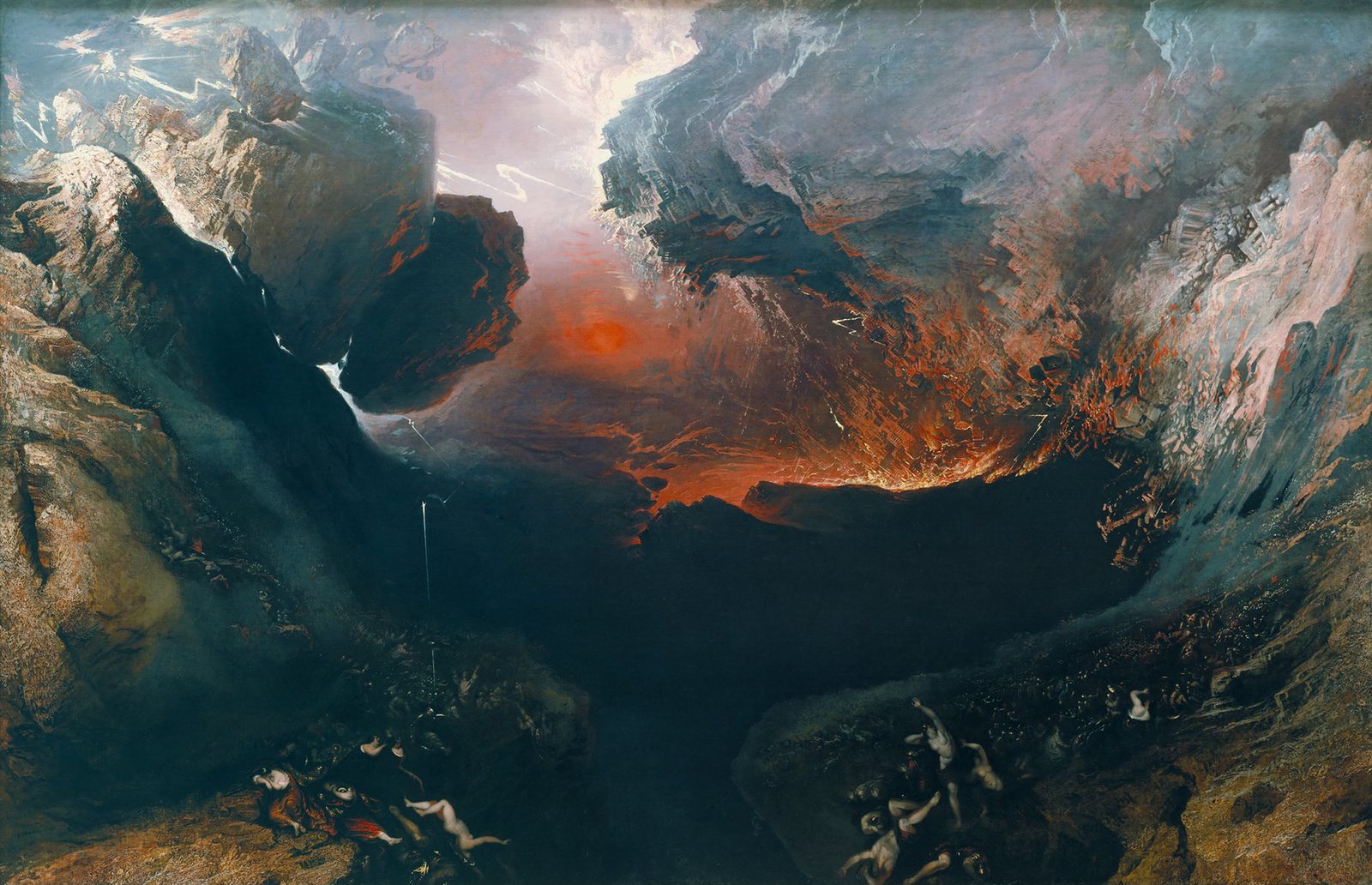
Everybody wants to know which nation Gog is. The better question is why the Holy Spirit picked these two names up again, six centuries later, and put them at the very end of the Bible.
A Bible study on Ezekiel 38 and 39 · Arthur Baldwin · StandUp4Jesus.Org · 13 min read
Table of Contents
These are the two chapters of Ezekiel that people have heard of. They are also the two most often read on their own, lifted clean out of the book, with a newspaper open beside them.
I want to try something different here, and simply read them in their place — as chapters 38 and 39 of a book we have now followed from chapter one. When you do that, a great deal falls into position.
Where We Are In The Book
Chapter 37 ended with the dry bones raised, the two sticks made one, one shepherd over them, and this:
“Moreover I will make a covenant of peace with them; it shall be an everlasting covenant with them: and I will place them, and multiply them, and will set my sanctuary in the midst of them for evermore.”
Ezekiel 37:26
So the invasion of chapter 38 does not fall on the wreckage we have been reading about since chapter eight. It falls on a nation that has already been restored, resettled, multiplied, and made safe. The text says so repeatedly:
“And thou shalt say, I will go up to the land of unwalled villages; I will go to them that are at rest, that dwell safely, all of them dwelling without walls, and having neither bars nor gates.”
Ezekiel 38:11
Hold on to that description, because it is the hinge of the whole passage. Unwalled. No bars. No gates. At rest. Dwelling safely. This is a picture of a people so secure that they have stopped fortifying anything — which is precisely why the invader thinks it is worth coming.
Who Gog Is — And Is Not
“Son of man, set thy face against Gog, the land of Magog, the chief prince of Meshech and Tubal, and prophesy against him.”
Ezekiel 38:2
One detail here settles more than it looks. Gog is called a prince.
We met that distinction ten chapters ago. In The Covering Cherub we saw Ezekiel address the prince of Tyre in verses 1 to 10 — a man, and told so plainly: “yet thou art a man, and not God” — and then turn in verse 11 to the king of Tyre, who had been in Eden and was the anointed cherub that covereth. Ezekiel uses one word for the human ruler in front and another for the power behind him.
Gog is the first word, not the second. He heads a confederacy of nations — and if you look them up, they are not all northern. Persia, Ethiopia and Libya ride with him (38:5), and the last two lie south of Palestine. This is not one empire on a map. It is a coalition drawn from every direction against one small people.
The Principle That Unlocks It
Before we can ask when this happens, we have to face something Scripture says about its own promises to Israel — and it says it in the plainest terms:
“At what instant I shall speak concerning a nation, and concerning a kingdom, to pluck up, and to pull down, and to destroy it; If that nation, against whom I have pronounced, turn from their evil, I will repent of the evil that I thought to do unto them. And at what instant I shall speak concerning a nation, and concerning a kingdom, to build and to plant it; If it do evil in my sight, that it obey not my voice, then I will repent of the good, wherewith I said I would benefit them.”
Jeremiah 18:7–10
Read that carefully, because it is God explaining His own prophetic method. A word of doom can be cancelled by repentance — Nineveh is the standing proof. And a word of blessing “to build and to plant” can be withdrawn if the nation does evil. Both directions.
This is not a loophole invented to explain away hard passages. It is the covenant Israel actually signed. Deuteronomy 28 sets it out in two columns: “if thou shalt hearken diligently unto the voice of the LORD thy God… the LORD thy God will set thee on high above all nations of the earth” (28:1), and then, from verse 15, the other side — “but it shall come to pass, if thou wilt not hearken.”
Every national promise made to Israel came with that if attached, whether or not it is restated each time.
The Israel Of Ezekiel 38 Never Existed
Now apply that to what we just read in chapter 38. The invasion presupposes a very particular Israel: restored, prosperous, dwelling safely, so at rest that its villages have no walls, no bars and no gates.
That nation never came into being.
The exiles returned, and the story of the return is the story of Ezra and Nehemiah — a small, poor, harassed community rebuilding a wall in half-armor with a trowel in one hand. There was no era of unwalled security. The conditions the prophecy assumes were never met, because the conditions of the covenant were not met.
This is not a novel observation, and it is not mine. It is the reading set out in Ministry, our own ministerial journal, in August 1962, drawing on the study “The Role of Israel in Old Testament Prophecy” in The SDA Bible Commentary, volume 4. That article puts it about as directly as it can be put: Ezekiel 38 and 39 would have been literally fulfilled at some point after the exile if only Israel had lived up to the conditions God had revealed to them — but they failed, the promised prosperity never materialized, and so the specific picture in chapter 38, a heathen coalition falling on a peaceful and prosperous Israel, had no soil left to land in.
The same article notes, with commendable honesty about our own house, how often evangelists — ours included — have advertised “Russia in Bible Prophecy,” and asks whether such preaching rests on ground as firm as Daniel 2. It is a fair question, and it was asked in-house more than sixty years ago.
But if the literal scenario lapsed with the covenant, does the prophecy simply expire? No. And here is where it gets remarkable.
Where The Two Names Come Back
Six hundred years later, John is shown the end of the great controversy — and reaches for Ezekiel’s two names:
“And when the thousand years are expired, Satan shall be loosed out of his prison, And shall go out to deceive the nations which are in the four quarters of the earth, Gog and Magog, to gather them together to battle: the number of whom is as the sand of the sea. And they went up on the breadth of the earth, and compassed the camp of the saints about, and the beloved city: and fire came down from God out of heaven, and devoured them.”
Revelation 20:7–9
Set the two scenes side by side and the correspondence is exact in every part that matters:
- A people dwelling safely, without walls or gates — and a city whose gates are never shut, with no need of defense.
- A coalition gathered from every direction — “the nations which are in the four quarters of the earth.”
- An evil thought that comes into the invader’s mind (38:10) — and a deceiver who goes out to put it there.
- Fire from God settling it without a battle being fought.
Notice what changes in the transfer. In Ezekiel the attackers are a named list of ancient peoples; in Revelation they are the nations in the four quarters of the earth — everyone. And the thing attacked is no longer a strip of land but the camp of the saints, and the beloved city. The picture has not been abandoned. It has been enlarged to the size of the whole controversy.
That is the Holy Spirit’s own commentary on Ezekiel 38, written into the last book of the Bible, and it is the safest guide we have to what these chapters are for.
The Same Ending, Both Times
“And I will plead against him with pestilence and with blood; and I will rain upon him, and upon his bands, and upon the many people that are with him, an overflowing rain, and great hailstones, fire, and brimstone.”
Ezekiel 38:22
In neither account does God’s side fight. There is no army of the saints, no counterattack, no siege. The defenders do nothing at all. The invaders arrive, and fire comes down.
Ellen White describes that ending in The Great Controversy, and the phrase she uses comes from the prophets:
“In the cleansing flames the wicked are at last destroyed, root and branch—Satan the root, his followers the branches.”
Ellen G. White · The Great Controversy, p. 673
Root and branch. Which is exactly the end pronounced on the covering cherub in chapter 28 — “never shalt thou be any more.” The book is consistent with itself from one end to the other.
What The Battle Is Actually About
If you want to know what these two chapters are for, count how often God states His purpose in them. It is never about territory:
- “that the heathen may know me, when I shall be sanctified in thee, O Gog, before their eyes” (38:16)
- “Thus will I magnify myself, and sanctify myself; and I will be known in the eyes of many nations, and they shall know that I am the LORD” (38:23)
- “So will I make my holy name known in the midst of my people Israel” (39:7)
- “And I will set my glory among the heathen, and all the heathen shall see my judgment that I have executed” (39:21)
That refrain — they shall know that I am the LORD — has been running through this whole book since chapter six. It is the same reason given for the restoration in chapter 36: not for your sakes, but for mine holy name’s sake. The last battle is not a contest God might lose. It is the final public demonstration of who He is, staged in front of every nation, ending an argument that began in a perfect being at the mercy seat.
And that is why the chapter can be read with a steady pulse. The outcome was never in doubt, and it does not depend on our correctly identifying a nation on a map.
What This Asks Of Us
Read prophecy with the Bible open, not the newspaper. Revelation tells us where Gog and Magog land. When Scripture supplies its own application, that application outranks anything current events can suggest, and it does not need revising every time the headlines change.
Take the conditions seriously. Jeremiah 18 is God describing how His own promises work. A blessing announced to a nation that then walks away is not a broken prophecy; it is a prophecy whose if was not met. That principle protects the character of God, and it is worth having straight before anyone asks you why Ezekiel 38 has not happened.
Notice who fights. Nobody, on God’s side. The people He defends are unwalled, unarmed, and at rest. If our security ever depends on our own fortifications, we are not yet in the position these chapters describe.
And keep the purpose in view. Every judgment in these two chapters is aimed at one result: that God should be known. That is what the whole controversy has been about, and it is the note this book ends on.
Next, and last in this series: Ezekiel 40 to 48 — the temple that was measured but never built.
In one breath
- The invasion falls on the restored Israel of chapter 37 — “unwalled villages… neither bars nor gates.”
- Gog is called a prince — Ezekiel’s word for the human ruler, as opposed to the king of Tyre in chapter 28.
- Jeremiah 18:7–10 is God explaining His own method: a promise “to build and to plant” can be withdrawn if the nation walks away. Deuteronomy 28 is the covenant in two columns.
- The prosperous, unwalled Israel this prophecy assumes never came into being — the return was Ezra and Nehemiah, rebuilding a wall in half-armor.
- Revelation 20:7–9 picks up both names and enlarges the picture: the nations of the four quarters, the camp of the saints, and fire from God.
- In both accounts God’s side never fights.
- The stated purpose, four times over, is that the nations shall know that He is the LORD.
Another Resource: “The Presentation of Ezekiel 38 in Evangelism,” Ministry, August 1962 — a careful denominational treatment, which in turn rests on “The Role of Israel in Old Testament Prophecy,” The SDA Bible Commentary, vol. 4, pp. 25–38.
