Of all the Ten Commandments, only one begins with the word “Remember,” and it is the one most of the world has forgotten. The seventh-day Sabbath was made in Eden before there was a single sin or a single Jew. Jesus kept it, His followers kept it after His resurrection, and the prophets say it will still be kept in the new earth. This study traces the Sabbath through the whole Bible, from the first full day Adam and Eve spent with their Creator to the last great test of loyalty before Jesus comes.
A Bible study · Arthur Baldwin · StandUp4Jesus.Org · 26 min read
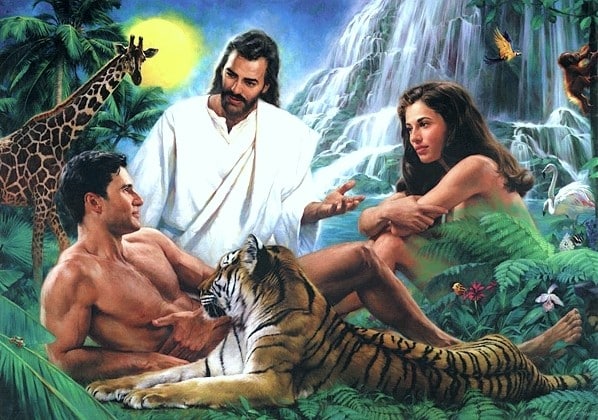
Their First Full Day With God
“Thus the heavens and the earth were finished, and all the host of them. And on the seventh day God ended his work which he had made; and he rested on the seventh day from all his work which he had made. And God blessed the seventh day, and sanctified it: because that in it he had rested from all his work which God created and made.”
Genesis 2:1-3
Adam and Eve were created on the sixth day, near the close of the week of creation. So the very first whole day of their lives was the seventh day. Before they had planted a garden or named a child, before they had done any work at all, God gave them a day to spend with Him. They did not earn that rest. They received it as a gift, and they spent it with the One who had just made them.
The song My Sabbath Day puts it this way:
Verse 4
That first Sabbath was so special,
It was the first full day with God,
It shows me God’s intimacy,
The full depth of His love for me!
God did three things to the seventh day, and He did them to no other day. He rested on it, He blessed it, and He sanctified it, which means He set it apart for a holy use. God was not tired. He rested the way an artist steps back from a finished painting, pleased with what He has made and eager to share it.
“God looked with satisfaction upon the work of His hands. All was perfect, worthy of its divine Author, and He rested, not as one weary, but as well pleased with the fruits of His wisdom and goodness and the manifestations of His glory. After resting upon the seventh day, God sanctified it, or set it apart, as a day of rest for man.”
Ellen G. White · Patriarchs and Prophets, p. 47
And it was not only the Father who rested that day. The New Testament says that “all things were made by” the Son (John 1:3). The One who walked with Adam in the cool of the day was the same One who would later walk the roads of Galilee.
“All things were created by the Son of God. ‘In the beginning was the Word, and the Word was with God…. All things were made by Him; and without Him was not anything made that was made.’ John 1:1-3. And since the Sabbath is a memorial of the work of creation, it is a token of the love and power of Christ.”
Ellen G. White · The Desire of Ages, p. 281
For more on the creation week itself, see our study Genesis 1-3: Where Everything Begins.
Made For Man
Many people call the seventh day “the Jewish Sabbath.” But there was no Jew anywhere on earth when God blessed it. Abraham would not be born for another two thousand years. Jesus Himself said who the Sabbath was made for:
“And he said unto them, The sabbath was made for man, and not man for the sabbath: Therefore the Son of man is Lord also of the sabbath.”
Mark 2:27-28
Not “for the Jew,” but “for man,” for the whole human race, which descends from Adam and Eve.
“The Sabbath was committed to Adam, the father and representative of the whole human family. Its observance was to be an act of grateful acknowledgment, on the part of all who should dwell upon the earth, that God was their Creator and their rightful Sovereign; that they were the work of His hands and the subjects of His authority. Thus the institution was wholly commemorative, and given to all mankind. There was nothing in it shadowy or of restricted application to any people.”
Ellen G. White · Patriarchs and Prophets, p. 48
Israel knew about the Sabbath before they ever reached Mount Sinai. When the manna fell in the wilderness, a double portion came on the sixth day and none on the seventh. When some of the people went out to gather anyway, God asked them a question:
“Six days ye shall gather it; but on the seventh day, which is the sabbath, in it there shall be none. And it came to pass, that there went out some of the people on the seventh day for to gather, and they found none. And the LORD said unto Moses, How long refuse ye to keep my commandments and my laws?”
Exodus 16:26-28
“How long refuse ye to keep my commandments?” God is speaking of commandments His people already had, weeks before the law was spoken from Sinai. (See Bread From Heaven, our study of Exodus 16.) And through Isaiah God made it plain that the Sabbath blessing was open to every “stranger” who would come to Him:
“Also the sons of the stranger, that join themselves to the LORD, to serve him, and to love the name of the LORD, to be his servants, every one that keepeth the sabbath from polluting it, and taketh hold of my covenant; Even them will I bring to my holy mountain, and make them joyful in my house of prayer: their burnt offerings and their sacrifices shall be accepted upon mine altar; for mine house shall be called an house of prayer for all people.”
Isaiah 56:6-7
“An house of prayer for all people.” The Sabbath has always been for everyone.
Written With The Finger Of God
At Sinai God spoke the Ten Commandments aloud, and then He wrote them in stone with His own finger. The fourth commandment sits in the heart of that law:
“Remember the sabbath day, to keep it holy. Six days shalt thou labour, and do all thy work: But the seventh day is the sabbath of the LORD thy God: in it thou shalt not do any work, thou, nor thy son, nor thy daughter, thy manservant, nor thy maidservant, nor thy cattle, nor thy stranger that is within thy gates: For in six days the LORD made heaven and earth, the sea, and all that in them is, and rested the seventh day: wherefore the LORD blessed the sabbath day, and hallowed it.”
Exodus 20:8-11
Notice three things. First, it begins with “Remember.” God knew we would be tempted to forget it. Second, it names a specific day: not “one day in seven,” but “the seventh day.” Third, it gives the reason, and the reason is creation: “for in six days the LORD made heaven and earth.” That reason has never expired. As long as God is our Creator, the memorial of creation stands.
“At the very beginning of the fourth commandment the Lord said: ‘Remember.’ He knew that amid the multitude of cares and perplexities man would be tempted to excuse himself from meeting the full requirement of the law, or would forget its sacred importance.”
Ellen G. White · Testimonies for the Church, vol. 6, p. 353
Jesus did not come to erase any part of this law. He said so in plain words:
“Think not that I am come to destroy the law, or the prophets: I am not come to destroy, but to fulfil. For verily I say unto you, Till heaven and earth pass, one jot or one tittle shall in no wise pass from the law, till all be fulfilled.”
Matthew 5:17-18
Heaven and earth are still here, and so is every jot and tittle of the Ten Commandments, the fourth included. Jesus also said, “If ye love me, keep my commandments” (John 14:15). Keeping them is not how we earn His love. It is how we answer it. (See I Bare You On Eagles’ Wings on Exodus 19-20, Written With The Finger Of God on Exodus 30-31, and our article His Law.)
A Sign That I Belong To Him
God calls the Sabbath a sign. A sign between Him and His people, and a sign of what He does for them:
“Speak thou also unto the children of Israel, saying, Verily my sabbaths ye shall keep: for it is a sign between me and you throughout your generations; that ye may know that I am the LORD that doth sanctify you.”
Exodus 31:13
“Moreover also I gave them my sabbaths, to be a sign between me and them, that they might know that I am the LORD that sanctify them.”
Ezekiel 20:12
The Sabbath is not a sign that we make ourselves holy. It is a sign that God is the One who sanctifies us. The same power that made the world in six days is the power that remakes a sinner’s heart.
“Then the Sabbath is a sign of Christ’s power to make us holy. And it is given to all whom Christ makes holy. As a sign of His sanctifying power, the Sabbath is given to all who through Christ become a part of the Israel of God.”
Ellen G. White · The Desire of Ages, p. 288
That is exactly what the chorus of My Sabbath Day sings:
Chorus
The Sabbath is my date with God,
It is a ring I'm proud to wear,
It's a sign that I belong to Him,
And I enjoy My Sabbath Day!
Think about a wedding ring. A ring does not make two people married. The love and the covenant do that. But a husband or wife who loves their spouse is glad to wear it, because it tells the world who they belong to. In the same way, keeping the Sabbath does not save anyone. Only Jesus saves. But a heart that belongs to Him is glad to wear His sign.
“The Sabbath is a golden clasp that unites God and His people.”
Ellen G. White · Testimonies for the Church, vol. 6, p. 351
That is also why Sabbath keeping without Christ becomes an empty shell. The leaders in Jesus’ day kept the day strictly, yet missed its meaning entirely.
“But in order to keep the Sabbath holy, men must themselves be holy. Through faith they must become partakers of the righteousness of Christ.”
Ellen G. White · The Desire of Ages, p. 283
Ezekiel 20 tells the sad story of a nation that lost the sign because it lost the God behind it. See The Sign Between Us.
Jesus Kept The Sabbath
Jesus did not merely tolerate the Sabbath. He kept it all His life, and He kept it as a habit:
“And he came to Nazareth, where he had been brought up: and, as his custom was, he went into the synagogue on the sabbath day, and stood up for to read.”
Luke 4:16
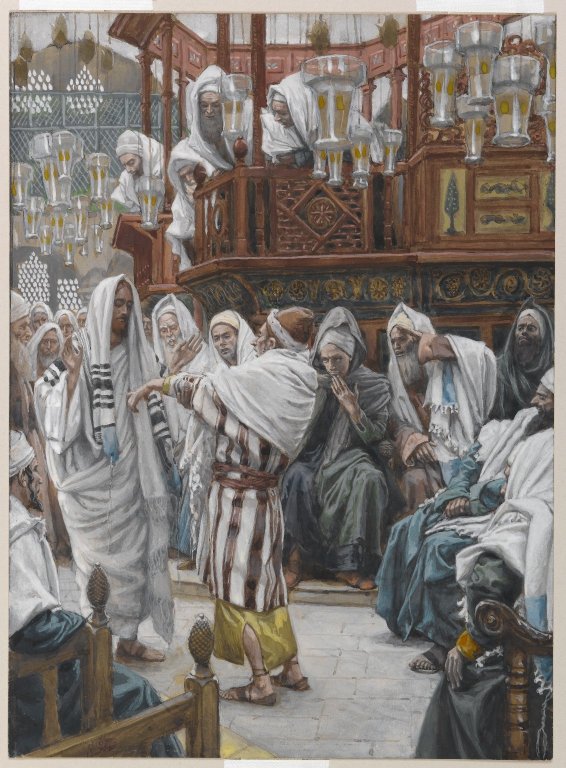
What Jesus did change was the way people thought about the Sabbath. The rabbis had buried it under hundreds of rules until it became a burden. Jesus cleared the rules away and showed what the day was really for. When He healed a man with a withered hand in the synagogue, He asked His critics whether they would not rescue a sheep that had fallen into a pit on the Sabbath:
“How much then is a man better than a sheep? Wherefore it is lawful to do well on the sabbath days.”
Matthew 12:12
“In the healing of the withered hand, Jesus condemned the custom of the Jews, and left the fourth commandment standing as God had given it. ‘It is lawful to do well on the Sabbath days,’ He declared. By sweeping away the senseless restrictions of the Jews, Christ honored the Sabbath, while those who complained of Him were dishonoring God’s holy day.”
Ellen G. White · The Desire of Ages, p. 287
And Jesus expected His followers to still be keeping the Sabbath long after He had gone back to heaven. Speaking of the destruction of Jerusalem, which came in A.D. 70, almost forty years after the cross, He said:
“But pray ye that your flight be not in the winter, neither on the sabbath day:”
Matthew 24:20
Read more in Lord Even Of The Sabbath Day (Matthew 12), The Sabbath Was Made For Man (Mark 2) and Wilt Thou Be Made Whole (John 5, the Sabbath healing at the pool of Bethesda).
He Rested In The Tomb
The clearest proof of which day is the Sabbath comes from the weekend Jesus died. Luke describes three days in a row:
“And that day was the preparation, and the sabbath drew on. And the women also, which came with him from Galilee, followed after, and beheld the sepulchre, and how his body was laid. And they returned, and prepared spices and ointments; and rested the sabbath day according to the commandment.”
Luke 23:54-56
“Now upon the first day of the week, very early in the morning, they came unto the sepulchre, bringing the spices which they had prepared, and certain others with them.”
Luke 24:1
Jesus died on the “preparation” day, the day we call Friday. The women rested on “the sabbath day according to the commandment,” the fourth commandment. Then Jesus rose on “the first day of the week,” which the whole Christian world celebrates as Sunday. So the Sabbath of the commandment is the day between them: Saturday. Notice also that Luke, writing years after the resurrection, still calls the Sabbath “the commandment.” He knew of no change.
Even in death, Jesus kept the Sabbath. Having finished His work of redemption, He rested in the tomb through the sacred hours, just as He had rested after finishing His work of creation.
“At last Jesus was at rest. The long day of shame and torture was ended. As the last rays of the setting sun ushered in the Sabbath, the Son of God lay in quietude in Joseph’s tomb. His work completed, His hands folded in peace, He rested through the sacred hours of the Sabbath day.”
Ellen G. White · The Desire of Ages, p. 769
See To Day Shalt Thou Be With Me In Paradise (Luke 23).
The Apostles Kept It Too
If the resurrection had moved the Sabbath to Sunday, the book of Acts would be the place to find it. Instead, Acts records the apostles keeping the seventh day again and again, years after the cross, and with Gentiles as well as Jews:
“And when the Jews were gone out of the synagogue, the Gentiles besought that these words might be preached to them the next sabbath. Now when the congregation was broken up, many of the Jews and religious proselytes followed Paul and Barnabas: who, speaking to them, persuaded them to continue in the grace of God. And the next sabbath day came almost the whole city together to hear the word of God.”
Acts 13:42-44
“And on the sabbath we went out of the city by a river side, where prayer was wont to be made; and we sat down, and spake unto the women which resorted thither.”
Acts 16:13
“And Paul, as his manner was, went in unto them, and three sabbath days reasoned with them out of the scriptures,”
Acts 17:2
“And he reasoned in the synagogue every sabbath, and persuaded the Jews and the Greeks.”
Acts 18:4
In Philippi there was no synagogue at all, just a prayer meeting by a river, and still Paul went out “on the sabbath.” It was “his manner,” just as it had been Jesus’ “custom.” And when the Gentiles of Antioch wanted to hear more, they did not ask Paul to come back on Sunday. They waited for “the next sabbath,” and “almost the whole city” came.
The letter to the Hebrews, written to believers after the cross, says:
“There remaineth therefore a rest to the people of God. For he that is entered into his rest, he also hath ceased from his own works, as God did from his.”
Hebrews 4:9-10
The Greek word Paul uses for “rest” in verse 9 is sabbatismos, literally “a Sabbath-keeping.” It still “remaineth.” (See There Remaineth Therefore A Rest.) And near the end of the first century, the apostle John, exiled on Patmos, was still keeping the day Jesus had called His own.
“It was on the Sabbath that the Lord of glory appeared to the exiled apostle. The Sabbath was as sacredly observed by John on Patmos as when he was preaching to the people in the towns and cities of Judea.”
Ellen G. White · The Acts of the Apostles, p. 581
Our Acts studies follow Paul from Sabbath to Sabbath: We Turn To The Gentiles (Acts 13), Come Over Into Macedonia And Help Us (Acts 16) and Whether Those Things Were So (Acts 17).
Who Changed It?
If Jesus did not change the Sabbath, and the apostles did not change it, how did most of the Christian world come to keep Sunday? The prophet Daniel saw it coming six centuries before Christ. Describing the “little horn” power that would rise out of the Roman Empire, he wrote:
“And he shall speak great words against the most High, and shall wear out the saints of the most High, and think to change times and laws: and they shall be given into his hand until a time and times and the dividing of time.”
Daniel 7:25
“Think to change times and laws.” Only one of the Ten Commandments has to do with time. (Daniel 7 is explained in World History Explained, Part 1.) History shows the change came gradually, as the church drifted toward the customs of the pagan world around it. On March 7, A.D. 321, the emperor Constantine made “the venerable day of the sun” a legal day of rest across the empire.
“In the early part of the fourth century the emperor Constantine issued a decree making Sunday a public festival throughout the Roman Empire. (See Appendix.) The day of the sun was reverenced by his pagan subjects and was honored by Christians; it was the emperor’s policy to unite the conflicting interests of heathenism and Christianity.”
Ellen G. White · The Great Controversy, p. 53
Church councils then pressed the change further over the following centuries. The Roman Catholic Church does not hide this. It claims the change as its own act, done by its own authority:
“Roman Catholics acknowledge that the change of the Sabbath was made by their church, and declare that Protestants by observing the Sunday are recognizing her power. In the Catholic Catechism of Christian Religion, in answer to a question as to the day to be observed in obedience to the fourth commandment, this statement is made: ‘During the old law, Saturday was the day sanctified; but the church, instructed by Jesus Christ, and directed by the Spirit of God, has substituted Sunday for Saturday; so now we sanctify the first, not the seventh day.’”
Ellen G. White · The Great Controversy, p. 447
This is not a judgment on the millions of sincere Christians who worship on Sunday. Most of them have simply never been shown what the Bible says. God knows their hearts:
“But Christians of past generations observed the Sunday, supposing that in so doing they were keeping the Bible Sabbath; and there are now true Christians in every church, not excepting the Roman Catholic communion, who honestly believe that Sunday is the Sabbath of divine appointment. God accepts their sincerity of purpose and their integrity before Him.”
Ellen G. White · The Great Controversy, p. 449
Common Questions
Wasn’t The Sabbath Nailed To The Cross?
This idea usually comes from Colossians 2:
“Let no man therefore judge you in meat, or in drink, or in respect of an holyday, or of the new moon, or of the sabbath days: Which are a shadow of things to come; but the body is of Christ.”
Colossians 2:16-17
Look at the list: meat and drink offerings, holy days, new moons, and “sabbath days.” Those are the feasts and offerings of Israel’s ceremonial system, the yearly sabbaths of Leviticus 23, which fell on fixed dates and were “a shadow of things to come,” pointing forward to Christ. When Christ came, the shadows met their reality. But the weekly Sabbath does not point forward to the cross. It points back to a finished creation, and it was made before sin, when no shadow of a Saviour was needed yet.
“The ceremonial system was made up of symbols pointing to Christ, to His sacrifice and His priesthood. This ritual law, with its sacrifices and ordinances, was to be performed by the Hebrews until type met antitype in the death of Christ, the Lamb of God that taketh away the sin of the world. Then all the sacrificial offerings were to cease. It is this law that Christ ‘took … out of the way, nailing it to His cross.’”
Ellen G. White · Patriarchs and Prophets, p. 365
The full explanation is in Ye Are Complete In Him (Colossians 2) and The Feasts Of The LORD (Leviticus 23).
Doesn’t Romans 14 Say Every Day Is Alike?
Romans 14:5 says, “One man esteemeth one day above another: another esteemeth every day alike.” But the chapter is about disputes over eating meat, herbs and wine, and possibly fast days. It never mentions the Sabbath, and Paul, who kept the Sabbath “as his manner was,” would hardly have called one of the Ten Commandments a matter of personal opinion. See Whatsoever Is Not Of Faith Is Sin.
Didn’t The Disciples Meet On Sunday?
Acts 20:7 describes a meeting “upon the first day of the week.” In Bible reckoning a day begins at sunset, so this was a Saturday-night farewell meeting, and Paul “continued his speech until midnight” before leaving “on the morrow.” It records one meeting. It does not call the first day holy, and nowhere does the New Testament command anyone to keep it. (See I Have Not Shunned To Declare.)
Isn’t Sunday “The Lord’s Day”?
John wrote, “I was in the Spirit on the Lord’s day” (Revelation 1:10), but he did not say which day that was. The Bible answers for him. Jesus said, “the Son of man is Lord also of the sabbath” (Mark 2:28), and God calls the Sabbath “my holy day” (Isaiah 58:13). The only day the Bible ever calls the Lord’s is the seventh.
Do Sunday Keepers Have The Mark Of The Beast?
No. Nobody has received the mark of the beast yet. The mark will be given only when the issue is set plainly before the whole world and people knowingly choose man’s day over God’s commandment.
“And it is not until the issue is thus plainly set before the people, and they are brought to choose between the commandments of God and the commandments of men, that those who continue in transgression will receive ‘the mark of the beast.’”
Ellen G. White · The Great Controversy, p. 449
The Great Test Of Loyalty
In Revelation 14, just before Jesus returns, God sends a final message to “every nation, and kindred, and tongue, and people.” Listen to the words:
“Saying with a loud voice, Fear God, and give glory to him; for the hour of his judgment is come: and worship him that made heaven, and earth, and the sea, and the fountains of waters.”
Revelation 14:7
“Worship him that made heaven, and earth, and the sea.” Those words come almost straight from the fourth commandment: “the LORD made heaven and earth, the sea.” The last call to the world is a call back to the Creator, and to the day that is the memorial of His creation. And the chapter describes the people who answer it:
“Here is the patience of the saints: here are they that keep the commandments of God, and the faith of Jesus.”
Revelation 14:12
“It was to keep this truth ever before the minds of men, that God instituted the Sabbath in Eden; and so long as the fact that He is our Creator continues to be a reason why we should worship Him, so long the Sabbath will continue as its sign and memorial. Had the Sabbath been universally kept, man’s thoughts and affections would have been led to the Creator as the object of reverence and worship, and there would never have been an idolater, an atheist, or an infidel.”
Ellen G. White · The Great Controversy, p. 437
At the end of time, the whole world will have to choose between the day God blessed and the day man chose.
“The Sabbath will be the great test of loyalty, for it is the point of truth especially controverted. When the final test shall be brought to bear upon men, then the line of distinction will be drawn between those who serve God and those who serve Him not.”
Ellen G. White · The Great Controversy, p. 605
Revelation 13 and 14 are studied in detail in The Beast And The Buffalo and The Everlasting Gospel To Every Nation. See also The Mark Of The Beast.
How To Keep It Holy
God’s own description of Sabbath keeping is found in Isaiah 58:
“If thou turn away thy foot from the sabbath, from doing thy pleasure on my holy day; and call the sabbath a delight, the holy of the LORD, honourable; and shalt honour him, not doing thine own ways, nor finding thine own pleasure, nor speaking thine own words: Then shalt thou delight thyself in the LORD; and I will cause thee to ride upon the high places of the earth, and feed thee with the heritage of Jacob thy father: for the mouth of the LORD hath spoken it.”
Isaiah 58:13-14
“Call the sabbath a delight.” God never meant His day to be a list of don’ts. It is a delight, a weekly appointment with Someone who loves us. Here are a few practical things the Bible teaches about keeping it.
From Sunset To Sunset
In the Bible, days begin at evening: “the evening and the morning were the first day” (Genesis 1:5). The Sabbath begins at sunset on Friday and ends at sunset on Saturday. That is why, in Capernaum, the crowds waited to bring their sick to Jesus until “at even, when the sun did set” (Mark 1:32). The Sabbath was over.
Friday Is The Preparation Day
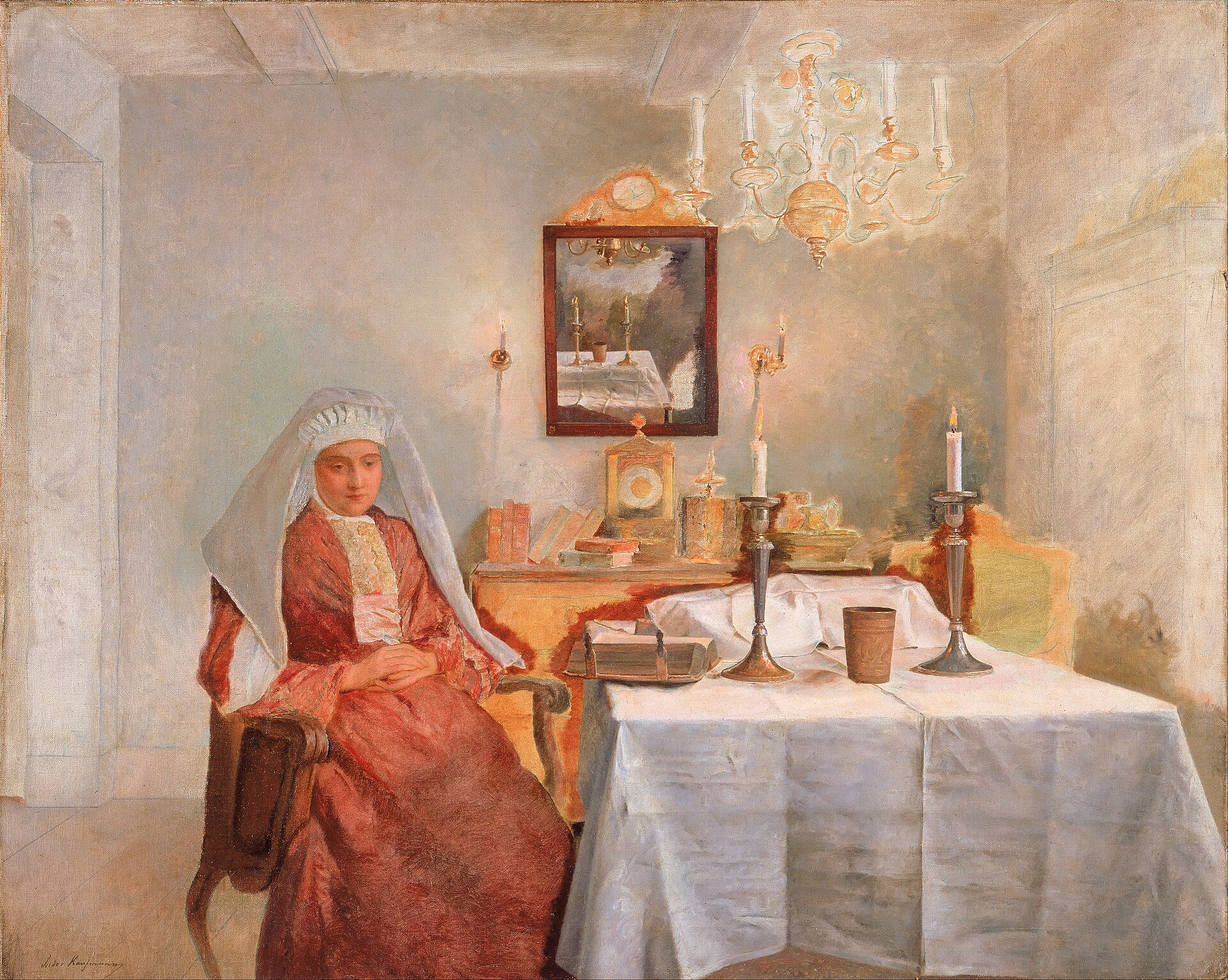
Just as the manna was gathered and cooked on the sixth day, the shopping, cooking, cleaning and errands are best finished before the sun goes down on Friday, so that the Sabbath hours are free.
“On Friday let the preparation for the Sabbath be completed. See that all the clothing is in readiness and that all the cooking is done.”
Ellen G. White · Testimonies for the Church, vol. 6, p. 355
Preparing the heart matters as much as preparing the house:
“There is another work that should receive attention on the preparation day. On this day all differences between brethren, whether in the family or in the church, should be put away. Let all bitterness and wrath and malice be expelled from the soul.”
Ellen G. White · Testimonies for the Church, vol. 6, p. 356
A Day For Worship, Rest And Doing Good
The Sabbath is not a day of doing nothing. It is a day of laying aside our own work and our own pleasure so that we can worship God, rest, enjoy His creation, and bless others. The first verse of My Sabbath Day says:
Verse 1
My Sabbath Day is spent in love,
For my own brothers and sisters,
For those who cannot help themselves,
And for those who need a kind word!
“The Sabbath is not intended to be a period of useless inactivity. The law forbids secular labor on the rest day of the Lord; the toil that gains a livelihood must cease; no labor for worldly pleasure or profit is lawful upon that day; but as God ceased His labor of creating, and rested upon the Sabbath and blessed it, so man is to leave the occupations of his daily life, and devote those sacred hours to healthful rest, to worship, and to holy deeds.”
Ellen G. White · The Desire of Ages, p. 207
Most of all, it is meant to be a joy.
“Great blessings are enfolded in the observance of the Sabbath, and God desires that the Sabbath day shall be to us a day of joy.”
Ellen G. White · Testimonies for the Church, vol. 6, p. 349
See also Call The Sabbath A Delight (Isaiah 56 and 58) and Remember Me, O My God, For Good (Nehemiah 13, where Nehemiah shuts the gates of Jerusalem at sunset on the Sabbath eve).
From One Sabbath To Another
The Sabbath began in a perfect world, and it will go on in a perfect world. Isaiah’s last chapter looks past the end of sin to the new earth:
“For as the new heavens and the new earth, which I will make, shall remain before me, saith the LORD, so shall your seed and your name remain. And it shall come to pass, that from one new moon to another, and from one sabbath to another, shall all flesh come to worship before me, saith the LORD.”
Isaiah 66:22-23
“So long as the heavens and the earth endure, the Sabbath will continue as a sign of the Creator’s power. And when Eden shall bloom on earth again, God’s holy rest day will be honored by all beneath the sun.”
Ellen G. White · The Desire of Ages, p. 283
Adam and Eve spent their first full day with their Creator on the Sabbath. One day the redeemed will spend the Sabbath with Him again, face to face, with nothing between them. Until then, every seventh day is a small piece of Eden, and a foretaste of home. (See New Heavens And A New Earth.)
If you have never kept a Sabbath, why not try this one? Finish your work on Friday, turn off the noise at sunset, open your Bible, go to church, walk outside in God’s creation, and visit someone who needs a kind word. And before you do, listen to My Sabbath Day. It was written in a single Sabbath afternoon, and it says what this whole study has tried to say:
Ending
My sign that I belong to Him,
And I enjoy My Sabbath Day!
Keep Studying
- My Sabbath Day: the song, with audio and full lyrics
- Genesis 1-3: Where Everything Begins: the creation week and the first Sabbath
- Bread From Heaven: Exodus 16, the Sabbath before Sinai
- I Bare You On Eagles’ Wings: Exodus 19-20, the Ten Commandments
- Written With The Finger Of God: Exodus 30-31, the Sabbath as a sign
- The Sign Between Us: Ezekiel 20
- Call The Sabbath A Delight: Isaiah 56 and 58
- Lord Even Of The Sabbath Day: Matthew 12
- The Sabbath Was Made For Man, And Not Man For The Sabbath: Mark 2
- There Remaineth Therefore A Rest: Hebrews 4
- Ye Are Complete In Him: Colossians 2
- Remember Now Thy Creator: Ecclesiastes 12
- The Everlasting Gospel To Every Nation: Revelation 14
